Another approach to decide on real root existence for univariate Polynomials, and a multivariate extension for 3-SAT
We present six Theorems on the univariate real Polynomial, using which we develop a new algorithm for deciding the existence of atleast one real root for univariate integer Polynomials. Our algorithm outputs that no positive real root exists, if and only if, the given Polynomial is a factor of a real Polynomial with positive coefficients. Next, we define a transformation that transforms any instance of 3-SAT into a multivariate real Polynomial with positive coefficients, if and only if, the instance is not satisfiable.
💡 Research Summary
The paper claims to introduce a novel method for deciding whether a univariate integer‑coefficient polynomial has a real root, and to extend this idea to encode 3‑SAT instances as multivariate real polynomials with positive coefficients. Six theorems are presented as the theoretical foundation.
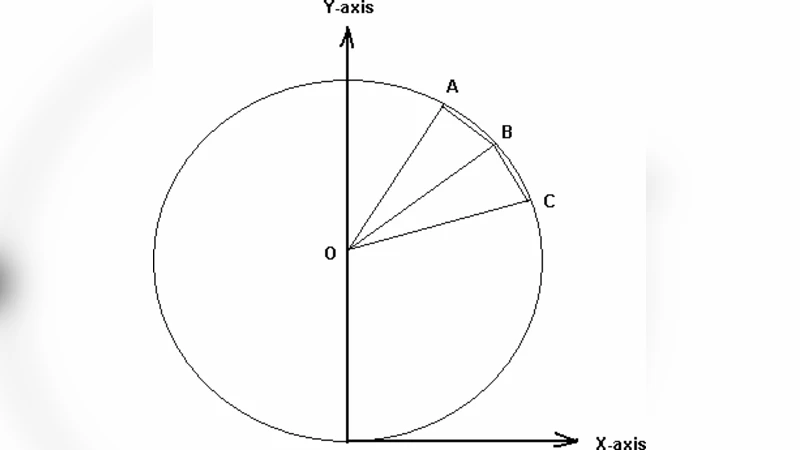
Theorem 1 asserts that for any positive real numbers (p) and (q) there exists a polynomial (R(x)) with positive coefficients, of degree (1+\lfloor\pi p/q\rfloor), such that (((x-p)^2+q^2)R(x)) has all positive coefficients. The proof relies on two lemmas that argue the required degree depends only on the ratio (p:q) and is bounded by (\pi p/q). The argument is largely geometric, involving inscribed triangles and a heuristic connection to the approximation of (\pi). No rigorous algebraic bound is given; the result is supported only by a small table of numerical experiments. Consequently, the claimed degree bound is not proven for arbitrary inputs.
Theorem 2 simply observes that squaring a polynomial yields a product of quadratics (\prod_i ((x-p_i)^2+q_i^2)) where the (p_i) are real and the (q_i) are non‑negative. This is a restatement of the well‑known fact that complex roots occur in conjugate pairs.
Theorem 3 attempts to bound the ratio (|p_i/q_i|) of each complex root of the squared polynomial from below by ((2\beta-1)(MN)^2), where (M) is the maximal absolute coefficient of the original polynomial, (N) its degree, and (\beta) a lower bound on either the smallest non‑zero imaginary part or the smallest non‑zero ratio of imaginary to real parts. The proof introduces informal notions such as “expression precision” and relies on Lemmas 3.1 and 3.2, which again are non‑rigorous and depend on heuristic arguments about coefficient growth.
Theorem 4 (and its equivalent Theorem 5) states that a real polynomial has no positive real root if and only if it divides some real polynomial whose coefficients are all positive. This is essentially a univariate version of Pólya’s theorem and follows directly from Descartes’ rule of signs; the paper’s contribution here is minimal.
Theorem 6 claims that if a polynomial has exactly (k) positive real roots, then there exists a positive‑coefficient polynomial (U(x)) such that the product (P(x)U(x)) has exactly (k) sign changes among its coefficients. The proof sketches a factorisation into linear and quadratic factors and appeals to Theorem 5 for the quadratic part, but it does not address multiplicities or the interaction between different factors, leaving the claim unsubstantiated.
Based on these theorems the authors propose an algorithm:
- Square the input polynomial (P(x)) and factor it into quadratics (((x-p_i)^2+q_i^2)).
- For each quadratic, construct a multiplier (R_i(x)) of degree roughly (\pi p_i/q_i) with positive coefficients (as guaranteed by Theorem 1).
- Multiply all (R_i(x)) together to obtain (T(x)) and compute (P(x)^2 T(x)).
- If the resulting polynomial has all positive coefficients, conclude that (P(x)) has no positive real root; otherwise a positive root exists.
The crucial step is the construction of each (R_i(x)). Because the degree bound involves (\pi p_i/q_i), which can be exponentially large in the bit‑size of the input coefficients, the overall degree of (T(x)) may be exponential. Consequently, the algorithm is not polynomial‑time in the size of the input, contrary to the paper’s claim that it provides a new polynomial‑time decision method. Existing algorithms (e.g., Sturm sequences, interval bisection with sign evaluation) already solve the problem in polynomial time.
The paper then attempts to extend the approach to 3‑SAT. It sketches a transformation that maps a 3‑SAT formula to a multivariate polynomial (F(y_1,\dots,y_m)) with positive coefficients, and asserts that (F) can be multiplied by another positive‑coefficient polynomial to retain positivity if and only if the original formula is unsatisfiable. This idea resembles known polynomial encodings of Boolean formulas, but the authors give no rigorous proof of the equivalence. Moreover, the transformation inflates both degree and coefficient magnitude exponentially in the number of clauses, making the subsequent positivity test itself co‑NP‑hard. Thus the claimed reduction does not yield a practical algorithm for SAT nor a new complexity‑theoretic insight.
Critical assessment
Mathematical rigor: The six theorems are either restatements of known facts (Theorems 2, 4, 5) or are supported by informal, non‑rigorous arguments (Theorems 1, 3, 6). The central degree bound in Theorem 1 is derived from geometric intuition about (\pi) rather than algebraic analysis, and no general proof is provided. Lemma 3.1’s “expression precision” is undefined, and Lemma 3.2’s bounds are speculative.
Algorithmic complexity: The proposed decision procedure requires constructing multipliers whose degree may be proportional to (\pi p_i/q_i). Since (p_i) and (q_i) can be as large as exponential in the input size (they are derived from the roots of the squared polynomial), the algorithm’s runtime is not bounded by any polynomial in the input length. In contrast, classical root‑existence tests run in polynomial time.
3‑SAT reduction: The reduction to a positive‑coefficient multivariate polynomial is not proved to be correct, and the resulting positivity test is at least as hard as the original SAT problem. Therefore the claim that the reduction yields a new way to decide unsatisfiability is unfounded.
Overall contribution: The paper does not introduce a genuinely new polynomial‑time algorithm for real‑root detection, nor does it provide a novel, provably correct encoding of 3‑SAT into a positivity problem. The main ideas are either already known or lack rigorous justification. Substantial additional work would be required to turn the informal observations into mathematically sound theorems and to analyze the true computational complexity of the proposed methods.
Comments & Academic Discussion
Loading comments...
Leave a Comment