Tetrahedra on deformed spheres and integral group cohomology
We show that for every injective continuous map f: S^2 --> R^3 there are four distinct points in the image of f such that the convex hull is a tetrahedron with the property that two opposite edges have the same length and the other four edges are als…
Authors: ** - **Pavle V. M. Blagojević** (Matematički Institut, Beograd, Serbia) – *pavleb@mi.sanu.ac.yu* - **Günter M. Ziegler** (Institut für Mathematik
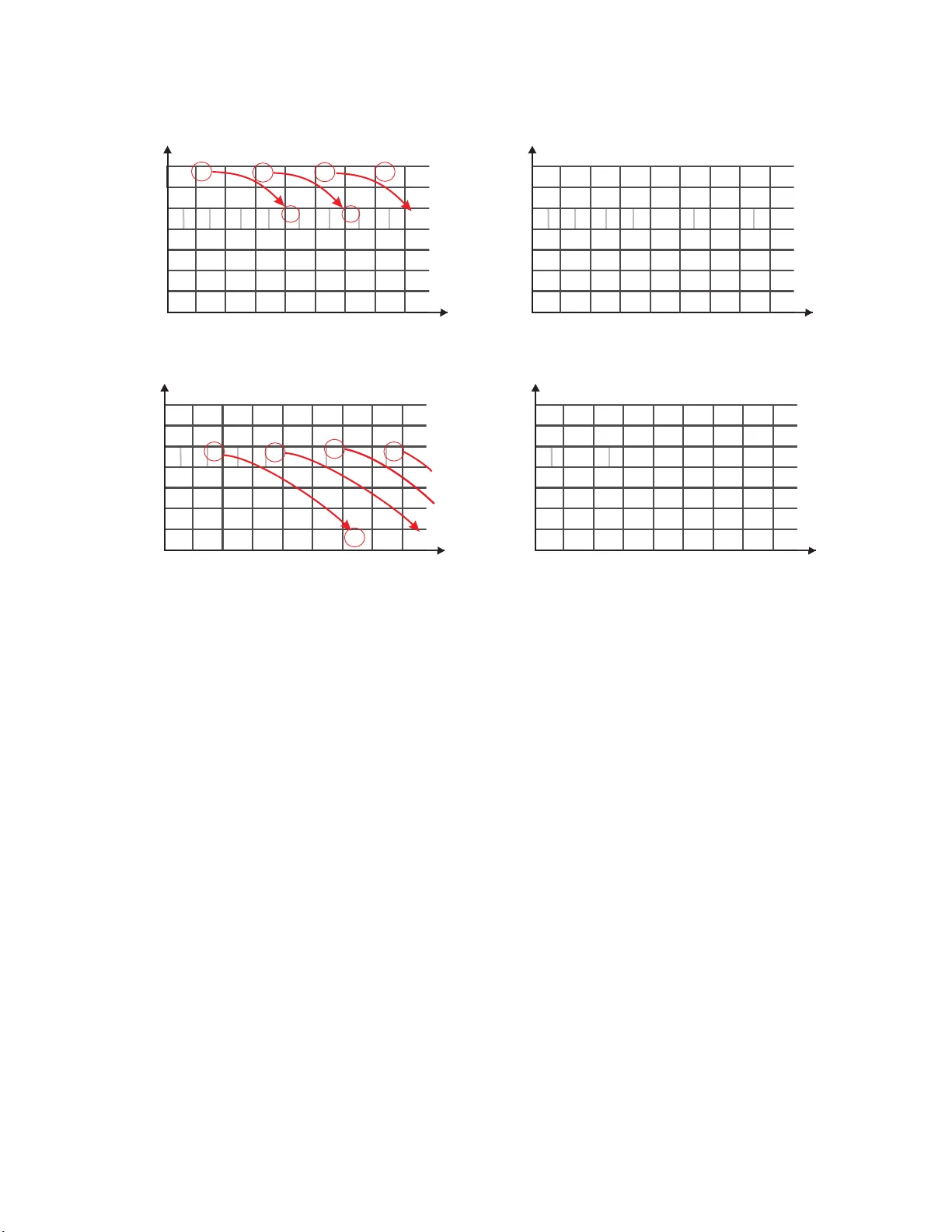
T etrahedra on deformed spheres and in tegral group cohomology P av le V. M. Blago jevi ´ c ∗ Mathemati ˇ cki Institut Knez Mic hailov a 35/1 11001 Beograd, Serbia pavleb@mi.s anu.ac.yu G ¨ un ter M. Z iegler ∗∗ Inst. Mathematics, MA 6-2 TU Berlin D-1062 3 Be rlin, German y ziegler@mat h.tu- berlin.de August 28, 2008 Abstract W e s h o w that for ev ery i n jectiv e con tinuous map f : S 2 → R 3 there are four d istinct p oints in the image o f f such that the con vex h ull is a tetrahedron with the prop erty that tw o opp osite edges hav e the same length and the other four ed ges are also of equal length. This result represents a partial result for the top ologica l Borsuk problem for R 3 . Our proof of the geometrica l claim, v ia F adell– Husseini index theory , provides an instance where arguments b ased on group cohomology with integer coefficients yield results that cannot b e accessed using only field co efficien ts. 1 In tro duction The motiv a tion for the study of the existence of particular types of tetrahedra on deformed 2-s pher es is t wofold. The top ological Borsuk problem, as considered in [7], along with the square p eg problem [6] inspire the s earch for p ossible poly topes with nice metr ic pr o perties who se vertices lie on the contin uous images of spheres. Beyond their intrinsic int er est, these problems can b e use d as tes ting grounds for to ols from eq uiv ar ian t top o logy , e.g. for comparing the strength of F adell–Husseini index theory with ring resp. field co e fficien ts. Figure 1 : D 8 -inv ariant tetrahedra on defor med sphere S 2 The following theorem will b e proved through the use o f F adell–Husseini index theory with co efficients in the ring Z . It is also going to be demo nstrated that F adell–Husseini index theory with coefficients in field F 2 has no p ow er in this instance (Section 4.1). ∗ Supported b y the grant 144018 of the Serbian M inistry of Science and T ec hnological dev elopment ∗∗ Pa r tially supp orted by the German Research F oundation DFG 1 Theorem 1.1. L et f : S 2 → R 3 an inje ctive c ontinuous map . Then its image c ont ains vertic es of a tetr ahe dr on t ha t has t he symmetry gr oup D 8 of a squar e. Th at is, ther e ar e four distinct p oints ξ 1 , ξ 2 , ξ 3 and ξ 4 on S 2 such that d ( f ( ξ 1 ) , f ( ξ 2 )) = d ( f ( ξ 2 ) , f ( ξ 3 )) = d ( f ( ξ 3 ) , f ( ξ 4 )) = d ( f ( ξ 4 ) , f ( ξ 1 )) and d ( f ( ξ 1 ) , f ( ξ 3 )) = d ( f ( ξ 2 ) , f ( ξ 4 )) . Remark 1.2. The pr oof is not go ing to use a ny pro perties of R 3 except that it is a metric space. Th us in the statement of the theorem, R 3 can b e replaced b y any metric spa ce ( M , d ). Remark 1 . 3. Unfortunately , the metho ds use d for the pro of o f Theorem 1.1 do not imply any co nclusion when applied to the squar e p eg problem (see Section 4 .2). On the other hand, if the square p eg problem could b e solved for the contin uous Jordan cur ves, then it would imply the re sult of Theorem 1 .1. 2 In tro ducing the equiv arian t question Let f : S 2 → R 3 be an injective contin uous map. Denote by D 8 the symmetr y g r oup of a square, that is, the 8 -elemen t dihedral g roup D 8 = h ω , j | ω 4 = j 2 = 1 , ω j = j ω 3 i . A few D 8 -represen tatio n s . The vector spa ces U 4 = { ( x 1 , x 2 , x 3 , x 4 ) ∈ R 4 | x 1 + x 2 + x 3 + x 4 = 0 } , U 2 = { ( x 1 , x 2 ) ∈ R 2 | x 1 + x 2 = 0 } are D 8 -representations with actions given by (a) for ( x 1 , x 2 , x 3 , x 4 ) ∈ U 4 : ω · ( x 1 , x 2 , x 3 , x 4 ) = ( x 2 , x 3 , x 4 , x 1 ) , j · ( x 1 , x 2 , x 3 , x 4 ) = ( x 3 , x 2 , x 1 , x 4 ) , (b) for ( x 1 , x 2 ) ∈ U 2 : ω · ( x 1 , x 2 ) = ( x 2 , x 1 ) , j · ( x 1 , x 2 ) = ( x 2 , x 1 ) , The configuration space. Let X = S 2 × S 2 × S 2 × S 2 and let Y b e the subspace given b y Y = ( x, y , x, y ) | x, y ∈ S 2 ≈ S 2 × S 2 . The config uration space to b e considered is the space Ω := X \ Y . Let a D 8 -action on X be induced by ω · ( ξ 1 , ξ 2 , ξ 3 , ξ 4 ) = ( ξ 2 , ξ 3 , ξ 4 , ξ 1 ) , j · ( ξ 1 , ξ 2 , ξ 3 , ξ 4 ) = ( ξ 4 , ξ 3 , ξ 2 , ξ 1 ) , for ( ξ 1 , ξ 2 , ξ 3 , ξ 4 ) ∈ X . 2 A test map. Let τ : Ω → U 4 × U 2 be a map defined for ( ξ 1 , ξ 2 , ξ 3 , ξ 4 ) ∈ X b y τ ( ξ 1 , ξ 2 , ξ 3 , ξ 4 ) = ( d 12 − ∆ 4 , d 23 − ∆ 4 , d 34 − ∆ 4 , d 41 − ∆ 4 ) × ( d 13 − Φ 2 , d 24 − Φ 2 ) (1) where d ij := d ( f ( ξ i ) , f ( ξ j )) and ∆ = d 12 + d 23 + d 34 + d 14 , Φ = d 13 + d 24 . With the D 8 -actions introduced ab ove the test map τ is D 8 -equiv ariant. The following proposition connects o ur set-up w ith the tetrahedro n problem. Prop osition 2.1. If ther e is no D 8 -e quivariant map α : Ω → ( U 4 × U 2 ) \ ( { 0 } × { 0 } ) (2) then The or em 1. 1 fol lows. Pr o of. If there is no D 8 -equiv ariant map Ω → ( U 4 × U 2 ) \ ( { 0 } × { 0 } ), then for every contin uo us em b edding f : S 2 → R 3 there is a p oin t ξ = ( ξ 1 , ξ 2 , ξ 3 , ξ 4 ) ∈ Ω = X \ Y such that τ ( ξ 1 , ξ 2 , ξ 3 , ξ 4 ) = ( 0 , 0 ) ∈ U 4 × U 2 . (3) F rom (3 ) we conclude that d 12 = d 23 = d 34 = d 14 = ∆ 4 and d 13 = d 24 = Φ 2 . (4) It only remains to prov e that all four points are differen t. Since ( ξ 1 , ξ 2 , ξ 3 , ξ 4 ) / ∈ Y we ha ve ξ 1 6 = ξ 3 or ξ 2 6 = ξ 4 . By symmetry we may assume that ξ 1 6 = ξ 3 . The map f is injective, ther efore f ( ξ 1 ) 6 = f ( ξ 3 ) and consequently d 13 6 = 0. Now d 13 6 = 0 ⇒ d 24 6 = 0 ⇒ f ( ξ 1 ) 6 = f ( ξ 3 ) , f ( ξ 2 ) 6 = f ( ξ 4 ) ⇒ ξ 1 6 = ξ 3 , ξ 2 6 = ξ 4 . Let us assume, without lo ss of generality , that ξ 1 = ξ 2 . Then d 12 = d 23 = d 34 = d 14 = 0, whic h implies that d 13 ≤ d 12 + d 23 = 0. This y ield a contradiction to d 13 6 = 0. Thus ξ 1 6 = ξ 2 . By P r opos ition 2 .1 , Theorem 1.1 is a consequence of the following top ological r esult. Theorem 2.2. Ther e is no D 8 -e quivariant map Ω → S ( U 4 × U 2 ) . 3 Pro of of Theorem 2.2 The pro of is going to b e conducted thro ugh a c o mparison o f the Serre s p ectral seq uences with Z - co efficien ts of the Bor el constructions asso c iated with the s paces Ω and S ( U 4 × U 2 ) a nd the subgro up Z 4 = h ω i of D 8 . In o ther words, w e determine the Z 4 F adell–Husseini index o f these spaces liv ing in H ∗ 4 ( Z 4 ; Z ) = Z [ U ] / 4 U , de g U = 2 . The F a dell–Husseini index of a G -space X is the kernel o f the map π ∗ X : H ∗ (B G, Z ) → H ∗ ( X × G E G, Z ) induced by the pro jection π X : X × G E G → B G . If E ∗ , ∗ ∗ denotes the Serre sp ectral sequence of the Bo rel construction of X , then the ho mo morphism π ∗ X can b e presented as the comp osition H ∗ (B G, Z ) → E ∗ , 0 2 → E ∗ , 0 3 → E ∗ , 0 4 → ... → E ∗ , 0 ∞ ⊆ H ∗ ( X × G E G, Z ) . (5) Since the E 2 -term o f the sp ectral sequence is given b y E p,q 2 = H p (B G, H q ( X, Z )) the fir st step in the computation of the index is study of the cohomolog y H ∗ ( X, Z ) a s a G -mo dule (Section 3.2). The final s tep is explicit descr iption of no n- zero differentials in the spectr al sequence and a pplication of the pre sen tation (5) of the homomorphism π ∗ X (Section 3.3). 3 3.1 The Index of S ( U 4 × U 2 ) Let V 1 be the 1-dimensiona l complex r epresen ta tion o f Z 4 induced b y 1 7→ e iπ/ 2 . Then the representation U 4 ⊂ R 4 seen as a Z 4 -representation decomp oses into a sum of tw o irreducible Z 4 -representations U 4 = spa n { (1 , 0 , − 1 , 0 ) , (0 , 1 , 0 , − 1) } ⊕ spa n { (1 , − 1 , 1 , − 1 ) } ∼ = V 1 ⊕ U 2 . Here “ s pan” stands for all R -linear combinations of the given vectors. It c a n be also seen that U 4 × U 2 ∼ = V 1 ⊕ U 2 ⊕ U 2 ∼ = V 1 ⊕ ( V 1 ⊗ V 1 ) . F ollowing [1, Section 8, p. 271 and App endix, page 285] we deduce th e total Chern class of the Z 4 - representation U 4 × U 2 c ( U 4 × U 2 ) = c ( V 1 ) · c ( V 1 ⊗ V 1 ) and cons equen tly the to p Chern class c 2 ( U 4 × U 2 ) = c 1 ( V 1 ) · c 1 ( V 1 ⊗ V 1 ) = c 1 ( V 1 ) · ( c 1 ( V 1 ) + c 1 ( V 1 )) = 2 U 2 ∈ H ∗ ( Z 4 ; Z ) . The Z 4 -index o f the sphere S ( U 4 × U 2 ) is g iv en by [2, Pro position 3 .11] as Index Z 4 , Z S ( U 4 × U 2 ) = h 2 U 2 i . (6) 3.2 The cohomology H ∗ (Ω; Z ) as a Z 4 -mo dule The cohomology is g oing to b e determined via Poincar´ e–Lefschetz duality a nd an explicit study of cell structures for the spaces X and Y . Poincar´ e–Lefsc hetz duality [5, Theorem 70.2, page 415 ] implies that H ∗ (Ω; Z ) = H ∗ ( X \ Y ; Z ) ∼ = H 8 −∗ ( X, Y ; Z ) (7) and therefo r e we analyze the homolog y o f the pair ( X , Y ). The lo ng exact sequence in homo lo gy o f the pair ( X, Y ) yields that the p ossibly non-zero homolog y groups o f the pair ( X , Y ) with Z -co efficients are H i ( X, Y ; Z ) = Z [ Z 4 ] / imΦ , i = 2 ker Φ , i = 3 Z [ Z 4 ] ⊕ Z [ Z 4 / Z 2 ] / imΨ , i = 4 ker Ψ , i = 5 Z [ Z 4 ] , i = 6 Z , i = 8 Thu s e x plicit formulas for the maps Φ : H 2 ( Y ; Z ) → H 2 ( X ; Z ) and Ψ : H 4 ( Y ; Z ) → H 4 ( X ; Z ), induced b y the inclusion Y ⊂ X , a re needed in order to determine the homo logy H ∗ ( X, Y ; Z ) and its exact Z 4 -mo dule structure. Let x 1 , x 2 , x 3 , x 4 ∈ H 2 ( X ; Z ) be generato rs carried b y individual copies of S 2 in the pro duct X = S 2 × S 2 × S 2 × S 2 . The generato r o f the gr oup Z 4 = h ω i acts on this basis of H 2 ( X ; Z ) b y ω · x i = x i +1 where x 5 = x 1 . Then by x i x j ∈ H 4 ( X ; Z ), i 6 = j , we deno te the generato r carried by the pro duct of i -th and j -th c op y of S 2 in X . Since ω is not changing the orientation the actio n o n H 4 ( X ; Z ) is descr ibed b y x 1 x 2 · ω 7− → x 2 x 3 · ω 7− → x 3 x 4 · ω 7− → x 1 x 4 and x 1 x 3 · ω 7− → x 2 x 4 . Let similarly y 1 , y 2 ∈ H 2 ( X ; Z ) b e genera tors carried by individual copies of S 2 in the pro duct Y = S 2 × S 2 . Then ω · y 1 = y 2 and ω · y 2 = y 1 . Again y 1 y 2 denotes the generato r o f H 4 ( Y ; Z ) and ω · y 1 y 2 = y 1 y 2 . Note that ω pres erv es the orientations of X and Y and therefo re acts trivially on H 8 ( X ; Z ) and on H 4 ( Y ; Z ). The inclusion Y ⊂ X induces a map in homolog y H ∗ ( X ; Z ) ⊂ H ∗ ( Y ; Z ), which in dimensions 2 a nd 4 is given by y 1 7− → x 1 + x 3 , y 2 7− → x 2 + x 4 , y 1 y 2 7− → x 1 x 2 + x 2 x 3 + x 3 x 4 + x 1 x 4 . 4 This can b e seen from the dual cohomolog y picture: An element is mapp ed to a sum of generators int er secting its image, with appro priately attached in ter section num b ers. Thu s Φ and Ψ are injective and imΦ = h x 1 + x 3 , x 2 + x 4 i , imΨ = h x 1 x 2 + x 2 x 3 + x 3 x 4 + x 1 x 4 i . Let N = Z ⊕ Z b e the Z 4 -representation given by ω · ( a, b ) = ( b, − a ), while M denotes the representa- tion Z [ Z 4 ] / (1+ ω + ω 2 + ω 3 ) Z . Then the non-trivial cohomolo gy of the space X \ Y , as a Z 4 -mo dule via the isomorphism (7), is given by H i (Ω; Z ) = N , i = 6 M ⊕ Z [ Z 4 / Z 2 ] , i = 4 Z [ Z 4 ] , i = 2 Z , i = 0 (8) 3.3 The S er re sp ectral sequ ence of the Borel construction Ω × Z 4 E Z 4 The Serre sp ectral seq uence asso ciated to the fibra tio n Ω → Ω × Z 4 E Z 4 → B Z 4 is a s pectral s equence with non-trivia l lo cal co efficients, since π 1 (B Z 4 ) = Z 4 acts non-tr ivially (8) on the cohomolo gy H ∗ (Ω; Z ). The first step in the study of such a sp ectral s equence is to understand the H ∗ ( Z 4 ; Z )-mo dule s tructure on the rows of its E 2 -term. The E 2 -term o f the sequence is given by E p,q 2 = H p ( Z 4 , N ) , q = 6 H p ( Z 4 , M ) ⊕ H p ( Z 4 ; Z [ Z 4 / Z 2 ]) , q = 4 H p ( Z 4 ; Z [ Z 4 ]) , q = 2 H p ( Z 4 ; Z ) , q = 0 0 , otherwise. Lemma 3.1. H p ( Z 4 ; Z [ Z 4 ]) = Z , p = 0 0 , p > 0 and multiplic ation by U ∈ H p ( Z 4 ; Z ) is trivial, U · H p ( Z 4 ; Z [ Z 4 ]) = 0 . F or the pro of one can consult [3, E xercise 2, page 5 8]. Lemma 3.2. H ∗ ( Z 4 ; Z [ Z 4 / Z 2 ]) ∼ = H ∗ ( Z 2 ; Z ) , wher e the mo dule structur e is gi ven by the r estriction homomorph ism r es Z 4 Z 2 : H ∗ ( Z 4 ; Z ) → H ∗ ( Z 2 ; Z ) . In other wor ds, if we denote H ∗ ( Z 2 ; Z ) = Z [ T ] / 2 T , deg T = 2 , then r es Z 4 Z 2 ( U ) = T and c onse quently: (A) H ∗ ( Z 4 ; Z [ Z 4 / Z 2 ]) is gener ate d by one element of de gr e e 0 as a H ∗ ( Z 4 ; Z ) -mo dule, and (B) multiplic ation by U in H ∗ ( Z 4 ; Z [ Z 4 / Z 2 ]) is an isomorphism, while multiplic ation by 2 U is zer o. The pro of is a direct applica tion of Shapiro’s lemma [3, (6.3), pa g e 73] and a small part of the restriction dia g ram [2, Section 4 .5 .2]. Lemma 3.3. L et Λ ∈ H ∗ ( Z 4 , M ) denote an element of de gr e e 1 s uch that 4Λ = 0 . Then H ∗ ( Z 4 , M ) ∼ = H ∗ ( Z 4 ; Z ) · Λ as an H ∗ ( Z 4 ; Z ) -mo dule. Pr o of. The shor t exact se q uence of Z 4 -mo dules 0 − → Z 1+ ω + ω 2 + ω 3 − → Z [ Z 4 ] − → M − → 0 induces a long exa ct sequence in cohomolo gy [3, Prop osition 6.1, page 71], whic h is natur al with resp ect to H ∗ ( Z 4 ; Z )-mo dule multiplication. Since Z [ Z 4 ] is a free module w e get enough zeros to recov er the 5 information w e need: 0 − → H 0 ( Z 4 ; Z ) − → H 0 ( Z 4 ; Z [ Z 4 ]) − → H 0 ( Z 4 , M ) − → H 1 ( Z 4 ; Z ) − → Z Z 0 − → H 1 ( Z 4 ; Z [ Z 4 ]) − → H 1 ( Z 4 , M ) − → H 2 ( Z 4 ; Z ) − → 0 Z 4 − → H 2 ( Z 4 ; Z [ Z 4 ]) − → . . . 0 . . . − → H i ( Z 4 ; Z [ Z 4 ]) − → H i ( Z 4 , M ) − → H i +1 ( Z 4 ; Z ) − → H i +1 ( Z 4 ; Z [ Z 4 ]) − → . . . 0 0 Lemma 3.4. L et Υ ∈ H ∗ ( Z 4 , N ) denote an element of de gr e e 1 such that 2Υ = 0 . Then H ∗ ( Z 4 , N ) ∼ = H ∗ ( Z 4 ; Z [ Z 4 / Z 2 ]) · Υ as an H ∗ ( Z 4 ; Z ) -mo dule. Pr o of. There is a short ex a ct sequence of Z 4 -mo dules 0 → N α → Z [ Z 4 ] → L → 0 where L = Z [ Z 4 ] / N and α ( p, q ) = ( p, q , − p − q ). The map α is well defined b ecause the following dia g ram commutes N = ab Z ⊕ Z ∋ ( p, q ) α − → ( p, q , − p, − q ) ∈ Z [ Z 4 ] ↓· ω ↓· ω N = ab Z ⊕ Z ∋ ( q , − p ) α − → ( q , − p , − q , p ) ∈ Z [ Z 4 ] The long exact sequence in gr oup cohomolo gy [3, Prop. 6.1, p 71] implies the r esult. The E 2 -term of the Borel construction ( X \ Y ) × Z 4 E Z 4 , with the H ∗ ( Z 4 ; Z )-mo dule s tr ucture, is pr esen ted in Fig ure 2. 01234567 0 1 3 2 4 5 6 1 0 U U 2 U 3 0 0 0 0 ¨ ¨ 4 ¨ 4 ¨ 4 0 0 0 0 0 0 0 ¨ 0 0 0 0 0 0 0 0 0 0 0 0 0 0 0 0 1 0 ¨ 2 0 C ¨ 4 T ¨ 2 0 C U ¨ 4 0 T 3 ¨ 2 0 0 C U 2 ¨ 4 T 2 ¨ 2 0 0 ¨ 4 C U 3 0 0 0 0 0 0 0 0 G 0 0 0 0 ¨ 2 ¨ 2 ¨ 2 ¨ 2 G G G T T 2 T 3 Figure 2 : The E 2 -term The differentials of the s p ectral sequence are re tr iev ed from the fact that the Z 4 action on Ω is free . Therefore H i Z 4 (Ω; Z ) = 0 for all i > 8. Since the spectral sequence is conv erg ing to the graded g roup asso ciated with H i Z 4 (Ω; Z ) this means that for p + q > 8 nothing s ur viv es . Thus the o nly non-zer o seco nd differentials are d 2 : E 2 i +1 , 6 2 → E 2 i +4 , 4 2 , d 2 ( T i Υ) = T i +1 , i > 0, as display ed in Figur e 3. The last r emaining non-zero differentials are d 4 : E 2 i +1 , 4 4 → E 2 i +6 , 0 4 , d 6 ( U i Λ) = U i +3 , i > 0. Then E 5 = E ∞ , cf. Figure 4. 6 01234567 0 1 3 2 4 5 6 1 0 U U 2 U 3 0 0 0 0 ¨ ¨ 4 ¨ 4 ¨ 4 0 0 0 0 0 0 0 ¨ 0 0 0 0 0 0 0 0 0 0 0 0 0 0 0 0 1 0 ¨ 2 0 C ¨ 4 T ¨ 2 0 C U ¨ 4 0 0 0 C U 2 ¨ 4 0 0 ¨ 4 C U 3 0 0 0 0 0 0 0 0 0 0 0 0 01234567 0 1 3 2 4 5 6 1 0 U U 2 U 3 0 0 0 0 ¨ ¨ 4 ¨ 4 ¨ 4 0 0 0 0 0 0 0 ¨ 0 0 0 0 0 0 0 0 0 0 0 0 0 0 0 0 1 0 ¨ 2 0 C ¨ 4 T ¨ 2 0 C U ¨ 4 0 T 3 ¨ 2 0 0 C U 2 ¨ 4 T 2 ¨ 2 0 0 ¨ 4 C U 3 0 0 0 0 0 0 0 0 G 0 0 0 0 ¨ 2 ¨ 2 ¨ 2 ¨ 2 G G G T T 2 T 3 0 0 0 0 Figure 3 : Differen tials in E 2 and E 3 -terms 01234567 0 1 3 2 4 5 6 1 0 U U 2 U 3 0 0 0 0 ¨ ¨ 4 ¨ 4 ¨ 4 0 0 0 0 0 0 0 ¨ 0 0 0 0 0 0 0 0 0 0 0 0 0 0 0 0 1 0 ¨ 2 0 C ¨ 4 T ¨ 2 0 C U ¨ 4 0 0 0 C U 2 ¨ 4 0 0 ¨ 4 C U 3 0 0 0 0 0 0 0 0 0 0 0 0 0 0 0 0 01234567 0 1 3 2 4 5 6 1 0 U U 2 0 0 0 0 ¨ ¨ 4 ¨ 4 0 0 0 0 0 0 0 ¨ 0 0 0 0 0 0 0 0 0 0 0 0 0 0 0 0 1 0 ¨ 2 0 T ¨ 2 0 0 0 0 0 0 0 0 0 0 0 0 0 0 0 0 0 0 0 0 0 0 0 Figure 4 : Differen tials in E 4 and E 5 -terms 3.4 The index of Ω The conclus io n d 6 (Λ) = U 3 implies that Index Z 4 , Z Ω = h U 3 i . Since the generator 2 U 2 of the Index Z 4 , Z S ( U 4 × U 2 ) is not contained in the Index Z 4 , Z Ω it follo ws that there is no equiv ariant map Ω → S ( U 4 × U 2 ). This concludes the pro of of The o rem 2.2. 4 Concluding remarks 4.1 The F 2 -index Let H ∗ ( Z 4 , F 2 ) = F 2 [ e, u ] /e 2 , deg( e ) = 1, deg( u ) = 2. T he homomorphism of co efficients j : Z → F 2 , j (1) = 1, induces a homomor phism in group cohomolog y j ∗ : H ∗ ( Z 4 ; Z ) → H ∗ ( Z 4 , F 2 ) given by j 8 ( U ) = u (compare [2, Section 4.5.2]). The F 2 -index o f the configuration space Ω is Index Z 4 , F 2 Ω = h eu 2 , u 3 i . This can b e obta ined in a s imila r fas hio n as we obta ine d the index with Z -co efficien ts in Section 3 .3. The relev ant E 2 -term of the Serre sp ectral sequence o f the fibration Ω → Ω × Z 4 E Z 4 → B Z 4 is des c ribed in Figure 5. The F 2 -index of the s phere S ( U 4 × U 2 ) is generated b y the j ∗ image o f the gener ator 2 U 2 of the index with Z -c o efficients Index Z 4 , Z S ( U 4 × U 2 ). Since j ∗ (2 U 2 ) = 0 the index Index Z 4 , F 2 S ( U 4 × U 2 ) is trivial. Therefore, for o ur problem no conclusion can b e o btained from the study of the F 2 -index. The same observ ation holds even when the complete gr oup D 8 is used. The F 2 -index of the sphere S ( U 4 × U 2 ) would b e generated by xy w = 0 ∈ H ∗ ( D 8 ; F 2 ), in the notation of [2]. 7 01234567 0 1 3 2 4 5 6 1 e u u 2 u 3 eu 0 0 0 0 0 0 0 0 0 0 0 0 0 0 0 0 0 0 0 0 0 0 0 t t 2 0 0 0 0 0 0 0 0 eu 2 eu 3 F 2 1 t 3 t 4 t 5 t 6 t 7 1 t t 2 t 3 t 4 t 5 t 6 t 7 e u eu u 2 eu 2 u 3 eu 3 u 4 Figure 5 : E 2 -term with F 2 -co efficien ts 4.2 The square p eg problem The metho d of configur ation spa ces can a lso b e set up for to the contin uo us s quare pe g proble m. F ollowing the ideas presented in Section 2, taking for X the pro duct S 1 × S 1 × S 1 × S 1 , for Y the subspace Y = ( x, y , x, y ) | x, y ∈ S 1 and for the configuratio n space Ω = X \ Y , the squar e p eg problem can b e related to the question of the existence of a D 8 -equiv ariant map Ω → S ( U 4 × U 2 ). The F adell– Husseini indexes ca n be r e tr iev ed: Index Z 4 , Z Ω = h U 2 i and Index Z 4 , Z S ( U 4 × U 2 ) = h 2 U 2 i , but since Index Z 4 , Z Ω ⊇ Index Z 4 , Z S ( U 4 × U 2 ) the r esult do es not yield an y conclus ion. The same can b e done for the complete symmetry group D 8 , explic itly Index D 8 , Z S ( U 4 × U 2 ) = h 2 W i and W ∈ Index D 8 , Z Ω. Ac kno wl edgemen ts. Thanks to Anton Do c hterman for many useful comments. References [1] M . F. A tiy ah, Char acters and c ohomolo gy of finite gr oups , Inst. Hautes ´ Etudes Sci. Publ. Math. No. 9 ( 196 1), 23–64. [2] P. V. M . Blagojevi ´ c, G. M. Zi egler, The ide al-value d i ndex for a dihe dr al gr oup action, and m ass p artition by two hyp erplanes , preprint, revised version , July 2008, 42 pages. [3] K. S. Bro wn , Cohomolo gy of Gr oups , Graduate T exts in Math. 87, Springer-V erlag, New Y ork, Berlin, 1982. [4] G . E. Bredon , T op olo gy and Ge ometry , Graduate T exts in Math. 139, Springer-V erlag, New Y ork, 1993. [5] J. R. Munkres , Elements of Algebr aic T op olo gy , Ad dison-W esley , Menlo Park CA, 1984. [6] L. G. S hnirelman , On c ertain ge ometric al pr op erties of close d curves (in Russian) , U spehi Matem. Nau k 10 (1944), 34–44, http://tin yurl.com/28gsy3 . [7] Y . Soibelman , T op olo gic al Borsuk pr oblem , p rep rin t arXiv:math/ 0208221v2 , 2002, 4 pages. 8
Original Paper
Loading high-quality paper...
Comments & Academic Discussion
Loading comments...
Leave a Comment