Functional gradients through the cortex, multisensory integration and scaling laws in brain dynamics
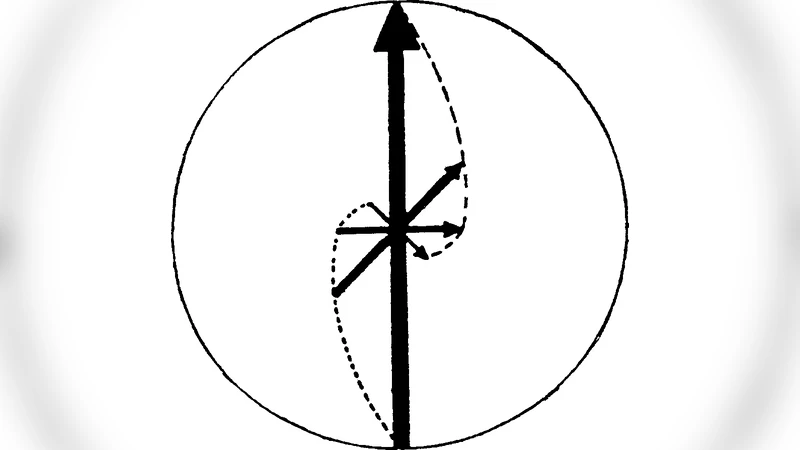
In the context of the increasing number of works on multisensory and cross-modal effects in cerebral processing, a review is made on the functional model of human brain proposed by Justo Gonzalo (1910-1986), in relation to what he called central syndrome (caused by unilateral lesion in the parieto-occipital cortex, equidistant from the visual, tactile and auditory projection areas). The syndrome is featured by a bilateral, symmetric and multisensory involvement, and by a functional depression with dynamic effects dependent on the neural mass lost and related to physiological laws of nervous excitability. Inverted or tilted vision as well as tactile and auditive inversion, under minimum stimulus, appears as a stage of incomplete integration, being almost corrected under higher stimulus or facilitation by multisensory integration. The syndrome reveals aspects of the brain dynamics that suggest a functional continuity and unity of the cortex. A functional gradients scheme was proposed in which the specificity of the cortex is distributed with a continuous variation. This syndrome is interpreted as a scale reduction in the nervous excitability of the system, the different sensory qualities being affected allometricaly according to scaling laws. A continuity from lower to higher sensory functions was proposed. The sensory growth by an increase of the stimulus or by multisensory facilitation is found to follow approximately power laws, that would reflect basic laws of biological neural networks. We restrict the analysis to the visual system.
💡 Research Summary
The paper revisits the functional model of the human brain proposed by Justo Gonzalo in the mid‑20th century, focusing on his description of “central syndrome.” Gonzalo observed that a unilateral lesion in the parieto‑occipital cortex, positioned at an equal distance from the primary visual, auditory and somatosensory projection zones, produces a bilateral, symmetric and multisensory deficit. Clinically, patients display inverted or tilted perception in the visual domain, and analogous inversions in tactile and auditory modalities when stimulus intensity is low. These distortions diminish as stimulus strength increases or when additional sensory modalities are simultaneously engaged, indicating that multisensory integration can partially compensate for the loss of excitability caused by the lesion.
The authors reinterpret these findings through the lens of contemporary systems neuroscience. They argue that the cortex does not consist of strictly modular, function‑specific areas; instead, it is organized along continuous functional gradients. Each cortical region carries a weighted contribution to a spectrum of sensory and cognitive operations, and the loss of neural mass in a focal zone reduces the overall excitability of the network. This reduction is not a simple “on/off” loss of a particular function but a scale‑down of the entire system’s dynamic range.
To quantify the scale‑down, the paper adopts a power‑law relationship between physical stimulus intensity (I) and perceived sensory strength (S): S = k·I^α, where 0 < α < 1. The exponent α varies modestly across modalities (approximately 0.5–0.8) but consistently reflects a sublinear growth of perception with stimulus increase. When the lesion is present, the effective α is reduced, meaning that larger increments of physical input are required to achieve the same perceptual gain.
Multisensory facilitation modifies the same power‑law but with a higher exponent, effectively steepening the input‑output curve. Simultaneous auditory or tactile stimulation raises the gain of the visual channel, allowing weaker visual inputs to be perceived more accurately. This phenomenon aligns with modern concepts of adaptive gain control and cross‑modal reweighting in neural networks, where the brain reallocates synaptic resources to preserve functional output despite localized damage.
The authors further propose that the observed “inverted vision” under minimal stimulation represents an incomplete stage of integration along the functional gradient. As stimulus intensity climbs or as additional sensory streams converge, the gradient is re‑engaged, and perception approaches normal orientation. This dynamic reflects a continuity from low‑level sensory processing to higher‑order integration, supporting Gonzalo’s original notion of a unified cortical operation.
By restricting the analysis to the visual system, the paper provides detailed empirical support (e.g., psychophysical measurements of brightness perception, orientation discrimination, and cross‑modal facilitation) while emphasizing that the underlying principles are modality‑independent. The scaling laws and gradient framework can be extended to auditory, somatosensory, and motor domains, offering a unifying theoretical scaffold for interpreting a wide range of lesion‑induced deficits.
In conclusion, the study positions Gonzalo’s central‑syndrome model as a precursor to modern theories of continuous cortical organization, multisensory integration, and scale‑invariant neural dynamics. It suggests that rehabilitation strategies employing graded stimulus intensities and multisensory training may exploit the inherent power‑law relationships to restore excitability and improve functional outcomes after focal cortical injury.
Comments & Academic Discussion
Loading comments...
Leave a Comment