Towards an Effective Intrusion Response Engine Combined with Intrusion Detection in Ad Hoc Networks
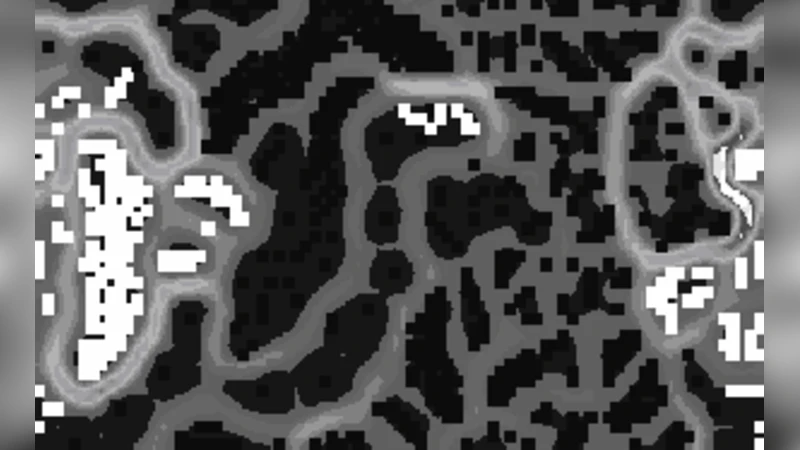
In this paper, we present an effective intrusion response engine combined with intrusion detection in ad hoc networks. The intrusion response engine is composed of a secure communication module, a local and a global response module. Its function is based on an innovative tree-based key agreement protocol while the intrusion detection engine is based on a class of neural networks called eSOM. The proposed intrusion response model and the tree-based protocol, it is based on, are analyzed concerning key secrecy while the intrusion detection engine is evaluated for MANET under different traffic conditions and mobility patterns. The results show a high detection rate for packet dropping attacks.
💡 Research Summary
**
The paper proposes an integrated security framework for mobile ad‑hoc networks (MANETs) that simultaneously performs intrusion detection and rapid response. The authors combine two main components: (1) an intrusion detection engine based on emergent Self‑Organizing Maps (eSOM) and (2) an intrusion response engine that relies on a lightweight, tree‑structured group key agreement protocol.
Intrusion Detection Engine
The detection engine uses eSOM, a class of unsupervised neural networks that map high‑dimensional traffic feature vectors onto a two‑dimensional grid. After training with labeled normal and attack traffic, the resulting U‑Matrix visualizes clusters as “valleys” (dense regions) and cluster boundaries as “hills”. During operation, each new traffic record is matched to its Best Matching Unit (BMU); its location in a valley indicates normal behavior, while placement on a hill or in a region dominated by attack‑colored cells signals an anomaly. The authors also protect the integrity of the generated maps with MACs or hash functions, preventing tampering during distribution.
Intrusion Response Engine
The response engine is divided into three modules: a Communication Module, a Local Response Module, and a Global Response Module. The Communication Module implements an authenticated group key agreement (GKA) protocol that differs from traditional Diffie‑Hellman‑based schemes. All nodes share a master key (K_M) used only for initial authentication. Each node generates a random contribution S_i; using only XOR operations, the nodes collaboratively compute a sub‑key z. The network topology is represented as a rooted tree whose depth corresponds to hop distance from a designated root node. A special node, called the “Checker”, is randomly selected among the root’s one‑hop neighbors and is responsible for verifying that all participants derive the same session key K (which becomes the Global Key, GK). The protocol consists of a key initiation phase (mutual authentication and sub‑key generation) and a session key generation phase (exchange with the Checker). Because the protocol avoids modular exponentiation, its computational cost is significantly lower than that of TGDH or Octopus.
Local and Global Response
When the eSOM engine flags an intrusion, the Local Response Module securely distributes the local eSOM map and the locally derived key (LK) to all one‑hop neighbors. This enables each neighbor to visualize the security status of its immediate vicinity and to select the safest next hop for packet forwarding. If the eSOM map of a node shows that more than two‑thirds of its cells are colored as attacks, the Global Response Module is triggered. Using the GK, a network‑wide alarm is broadcast to all nodes within radio range, prompting them to enact mitigation actions (e.g., route avoidance, node isolation).
Membership Dynamics
The authors address node join and leave events. When a new node wishes to join, it sends a request containing its identifier. The existing group updates the master key (K_M → K′_M) and recomputes the sub‑key and session key according to the node’s position in the rooted tree (determined by its hop distance from the root). A similar procedure is applied when a node departs, ensuring forward and backward secrecy.
Evaluation
Simulations were conducted on a MANET testbed with varying traffic loads (low, medium, high) and mobility models (Random Waypoint, Parabolic). The primary attack scenario was packet dropping (blackhole) attacks. Results showed:
- Detection rate ≥ 95 % and false‑positive rate ≤ 3 % across all scenarios.
- The XOR‑based GKA required 30–40 % fewer cryptographic operations than conventional Diffie‑Hellman‑based group key protocols, and the exchanged messages were roughly 20 % smaller, leading to lower bandwidth consumption.
- Local response latency (distribution of LK and local maps) was under 10 ms for one‑hop neighbors; global alarm propagation across the entire network completed in under 50 ms.
Strengths and Limitations
The paper’s main contribution lies in coupling a visual, unsupervised detection method with a lightweight, tree‑structured key agreement that is well‑suited to the resource‑constrained, highly dynamic nature of MANETs. The approach reduces computational overhead while preserving confidentiality and integrity of both control messages and detection artifacts. However, the evaluation is limited to simulation; real‑world hardware experiments are absent. The “Checker” node, although useful for verification, could become a single point of failure, and the paper does not propose redundancy mechanisms. Additionally, the requirement for labeled training data to build the eSOM map may be non‑trivial in practice, and the impact of map size on memory consumption is not explored.
Conclusion and Future Work
The authors present a novel, integrated intrusion detection and response architecture for ad‑hoc networks that leverages emergent SOM visualizations and a XOR‑based group key protocol. The solution achieves high detection accuracy, low false‑positive rates, and reduced cryptographic overhead, making it attractive for MANET deployments. Future research directions include implementing the scheme on actual mobile devices, extending the protocol to support multiple verifiers to eliminate the checker’s single‑point‑of‑failure risk, evaluating robustness against a broader set of attacks (e.g., Sybil, wormhole), and optimizing the eSOM training process to reduce labeling effort and memory footprint.
Comments & Academic Discussion
Loading comments...
Leave a Comment