The art of community detection
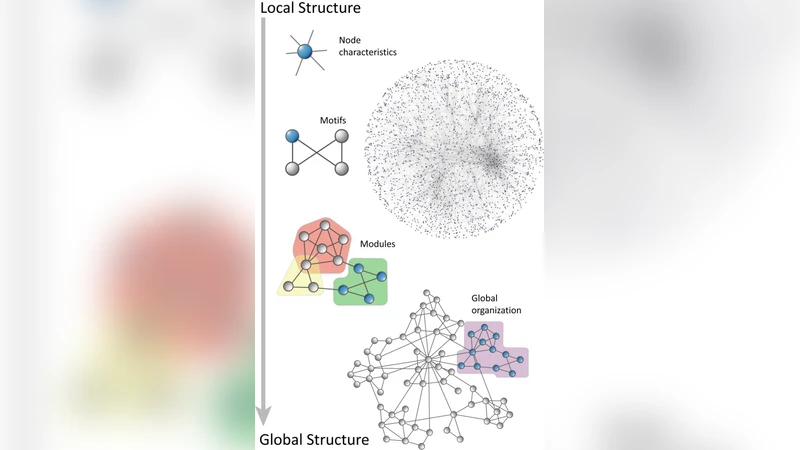
Networks in nature possess a remarkable amount of structure. Via a series of data-driven discoveries, the cutting edge of network science has recently progressed from positing that the random graphs of mathematical graph theory might accurately describe real networks to the current viewpoint that networks in nature are highly complex and structured entities. The identification of high order structures in networks unveils insights into their functional organization. Recently, Clauset, Moore, and Newman, introduced a new algorithm that identifies such heterogeneities in complex networks by utilizing the hierarchy that necessarily organizes the many levels of structure. Here, we anchor their algorithm in a general community detection framework and discuss the future of community detection.
💡 Research Summary
The paper situates the hierarchical modularity‑optimisation algorithm introduced by Clauset, Moore, and Newman (CMN) within the broader landscape of community detection in complex networks. It begins by tracing the evolution of network science from early random‑graph models to the contemporary view that real‑world networks exhibit rich, multi‑scale structure, including pronounced community organization. Recognising that uncovering these high‑order structures is essential for interpreting functional, dynamical, and evolutionary aspects of systems ranging from biological interaction maps to social and infrastructural graphs, the authors frame community detection as a central methodological challenge.
The CMN algorithm is described in detail. Starting with each node as a singleton community, the method iteratively merges the pair of adjacent communities that yields the greatest increase in modularity (ΔQ). By maintaining for each community the total internal edge weight and the sum of incident edge weights, ΔQ can be computed in constant time, while a priority queue enables selection of the maximal ΔQ in O(log n) time. Consequently the overall computational complexity is O(m log n) (m = number of edges, n = number of nodes), and memory usage remains linear, allowing the algorithm to scale to networks with hundreds of thousands of vertices. The sequence of merges naturally produces a binary dendrogram that encodes the hierarchical organization of the network; cutting the dendrogram at the modularity peak yields the most “significant” partition, but alternative cuts provide a multiresolution view.
Empirical evaluation is carried out on classic benchmark graphs (e.g., Zachary’s Karate Club), synthetic networks with planted partitions, and large‑scale real datasets such as the US power‑grid and Internet autonomous‑system topology. Compared with earlier methods like Girvan‑Newman edge betweenness removal and spectral clustering, CMN achieves orders‑of‑magnitude speedups while delivering comparable or higher modularity scores. The dendrograms reveal intuitive community hierarchies that often correspond to known functional divisions, demonstrating the algorithm’s practical interpretability.
Nevertheless, the authors acknowledge intrinsic limitations. Modularity suffers from a “resolution limit” that can obscure small but meaningful communities, and the greedy merge strategy does not guarantee a global optimum; different tie‑breaking rules can lead to distinct dendrograms. Moreover, the original formulation assumes undirected, unweighted graphs, limiting direct applicability to directed, weighted, or multilayer networks.
To address these issues, the paper surveys recent extensions: (1) statistical‑inference approaches that replace modularity with likelihood‑based quality functions, thereby mitigating resolution bias; (2) overlapping‑community models that allow nodes to belong to multiple groups; (3) dynamic or streaming variants that update the dendrogram incrementally as new edges arrive; and (4) hybrid optimisation schemes that combine modularity with information‑theoretic criteria.
The authors propose a standardized pipeline for community detection based on CMN: (i) preprocess the network into an undirected, unweighted representation if necessary; (ii) run the CMN agglomerative process to obtain the full dendrogram; (iii) identify the modularity peak or apply domain‑specific criteria to select an appropriate cut; (iv) validate the resulting partitions against external knowledge (e.g., functional annotations, geographic data). This workflow can be uniformly applied across disciplines, facilitating reproducible and comparable analyses.
Finally, the paper outlines four future research directions: (a) development of online CMN algorithms for real‑time data streams; (b) integration of multilayer and multiscale network representations into a unified community‑detection framework; (c) design of hybrid optimisation that jointly maximises modularity and alternative quality measures; and (d) construction of domain‑specific evaluation frameworks that assess the functional relevance of detected communities. By pursuing these avenues, community detection will evolve from a purely structural tool into a comprehensive lens for deciphering the organization and dynamics of complex systems.
Comments & Academic Discussion
Loading comments...
Leave a Comment