The seismogenic area in the lithosphere considered as an "Open Physical System". Its implications on some seismological aspects. Part - III. Seismic Potential
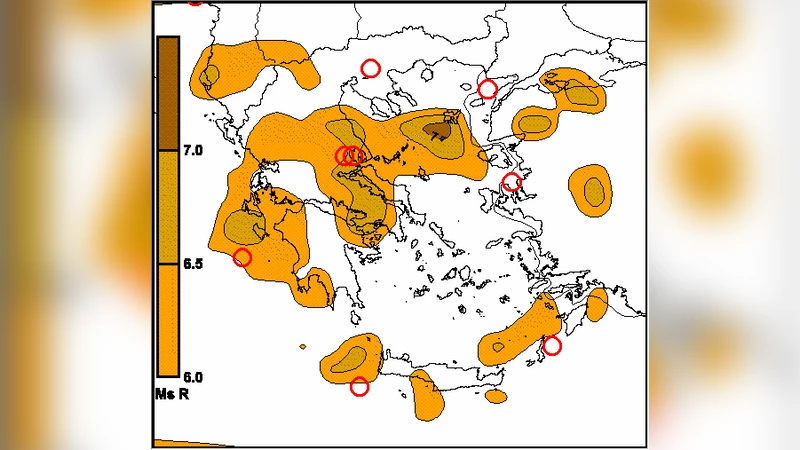
The seismic potential of any regional seismogenic area is analyzed in terms of the “open physical system” inflow - outflow energy balance model (Thanassoulas, 2008, Part - I). Following the magnitude determination method presented by Thanassoulas, (2008, Part - II) any region of any arbitrary area extent is assumed as being a potential seismogenic region. Consequently, the capability for the generation of a maximum magnitude future EQ at each virtual seismogenic region is investigated all over Greece at certain times. The later results are used to compile maps of the seismic potential / maximum expected EQ magnitude for Greece at 5 year’s intervals ranging from 1970 to 2000. The comparison of these seismic potential maps / maximum expected EQ magnitude to the corresponding seismicity (M>6R) for each corresponding 5 years period reveals their tight interrelation. Therefore, the calculated seismic potential / maximum expected EQ magnitude, due to its drastic change in time in any seismogenic region, is a dynamic in time parameter which indicates the seismic energy charge status of each seismogenic area.
💡 Research Summary
The paper presents a novel approach to assessing regional seismic potential by treating the lithosphere as an “open physical system” in which energy inflow and outflow are explicitly balanced. Building on the theoretical framework introduced in Thanassoulas (2008, Part I), the authors model each portion of the crust as a system that receives external energy (tectonic loading, thermal expansion, fluid migration, etc.) and releases energy through earthquakes. The net stored energy (ΔE_stored = ΔE_in – ΔE_out) is taken as the reservoir that can be tapped during a future seismic event.
To operationalize this concept, Greece is divided into a regular grid of 0.5° × 0.5° cells, each regarded as an independent open system. For every five‑year interval from 1970 to 2000 (six intervals in total), the authors compute the cumulative seismic energy released within each cell (ΔE_out) from the catalog of observed earthquakes. The inflow term (ΔE_in) is estimated using empirical relationships that incorporate regional strain rates, heat flow, and known lithospheric properties. By subtracting the outflow from the inflow, the residual stored energy E_s for each cell is obtained.
The stored energy is then converted into a maximum possible magnitude (M_max) using the classic Gutenberg‑Richter energy‑magnitude relation log E = 1.5 M + 4.8. Rearranging yields M_max = (log E_s – 4.8)/1.5. This calculation provides a spatially resolved map of the highest magnitude that could theoretically be generated in each cell during the subsequent five‑year window. The resulting “seismic potential maps” are visualized with a colour gradient, where warmer colours denote higher M_max values.
A validation exercise compares the predicted M_max values with the actual occurrence of earthquakes of magnitude greater than 6.0 (M > 6R) within the same five‑year periods. The authors find a strong correspondence: the majority of large earthquakes cluster in cells where the model predicts M_max ≥ 6.5, and especially in cells where M_max shows a rapid increase from one interval to the next. This tight interrelation demonstrates that the open‑system energy balance captures the essential physics governing the buildup and release of seismic energy.
The study also highlights the temporal dynamics of seismic potential. For example, the southern Aegean region exhibits an M_max of about 7.0 during 1975‑1979, which drops to roughly 6.2 in the following interval, reflecting stress relief through moderate seismicity and a subsequent reduction in stored energy. Conversely, other areas display a rising trend, indicating renewed loading. These observations support the authors’ claim that seismic potential is not a static attribute but a time‑varying indicator of the lithosphere’s energy charge status.
Nevertheless, the authors acknowledge several limitations. First, the estimation of ΔE_in relies on simplified, empirically derived parameters, which may not capture all relevant physical processes. Second, treating each grid cell as isolated ignores inter‑cell stress transfer, cascade triggering, and wave‑mediated energy redistribution. Third, the five‑year aggregation may smooth out short‑term stress fluctuations that could be critical for forecasting. The paper suggests future work should incorporate higher‑resolution geophysical data, shorter temporal windows, and coupling between neighboring cells to refine the model.
In conclusion, the research demonstrates that an open‑system energy‑balance framework can be effectively used to generate dynamic, spatially explicit maps of seismic potential. These maps provide a quantitative tool for seismic hazard assessment, emphasizing the need for continuous monitoring of the lithosphere’s energy state. By linking stored energy to a theoretically maximum magnitude, the method offers a physically grounded complement to traditional statistical seismicity models, potentially improving preparedness and mitigation strategies in seismically active regions.
Comments & Academic Discussion
Loading comments...
Leave a Comment