On Hamilton Decompositions
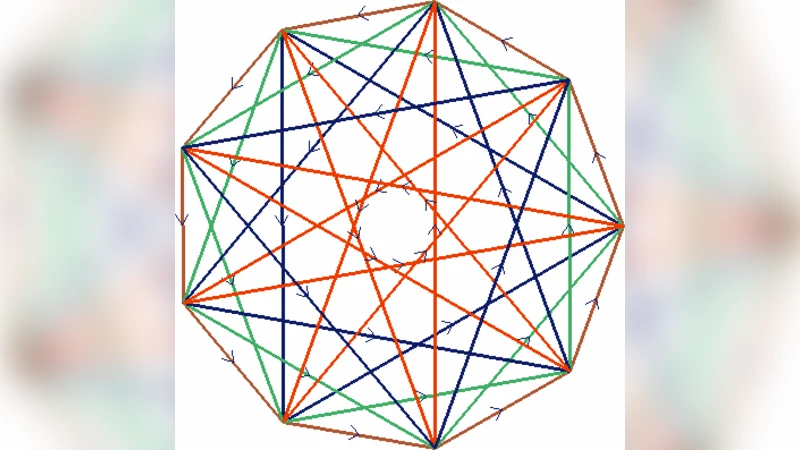
P. J. Kelly conjectured in 1968 that every diregular tournament on (2n+1) points can be decomposed in directed Hamilton circuits [1]. We define so called leading diregular tournament on (2n+1) points and show that it can be decomposed in directed Hamilton circuits when (2n+1) is a prime number. When (2n+1) is not a prime number this method does not work and we will need to devise some another method. We also propose a general method to find Hamilton decomposition of certain tournament for all sizes.
💡 Research Summary
The paper addresses a long‑standing conjecture of P. J. Kelly (1968) that every diregular tournament on an odd number of vertices = 2n + 1 can be decomposed into directed Hamilton cycles. The author introduces a particular class of such tournaments, called “leading diregular tournaments”, whose adjacency matrix follows a simple rule: for each vertex i the outgoing arcs go to i + 1, i + 2, …, i + n (mod 2n + 1) and the incoming arcs come from i − 1, i − 2, …, i − n. This structure can be visualised by placing the vertices equally spaced on a circle and connecting each vertex to the next n vertices in the clockwise direction.
Prime case (2n + 1 is prime).
When 2n + 1 is a prime, the integers 1, 2, …, n are all coprime to 2n + 1. For each k in this set the author defines a “step‑k” sequence
(C_k = (1, 1+k, 1+2k, …, 1+2nk ≡ 1 \pmod{2n+1})).
Because k is coprime to the modulus, the sequence visits every vertex exactly once before returning to 1, thus forming a directed Hamilton cycle. Different values of k generate edge‑disjoint cycles, and the n cycles together contain every arc of the leading tournament exactly once. Hence, for prime orders the leading diregular tournament admits a perfect Hamilton decomposition. The paper illustrates this with the 7‑vertex case (2·3 + 1) and explicitly lists the three Hamilton cycles obtained from steps 1, 2, 3.
Composite case (2n + 1 composite).
If the order is composite, the set {1,…,n} may contain fewer than n numbers coprime to 2n + 1. The author examines the 9‑vertex tournament (2·4 + 1) where the coprime step sizes are {1, 2, 4}. Using these three step‑k cycles leaves three disjoint directed 3‑cycles (triangles) uncovered, showing that the simple step‑k construction fails to give a full Hamilton decomposition. Thus, for composite orders the leading tournament cannot always be partitioned solely into Hamilton cycles by this method.
A geometric rotation construction.
To overcome the limitation, the paper proposes a more general construction that works for a certain isomorphism class of tournaments, regardless of primality. Vertices are placed on a circle; a base Hamilton cycle (e.g., the step‑1 cycle) is drawn, and then the entire edge pattern is rotated by multiples of (2\pi/(2n+1)). Each rotation yields a new Hamilton cycle that shares no edges with previous ones. After n rotations we obtain n edge‑disjoint Hamilton cycles that together cover all arcs of the constructed tournament. This method relies on the tournament being invariant under the described rotational symmetry, which defines a specific class of diregular tournaments.
Distance‑type viewpoint.
The author also classifies arcs by their “distance” around the circle: type‑k arcs connect vertices that are k steps apart. In a leading tournament there are exactly 2n arcs of each type, and each vertex has exactly one incoming and one outgoing arc of each type. When the order is prime, a Hamilton cycle can be formed using arcs of a single type (step‑k). For composite orders, a Hamilton cycle must mix arcs of different types, as demonstrated in the 9‑vertex example.
Main results.
- Theorem 2.1: If 2n + 1 is prime, the leading diregular tournament on that many vertices decomposes into n directed Hamilton cycles.
- Theorem 2.2: There exists a class of diregular tournaments (those possessing the rotational symmetry described) that can be decomposed into n directed Hamilton cycles for any odd order, prime or not.
Significance and open problems.
The paper provides a constructive proof for the prime case, confirming Kelly’s conjecture for this specific family. It also highlights the obstruction in the composite case and offers a geometric method that works for a restricted class of tournaments. The general conjecture—whether every diregular tournament (not just the leading one) admits a Hamilton decomposition for all odd orders—remains open. Further research could explore extensions of the rotation technique, alternative constructions for composite orders, and the role of distance‑type edge classifications in broader classes of directed graphs.
Comments & Academic Discussion
Loading comments...
Leave a Comment