The Role of Artificial Intelligence Technologies in Crisis Response
Crisis response poses many of the most difficult information technology in crisis management. It requires information and communication-intensive efforts, utilized for reducing uncertainty, calculating and comparing costs and benefits, and managing r…
Authors: Khaled M. Khalil, M. Abdel-Aziz, Taymour T. Nazmy
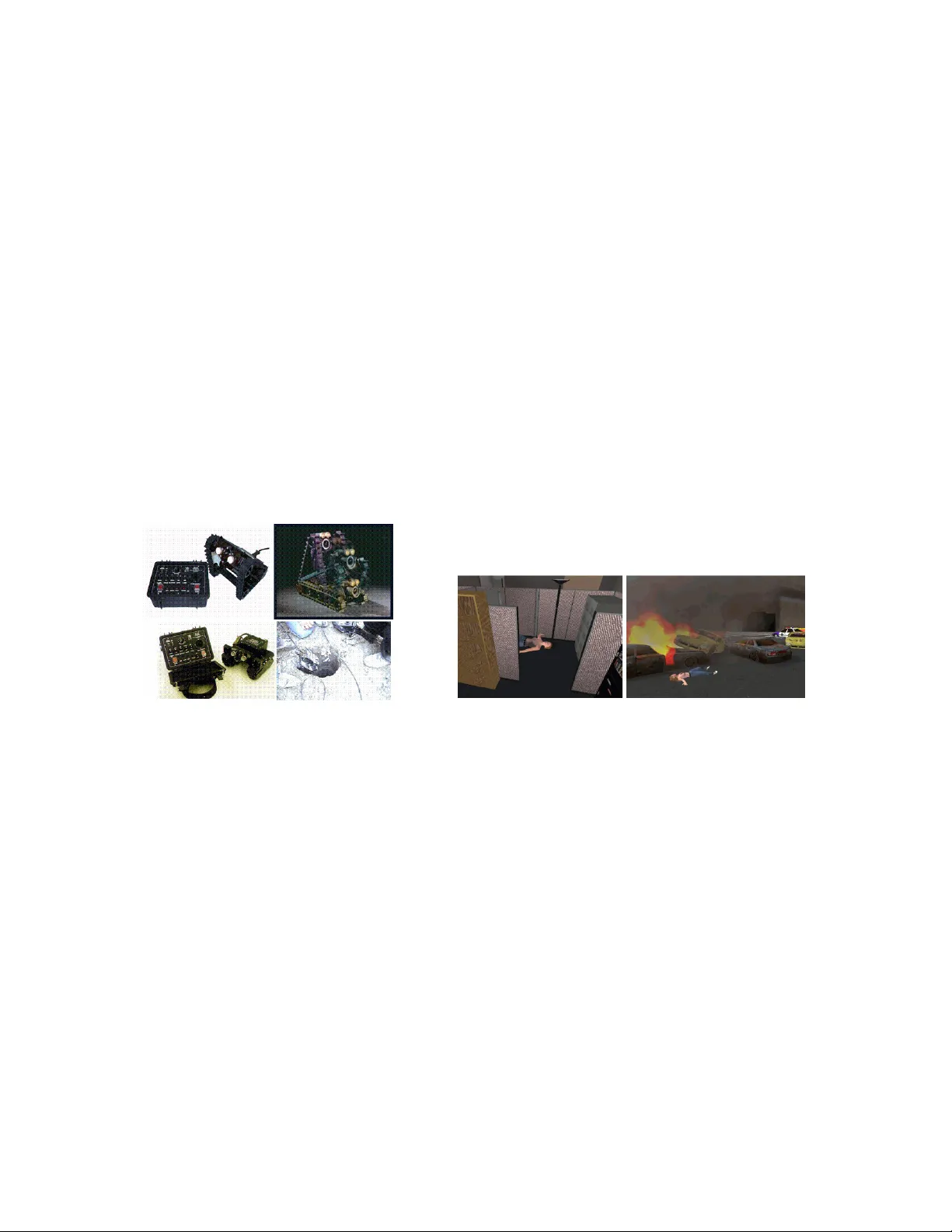
THE ROLE OF AR TIFICIAL INTELLIGENCE TECHNOL OGIES IN CRISIS RESPONSE Khaled M. Khalil, M. Abdel-Aziz, Taymour T. Nazmy & Abdel-Badee h M. Salem Faculty of Computer and Information Science, Ain shams Universit y Cairo, Eg y pt kmkmohamed@ gmail.com, mhaziz @aucegypt.edu, nta y moor@ yahoo.com, absale m@asunet.shams.edu.e g Abstract: Crisis response pos es many of th e most difficult information technology in crisis management. It requires information and communicati on-intensive efforts, uti lized for red ucing uncertainty, c alculating and compari ng costs and benefits, and managing resource s in a fashion beyond those regularly availa ble to handle routine proble ms. In this paper, we expl ore the be nefits of artificial intelligence tec hnologies i n crisis response. This paper discu sses the r ole of artificial intelli gence technologies; na mely, robotics, o ntology a nd semantic web, and multi-agent systems in crisis response. Keywords: crisi s response, crisis management, artificial intelligence techn ology. 1.0 Introduction Crisis e vents, like the 9. 11 a ttack, Hurricane Katri na and the ts unami devastat ion, hav e dramatic i mpact on hu man society, econom y and en vironment. The crisis response term i s defi ned as t he i mmediate protection of pr operty a nd life during the crises events to r educe deaths a nd injuries. Crisis response requires urgent action and the coordinated application of r esources, facilities, and eff orts. It inclu des actions t aken before t he actu al crisis event ( e.g., hurrica ne warning is rec eived), i n resp onse t o the immediate impact of a crisis, and a s sus tained e ffort duri ng the course of the crisis. Depending upon the magnitude and complexit y of the crisis, r esponse may be a large-scale and multi- organizational operation involving many l a y ers of a uthorities, commercial entities, volun teer organization s, media organizations, and the public. These entitie s work t ogether as a virt ual organizati on to sa ve li ves, preserve i nfrastructure and comm unity res ources, and reestablish normalcy wit hin the c ommunity [1]. Artificial intelligence technology tr ies to improve the efficienc y of the m anagement process durin g the c risis response via: robotics s ustaining urban search and rescue operations [12], e nhancing inf ormation sharin g us ing ontologi es [ 5], providing customized query to cr isis actors [3], and providin g multi-age nt s ystems for rea l time support [15] and simulated e nvironments [8] . We will discuss these technologies a nd those roles in cr isis response. First, the diversit y structure of crisis a rea, rescuers safet y and the necessit y of quickl y a nd r eliably e xamining tar g eted regions f orces re scue a g encie s to use m ulti-robot s olutions in the fi eld of urban search an d resc ue. Robots provide variety of fu nctions i n the crisis context, such as a rea ex ploration, mapping a nd expe diting the searc h f o r victims. One of the first use s was “VGTV a nd MicroTracs” r obots, which are used during the W orld Trade Center cri sis in New York [12] to search for victi ms under co llap sed buildings. Suc cessively, ae rial robots (“T- Rex helicopter” f rom Like90) a re used at Hurricane Katrina and b o at r obots (“AEOS-1”) are u sed at Hurricane Wilma. Second, fr om t he point of view of inf o r mation processing, the success of cris is response la rgely depends on gathering information fr om d istributed sources , integrating it and then making decisi ons. It i s clear that such c omplexity makes i t impossible f or an y single human or e ven a team t o fulfill the r o les a dequatel y [ 3]. O ntologies a nd semantic web are adopted to s olv e inte grating problems, f or example ontol ogi es are used in integrati ng heterogeneous inf ormation sources and semantic web ser vices ar e used t o provide customized q ueries to cr isis ac tors. The W orld Wide Web Consortium (W3 C) [4] and E-response project represent the noticeable effort in the wa y of buil ding crisis response ontologies and g etting the benefits o f semantic w eb services. W3C focus ed on i dentifying and building standard ontolog y for c risis response, while E-respon se project focused on building overall crisis respon se ontology and se mantic web ser vices based on the created ontologies. Third, crisis res ponse problems are not s o lvable by single responder a nd a heterogeneous tea m is needed. Heterogeneous team needs plannin g and c oordination capa bilities to com plete his mission succ essfull y. A multi-agent system pr ovides the decisive soluti on t o a ll problems related t o i nteraction and c oordination of response team s. Related multi-agent systems for cris is resp onse i nclude rea l-time support and simulati on s ystems such a s D rill Sim [ 8], DEFACTO [15] and WIPER [14] . In the following section s we discuss in details artificial intellige nce te chnologies: robots, ontologies and se mantic we b, and multi-agent systems contributions i n crisis resp onse. 2.0 Robotics Robotics i s a growing researc h area in crisis resp onse. Multi-robot s olutions had been a dopted in a wide ra nge of crisis response operations. Specificall y, robots are used in Urban Search and Re scue (USAR) operations. Urban Searc h and Rescue involves l ocating, rescuing, an d medically stabilizi ng victims tra pped in confined s paces. USAR workers have 48 hours t o find trapped survivors i n a collapsed structure; otherwise the likelihood o f finding victi ms still alive is nearl y z ero. Greer [ 7] had s ummarized c hallenges t hat USAR team have to overcome into f our area s, (1) effi cient response, (2) rescuers safet y, (3) envir onment disturbance and climatic conditi ons, a nd (4) i nappropriate e quipment and resources. Buildin gs debris prevents rescue workers fr om searching due to the u nacceptable personal risk from further collapse, besides collapse confi ned create spaces which are frequentl y too small for people t o ente r limitin g t he searc h to no more tha n a fe w feet f rom the e xterior. Rescuer s ma y be cru shed by struct ural collapse or ma y be suffered respirator y injurie s due to haza rdous materials, fumes and dust. The site nee ds to be sh ored u p an d made safe for rescuers to enter which takes up three t o four critical earl y h ours of the crisis whic h are crucial f or finding victims alive. Robots c an bypass the da nger and e xpedite t he search for victims i mmediately after a collapse. Their a bility to navigate through ti ghtly confined s paces which people cannot acc ess makes them e xtremely useful f or quickl y gettin g t o a location within the cr isis site. R obots can be d eplo yed to a large cri sis to searc h m ultiple locations simultaneousl y to expedite the search p r o cess. They can map the area an d i dentify the locati on o f victims using Radio F requenc y Identification ( RFID) tags. During the s earc h the y can deposit radio tr ansmitters to be a ble t o com municate wit h victims, use small probes t o c heck victim’s heart rate and body te mperature and suppl y heat source and small amounts of food and me dication to sustain the survi vors [12]. One of the firs t uses of robots in search a nd r escue operation was during the World Trade Center c risis in New York. Figure 1 s hows VGT V a nd Micr oTracs by Inu ktun r obot used in rescue operations during t he World Trade Center cr isis i n New Y ork [12] . Micr o-VGTV or Variable Geometr y Tracked Vehicle can alter its shape during operation. The tracks, in their lowered c onfiguration, t ake the s hape of c onventional crawler trac ks. When the geometry i s varied t o the point where the vehicle is in i ts r aised configurati on, the trac ks ta ke the sha pe of a tria ngle. T his unique f eature allows the vehic le to negotiate obstacles, an d operate in c onfined spaces an d over rough terrai n. Figure 1: The Micro VGTV S ystem Figure 2: Representative s napshot of USARSim Micr oT racs by Inuktun with its control uni ts Urban rescue a nd searc h simul ation ( USARSim) pla ys a nother vital role in c risis response. USARSim is a benc hmark for evaluatin g robot platforms for their usabil ity in cr isis response. USARSim framew ork pr ovides a devel opment, testing and c ompetition en vironment tha t is based on a realistic depiction of conditions a fter a r eal crisis, such as a n earthquake or a major fire. R obots a re simul ated on t he se nsor and actuator level based on social behavior, ma king a transparent migration of code between real robots and t heir simulate d counterparts possible, Figure 2 for example, a real robot ma y be exploring environment i n cooperati on with a virtual robot. The r obots share map information a nd e v en s ee each other in their own respecti ve representations of the re al or virtual worlds. 3.0 Ontology and Semantic Web Information management a nd pr ocessing in cr isis resp onse aimed to produc e digital representations for a c ommon response operational picture. This c ommon picture ca nnot be effecti ve wit hout o vercoming the f ollowing challenges [9]: (1) Diversit y of inf ormation sourc es: inf o r mation rele vant to deci sion maki ng ma y be disperse d fr om sensors where data is generate d, to heter ogeneous database s belonging t o autonomous organizations. In addition, critical i nformation may s pan various modalities, e .g., voice c onversations a mong crisis r esponders, camer as da ta, sens or data strea ms, GIS(Geographi cal Information S ystems)-oriented data and relati onal information in d atabases, (2) Diversit y of information users: different peopl e/ organizations have different needs a nd urgency le vels regard ing t he same information. Acc ording to theses challenges differe nt sorts of data a re used, but a c ommon core set ma y be s hared throughout. T his common core set of information can be re presented by ontol ogy . According t o W3C [ 4] definition of crisis resp onse ontology, cr isis re sponse ontolog y must descri be t he f ollowing critical steps: • Once crisis is widel y anticipated, sharing of data describing respon se and resource character istics are needed. • As the crisis unfolds gathering of data on its scope and emerging ef fects. • As the response begins, gathering of data on i ts outages and missing links and matc hing with relief capacity. • As the r esponse b y f irst re sponders is overwhelmed, sharing relief requests t o prioritize re lieving the fi rst responders who are most overloaded or tired. • As the relief unfolds gatheri ng an d integratin g data from a ll responders t o build a common baseline map of the situation and facilitate probes and first attempts a t proactive data gathering. • Characterizing problem states as chaotic (n o baseline and no relia ble ma p), comple x (cha nging to o fast to i dentify causes, requires pr obes) or manageable. • Rapidly d eploying compati ble i nformation and commun ication systems to local auth orities and institutions capable of dealing with the manageable situati ons. • Calling for e xpert re view of acti on proposals to l imit/contain chaotic situations, and mass peer review of pr obes that better define c omplex ones, with inte nt to limit the unant icipated side effects of management decisions . • Comparing predicted t o measured effec ts of interventions w ithin 48-72 hours. • Identifying situations which are not impr oving and callin g for more options or m o re res ources. • Helping experienc ed response t eams m ove on to the more comple x situation b y facilitating r apid handoff an d just- in-time training of t hose less experienced. • Guiding recover y and re construction eff orts b y i dentifying those outa ges or problems t hat most inhibit t he resilience networks a nd outside relief efforts. • Guiding resilience efforts by ident ifying which pre vention and anticipation options (e.g. evacuation) could have prevented the most morbidity or loss of life-sustaining infr astructure. • Passing off all dat a gathered i n the disaster to the appr opriate authority afte r the c risis pass es, updating databases of vulnerable persons a nd places. Different t ypes of ontologies ha ve been developed suc h as: 1. Ontologies f or overall crisis r esponse: E-response project has developed different types of response ontologies, such as ontolog y f or overall crisis resp onse process, pat hology ontolog y , an d healthcare ontolog y . 2. Robot ontolog y for urban search and resc ue: Sc hlenoff [13] has deve loped robot ont ology t o capture relevant information about robots and their ca pabilities to as sist in the developme nt an d te sting of effecti ve technologies for sen sing, navi gation, planning, i ntegration, and huma n operator interaction within search a nd rescue robot s y stems. C apture d inf ormation rec ognized in three cate gories: structural charact eristics ( such a s size, weight, power source, locomotion mechanism, se nsors and processors), fu nctional capabi lities (such a s weather resistance, degree of autonomy, capabilities of locomotion, sens ors and operations, and communications), and operational conside rations (such as h uman operator trainin g and education). 3. Decision ma king ont ologies: Bloodswort h [ 3] has described COSM OA an ontology-centric multi-agent s ystem that is a imed at s upporting h ospitals durin g the r esponse to a large-scale incident event b y producing a web- based emergenc y plan. C OSMOA has been designed to support the decision-making process durin g the medical res ponse. It is based on ontolog y la y er which is simpl y a c ollection of one or more domain s pecific and generic ontologies. Ontologies are used within C OSMOA to c ollect, inte grate, reason on heter ogeneous data ( potential number of cas ualties and l ikel y injuries) a nd t hen generate response pla ns. Response plans are posted on the resp onse website, which are r eviewed b y crisi s manager, responders a nd decision m akers. Figure 3: Ontologies de ployed on legac y systems and semant ic web services Based on the depl oyed ont ology, sema ntic web services ar e protot y ped that provide da ta to cri sis act ors, Figure 3. Emergenc y Mana gement Applicati on (E MA) i s a n e xample of developed semant ic web services [16]. E MA system has been desi gned t o ena ble data and functi onalities provided by ex isting legac y s ystems to be e xposed as Web Ser vices (WS). This s ystem in volves number of ontologies re quired t o gather informati on from differe nt sources. Based on th ose embedded on tologie s, emergenc y o fficer can retrie ve, process, d ispla y, a nd interact w ith onl y emer gency rele vant information m ore quickl y and acc urately. The Semantic web vision of a crisis s y ste m t hat could a nswer a complicated re quest at the time of a crisis i s far from realized. For example, if an emergenc y officer neede d eno ugh tent s an d f ood f o r 3400 pe ople, deli verable i n one da y, first b y air t o the local cit y , t hen b y r oad to the crisi s area accompanied by fifteen distribution experts, the parts of this request w ould need at present t o be broken i nto separate items. The required num ber of tents a nd amount o f f ood would have t o be c omputed, the locati on o f the ite ms disco vered, and the l ogistics put in pl ace. This w ould be done b y building an ont ology allowing machine inference in this d omain [6]. 4.0 Multi-Agent Systems A multi-agent s ystem (M AS) is a s y ste m c omposed of m ultiple i nteracting intelligent software agents. M ulti-agent systems can be used to solve pr oblems w hich a re diffi cult or impossible for an individ ual a gent t o solve s uch as cr isis response, and modelin g socia l structures. Currently, m ulti-agent arc hitecture is the e ssence o f resp onse systems. The original i dea c omes out fr om a g ent characteristics i n MAS , such as autonom y, l ocal view of environ ment, and capabilit y of learning, plannin g, co o r dination a nd decentralize d decisi on making. If we imagine tha t a n a gent ca n represent a crisi s responder, so we ca n build a cri sis resp onse s ystem b ased on a gents’ interact ion a nd coordi nation. Agents ca n help crisis responders doing their plan ning, and c oo rdi nation tas ks or eve n replacin g human i n i nformation gathering an d specific decision ma king tasks. Another important resear ch field in crisis r esponse is the a gent-based modeling and simulati on, which are curren tly used for responders training a nd systems testing. DrillSim [ 8], DEFACTO [15] and WIPER [14] are examples of multi-agent systems f or cr isis response. We will di scuss ea ch system in brief, and ta ble 1 includes c omparison of the three s ystems: (1) DrillSim is an a ugmented realit y multi-a gent si mulation envir onment f or testin g IT s o lutions. The purp ose of this environment is t o play out a cr isis response activit y where agents might be either c omputer agents o r re al people pla y in g diverse r oles. An acti vity in DrillSim occurs in a h y brid world that is comp osed of (a) t he simulate d worl d generate d b y a mu lti- agent simul ator an d (b) a re al world captured by a smart spa ce. I n order to capt ure real actors i n the virtual space, Dri llSim utilizes a sensing infrastruct ure that monitors and e xtracts information from real ac tors that is needed b y simulator (such as agent l ocation, agent sta te, etc.); in other words, DrillSim infuses acti ons and state of human a ctors in the virtual spa ce. DrillSim m odeled agent be havior (Figure 4) a s a discrete pr ocess where a gents alternate between sleep and awake states. Agents wake u p and take some action every t ti me u nits. Fo r this purp ose, an agent acquires awareness of t he world ar ound it (i.e. e vent cod ing), tran sforms the acquired data int o informati on, and makes de cisions based on thi s informat ion. Then, based on the dec isions, i t (re)generates a set of action plans. These plans dictate the actions the agent atte mpts before going to s leep again. F or example, hear ing a fir e alarm res ults in the decision of exiting a floor, which results in a navigation plan t o atte mpt t o go fr om the current location to a n exit l ocation an d force the agent tr y ing t o walk one step f ollowing the navigati on plan. Figure 4: DrillSi m Agent Beha v ior Pr ocess [8] (2) DEFACTO (De monstrating Eff ective Flexible Age nt Coordi nation of Teams thr ough Omnipresence) incorp orates state of the art artificial i ntelligence, 3D visualization a nd h uman-interaction reasoning i nto a uniq ue high f idelity system for trai ning re sponders. B y pr oviding the responder s int eraction w ith t he coordin ating a gent tea m in a c omplex environment, the responder can gain e xperience a nd draw v aluable less ons that will be applicable in the real world. The DEFACTO s y ste m ac hieves this via (Figure 5): (i) omnipresent viewer – intuit ive in terface, (ii) and flexible intera ction between the responder and t he team. First, the 3D visualiz ation interf ace enable s human virtual omniprese nce in the environment, improving human situational a wareness a nd a bility t o assist agents. Second, g eneraliz ing past work on adjustable autonom y , the DEFACTO agent team chooses among a variety of “tea m-level” interaction strategies, eve n excluding humans fr om the loop in extreme c ircumstances. DEFACTO i s c omprised o f v arious tra nsfer- o f-c o ntr ol strategies. Each trans fer-of-control strategy is a preplanned se quence of ac tions t o transfer control over a de cision among multi ple entities, f or example, an A T H 1 H 2 strateg y i mplies that a team of agent s (A T ) attempts a decision a nd if i t fails in the de cision the n the contr ol over the decision is pas sed to a human H 1 , and then i f H 1 cannot r each a decision, then the c ont r ol is passed to H 2 . Figu re 5: DEFACTO s y stem a pplied [15] (3) Wireless Phone-based E mergency Response (WIPER) system i s desi gned to provide emergency planners a nd responders with an i ntegrated s y ste m that will help t o de tect possible i ncident e vents, as well as to suggest and eva luate possible cour ses of res ponse a ction. The system is des igned as a distributed m ulti-agent s ys tem using web ser vices and the service orie nted architecture. WIPER is designed to evalua te potential plans o f acti on using a series of GIS-enabled agent-based simulations that are g rounde d o n real-t ime da ta from cell phone network prov iders. The sy stem will interface with the e xisting cellular telephone network to allow cel l phone activity to b e monitored in a ggregate, essentiall y creating a lar ge scale , ad-hoc sensor network. Th e stream of i ncoming da ta will be m onitored b y an a nomaly detection alg orithm; fla gging pot ential crisis events f or f urther autom ated in vestigation. WIPER Age nt-based simulati ons will attempt to predict the c ourse of e vents a nd suggest potential mitigation plans, while displa y ing output at every level t o human pla nners s o that t hey can monit o r the c urrent sit uation, o versee the software process a nd make decisions. WIPER ar chitecture is c omposed of three la y ers: (1) Da ta S ource and Measurement, (2) Det ection, Sim ulation and Prediction, a nd (3) Decision Support. The Data Source and Measurement la yer handles the acquisiti on of real ti me cel l phone data, as well as the fixed transf ormations on the data, such as the c alculation of triangulation informati on for providing more accurate location informati on on le gacy handsets. The Detection, Simulation and Prediction la y er analyzes incoming data f or a nomalies, atte mpts to simula te the an omaly to predict possible outcomes and suggests actions to miti gate t he e vent. The Simulation and P rediction System will ini tially b e used to predict sim ple movement and traffi c patterns. Finall y , the Decision Support l ayer presents t he inf ormation fr om the other la yers t o end users i n terms of su mmaries of traff ic inf o rmati on for commuters, rea l time maps and simulati ons on the a nomaly to first responders a nd pote ntial plans for crisis pla nners. Ta ble 1, compares among the three s y st ems based on t heir objecti ves, architecture , application domain and f eatures. Table 1: Features of the three s y ste ms DrillSim, DEFACTO, and WIPER Criteria Objectives Architecture Application Domain Features DrillSim -Test-bed for I T Solutions -Multi-Agent simulati on -(Fire) Floor Evacuation Simulation -Micro level - ever y agent simulates and interac ts with a real person. -Agent Learning usi ng recurrent artificial ne ural networks. DEFACTO -Address limitations of: (i) human situati onal awareness and (i i) the agent team’s rigid interaction strate gies. -Software pr oxy architecture (Machinetta) a nd 3D visualization system -Fire RoboCup resc ue -Omnipresent Viewer. -Proxy Framework. -Flexible Interaction. -Adjustable Auton omy . WIPER -Evaluate potentia l plans of action u sing a series of GIS enable d Agent-Based simulations -Web Service a nd Service Orien ted Architecture + Multi-Agent S y stem Design -Building large scale ad- hoc sensor net work based on the existing cellular telephone net work. -The Simulation an d Prediction S ystem will initiall y be used t o predict simple movement an d traffic patterns. -Data stream will be monitored b y an an omaly detection algorithm flagging potential crisi s events. -Agent-Based simulati ons will attempt to predict t he course of events and suggest potential mitigation plans. 5.0 Conclusion Artificial i ntelligence tec hniques offer potentiall y powerf ul tools f or t he de velopment of crisis re sponse an d management s ystems. The tec hnologies of robotic s, ontology and semantic web, and multi-a gent s ystems can be useful to s olve t he problems of crisis response. This p aper discusses the role of artificial intelli genc e technologie s in crisis response. Roboti cs c an be u seful i n urban s earch a nd rescue t o bypass challe nges faced b y res cue workers a nd to expedite t he search op erations. Ont ologies conce pts and semantic web offers a s man y ad vantages in s olving s y stems integration and interoperability problems. Ontologies are al so used to c ollect, i ntegrate and re ason on heterogene ous information s ources. Multi-agent s y ste ms features and m ethodologies is the core of c risis r esponse s ystems. Crisis response s ystems take advanta ge of c oordination and p lanning ca pabilities of multi-age nt s ystems to handle resp onse teams’ coor dination and interacti on problems. 6.0 References [1] Ashish, Ronald Eguchi, Raj esh Hegde, et. al. (2007), “Situational Awareness Tec hnologies f or Disaster Response”, In Terrorism Informatics: Knowledge Management and Data M ining f or Homela nd Securit y, E d: Hsinchun Chen et. a l. [2] Balakirsk y , S., Car pin, S., Klei ner, A., Lewis, M., Visser, A., Wang, J ., Zipar o, and V.A. ( 2007), “ Towards heterogene ous robot teams for disaster mitigati on: Results a nd performance metrics from robocup resc ue”. Journal of Field Robotic s 2007, vol. 24, n o. 11-12, pp. 943-9 67. [3] Bloodswort h and S. Greenwood. ( 2005), “C OSMOA a n Ontology-centric multi-agent s ystems f or Coordinatin g Medical Response s to Large-Scale Disasters”, S ema ntic Web Factbook – 2005 Editi on, Lytras M. (eds), 1st edition, AIS SIGSEMIS and Ope n Research Societ y Public ations, ISSN: 1556-2 301, May 200 6. [4] “Disaster Ma nagement”, http:/ /esw.w3.org/topic/Disa sterManagement , a ccessed Ma y -2008. [5] “E-Response Pr oject”, http://www.e-r esponse.org/ [6] Halliday. (2 007), “ Disaster Ma nagement, Ontol ogy and the Semantic Web”, UCLA Department of Information Studies. [7] Greer, Phillip M. c. Kerrow, J o Abrantes. ( 2002), “Robots in Ur ban Search a nd Rescue Operations”, Pr oceedings ACRA'2002, Aukland, November, pp 25-30. McKerr ow, P.J. [8] Massaguer, Vid hya Balasubram anian, Sharad Me hrotra, and Nalini Venkatasubramani an. ( 2006), “MultiA gent Simulation of Disaster Response” , AAMAS’06 Ma y 8 –12 2006, Japan. [9] Sharad Mehrotra, C. Butts, Dm itri V. Kalashnikov, Nalini V en k atas ubramanian, Ramesh Rao, et a l. ( 2004), “Project Resc ue: Challenges i n Responding to the U nexpected” In SPIE , Vol. 5304, pp. 179-1 92, Jan 2004. [10] Ramesh R. Ra o, Jon E isenberg, and Ted Sch mitt. (2 007), “Improving disaster management: The r ole of it i n mitigation, preparedne ss, res ponse and recover y ”, N ational Research Council, National Academy of Scie nces Washin g ton D.C., ISBN: 0-309-6674 4-5. [11] RoboC up project, http:// www.robocup.org/ [12] Shah, B. and Choset H. (2003), “Surve y on Urban Search and Rescue Robotics”, CMU, Pittsburgh, PA. 15213. Lee, C.H. and Kwak, Y.K. [13] Schle noff, Elena Messina. (2005), “A Robot Ontology for Urban Search and Rescue“, Proceedings of the 2005 CIKM confe rence: W orkshop on Resea rch in Knowledge R epresentation f or Autonomous Systems, October 31 – November 5, 2005, Bremen, Ger many. [14] Schoe nharl, Greg Madey, G´abor Sz ab´o, et, al. (20 06), “W IPER: A Multi-Agent System for Emer genc y Response”, Proceedings of the 3rd International ISCRA M Conference (B. Van de Walle and M. Turoff, eds.), Newark, NJ (USA). [15] Schurr , J. Marecki, N. Kasinadhuni, M. Tam be and J.P . Lewis, P aul Scerri. (2005). “The DEFAC TO S ystem for Human Omniprese nce to Coo rdinate Agent T eams: The F uture of Disaster Response” , AAMA S’05, Utrecht, Netherlands. [16] Vlad Tanasescu, Alessi o Gugli otta, John Domi ngue, Rob Da vies, Leticia Gutiérrez- Villarías, Mary Rowlat t, Marc Richardson, Sandra Stincic, “A Semantic Web Ser vices GIS Based Emer gency M anageme nt Application”, International Se mantic Web Conference 2006: Athens, GA, USA, pp. 959-966.
Original Paper
Loading high-quality paper...
Comments & Academic Discussion
Loading comments...
Leave a Comment