ICT, Community Memory and Technological Appropriation
The core mission of universities and higher education institutions is to make public the results of their work and to preserve the collective memory of the institution. This includes the effective use of information and communication technologies (IC…
Authors: Rodrigo Torrens, Luis A. Nunez, Raisa Urribarri
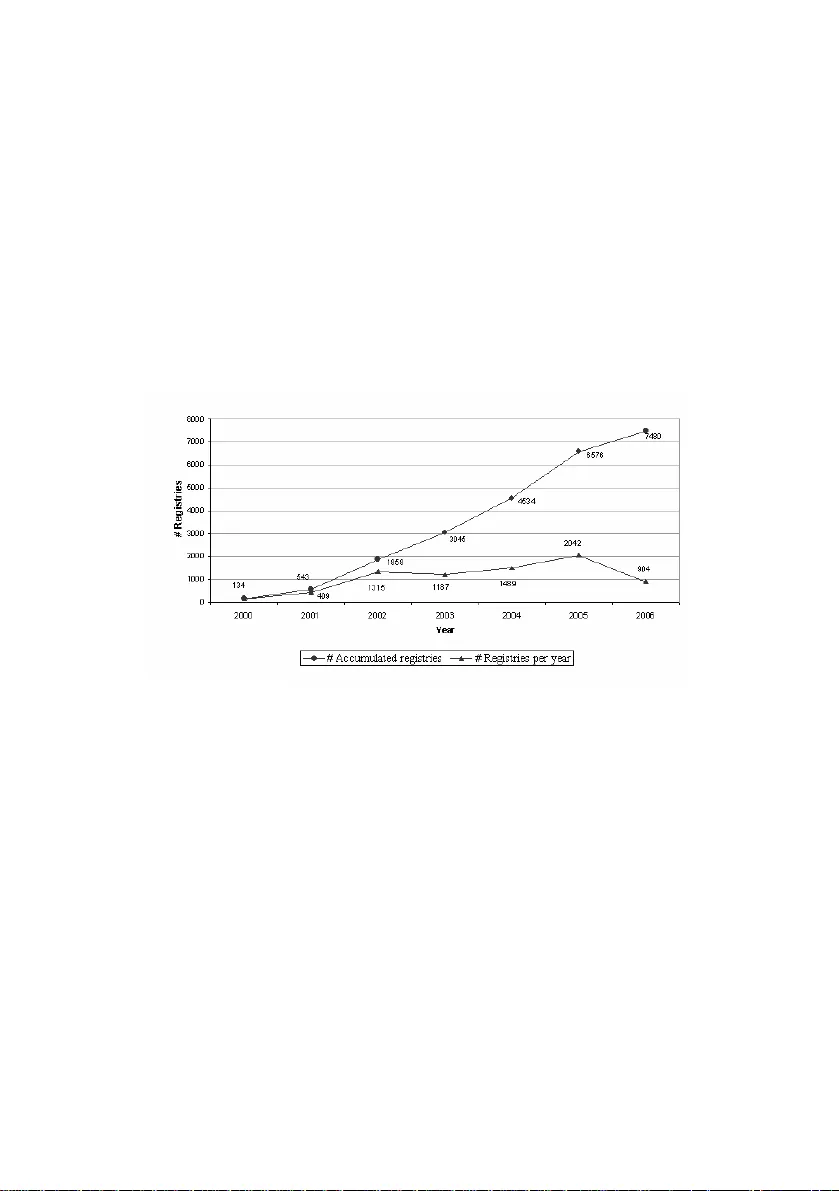
ICT, C OMMUNITY M EMORY AND T ECHNOLOGICAL A PPROPRIATION R ODRIGO T ORRÉNS C ORPORACIÓN P ARQUE T ECNOLÓGICO DE M ÉRIDA , V ENEZUELA L UIS A. N ÚÑEZ U NIVERSIDAD DE L OS A NDES , M ÉRIDA , V ENEZUELA R AISA U RRIBARRI U NIVERSIDAD DE L OS A NDES , T RUJILLO ,V ENEZUELA The core m i ssion of universi ti e s and h i gher e duca t ion instit u t ions is to m a ke public t h e results of their work and to preserve the c oll e cti v e memory of the institution. Th is includ es the eff ective use of information and communication technologies (ICT) to systematically compile academic and research ach ievements as well as disseminate effecti vely this accumulated knowledge to societ y at large. Current efforts in Latin America and Venezuela in particul ar, are limited but provide some valuable insights to pave the road to this important goal. The institutional repository of Universidad de Los Andes (ULA) in Venezuela (www.saber.ula.ve) is such an example of ICT usag e to store, manage and disseminate digital material produced by our University. In this paper we elaborate on the overall process of prom oting a cu lture of content creation, publishing and preservation within ULA. Introduction and General Considerations Due to the development and disseminat ion of Info rmation a nd Communication Technology (ICT), th ere are greater opportunities to publish and access resear ch results and intellectual production at university institutions. The academic use of these technologies, a nd in particular Institutional Repositories (I IRR), is essential to reach goals a nd milestones related to the p reservation and publication of scientific and Constructing and Sharing Memory: Community Informatics, Identity and Empowerment 293 humanitari an heritage p roduced in ed ucation centers , which als o contributes to the preservatio n of their institutional memory. Without a doubt, university comm unities made up of teachers, researchers and students are a perm an ent source of knowledge pr oduction. This is a system in which, as Peset et al (2005 ) point out, although the actors produce the informati on, they then ha ve to pay in order to access it, acquiring publications through personal or institutional subscriptio ns. To correct this si tuation, tra ditional dissem ination a nd publi cation models must change. In the sam e way, th e quality, accessibility and preservation in time of intellectual heritage must be guaranteed in order to reach th e goals set by the Budapest Open Access Initiative (BOAI) 72 and the Berlin Declaration on free access to huma nistic, artistic and scientific knowledge 73 . One of the main ideas behind these initiativ es is that free and open access to knowledge gene ra tes in turn more knowledge an d benefits f or humanity ; any kind of c ontrol or restrictions on this knowledge would be a n obstacle for the advancem ent of the sciences (Guedon, 2002). ICT and digital preservation Current research results are mostly published in digital format. Electronic publi shing has helped to change the way i n which the actors involved in the editing process relate and work (universities, researchers, publishi ng houses and l ibraries ( Steenbakkers, 2003). Acc ording th e digital encyclopedia Wikipedia 74, digital prese rvation can be considered as the group of processes and activities that ensure th e continuous long-term access to existing information and scie ntific registries and to cultura l heritage in electronic formats It could be said t hat thanks to di gital techn ologies the preservat ion of knowledge is an easier process, but it is n ot so. Although we can still read on paper materials written hundreds of years ago, digital information created only a decade ago is i n serious danger of being los t. This is why some countri es have decide d to save a nd preserve valuable in formation. One of t h ese projects is the Digital Longevity Project, undertaken by the Natio n al Arc h i v e o f t h e Netherlands 75 . 72 Budapest Open Access Initiati ve: http://www.soros.org/openaccess 73 Original text for the Berlin Decl aration http ://www.zi m.mpg.de/openaccess- berlin/berlindeclaration.html 74 http://en.wikipedia.org/wiki/Dig ital_preservation 75 Digital Longevity Projec t: ICT, Community Memory and Technological Appropriation 294 Institutional Repositories as tools for the preservation of institutional memory Institutional Reposito ries are digital collections that cap ture, preserve and disseminate the intellectu al production of university communitie s (Crow, 2002). A university institution a l repository (IR) is “a group of services that a university offers to the members of its community to create and disseminate digital material created by the institution and th e members of its community. At the same time, it is an institu tional commitment fo r the safeguard of these digital materials, including their long-term preservation, o rganization, access and dist ribution” (Lyn ch, 2003). The IR is a digital archive of the intellectual produ ction generated by professors, researchers, employees an d students of an institution which is accessible to the end-users, bot h inside an d outside the institution, with little or no obstacles to access it. A ccording to Crow (2002), one of the main characteristics of an IR is that it is define d and suppo rted by the institution. Also, it h as academic and research purposes. From the informat ion point of view, t he IR is cumulati ve, permanent, open and interoperating. In other words, an IR is a place of easy and free access that hosts “trea sures” (Drake, 20 04) previous ly hidden, wh ere both expert s and amateurs can go to searchi ng for answers and benefi t from the collective knowledge it holds. Collective memory is a term coined by the French philosopher a nd sociologist M aurice Halbw achs (Rheim s, March 1877–B uchenwald, March 1945 ) 76 and, contra ry to indivi dual mem ory, it is shar ed, transfer red and built by a group, institutio n, community or society as a whole. The preservation of collective institutio nal memory depends on several elements: the conscience that members of the in stitution have of the importance of this task, i n the first place, but also of the existing abilities to preserve data and the information produced in the institu tion, as well as to analyze it and process it. IIRR play an im portant rol e in the dynami cs of preserving and disseminating the institutional or collective memory. Also, a group of them may be considered join tly as part of the collective memory of a whole country or culture. As an ex ample, we can m ention the “ Digital Academics Repositories” (DARE) 77 project in the Neth erlands, in which http://www.digitaleduurzaamheid.nl/inde x.cfm?paginak euze=286&categorie=6 76 Collective Memory and Time. Mauric e Halbwachs. http://www.uned.es/ca- bergara/ppropias/vhuici/mc.htm 77 Proyecto DARE: http://www.surf .nl/en/themas/in dex2.php?oid=7 Constructing and Sharing Memory: Community Informatics, Identity and Empowerment 295 the IIRR are the base of the co mm on infrastructure of electronic publication that pr eserves and spreads the intellectual pro duction of all the universities in the country. DAREnet 78, on the other hand, offers a common access to the research results that are produced in different institutions. This contri bution aim s to system ati ze and share the ex perience of over a decade in the developm ent and oper ation of the Institutional Repository (IR) of the University of Los Andes (ULA, Venezuela). We present a panorami c vision of the proce sses that we have foll owed for the prom otion of the cult ure to capt ure, pres erve and disse minate conte nts throug h an IR. We will show some quantitative results related to the operation of the repository, and we will present some final general ideas on the hard ships and challenges that came with the de velopm ent of the IR at the UL A. The SABER-ULA IR: a methodological approach The ULA has arou nd 40 thousa nd students a nd five th ousand professors a nd researchers. It is made up of eleven school s in which undergraduat e and graduate courses are taught, related to differe nt knowledge areas (engi neering, tech nology, health s ciences, social sciences, and so on). It has around 200 research gr oups and offers approxim ately 160 postgra duate program s. It has three branche s in three states in western Venezuela (Táchira, Mérida and Truj illo.) The main campus is in Mérida (capital of the state with the same name), a s mall city in the Venezuelan And es with an approximate population of half a million people and is characterized by having inha bitants that uses ICT in hi gher proportion t han the rest o f the country , as pointed out by the Hum an Development Report by the UNDP for the year 2002 (U NDP, 2002). As mentione d by Dávi la et al ( 2006-1), the ULA has ha d a leadin g role in buildi ng a welcom ing environm ent for techn ological i nnovation. I n this sense, the ULA, along with the Méri da Technological Park Corporation 79 (CPTM), has began to build , since the year 2000, a univ ersity IR aiming to save and spread out th e production and un iversity intellectual h eritage. The project received th e name of “SABER-ULA, the Intellectual Heritage of the ULA on the In ternet.” 80 Taking the ideas from the interna tional m ovement for Open Access to knowledge proposed at the BOAI, the Berlin Declaration, as well as our 78 DARENet: http: //www.darenet.nl/ 79 CPTM: http:// www.cptm.ula.ve 80 Web portal of IR SABER-UL A: http://www.saber.ula.ve ICT, Community Memory and Technological Appropriation 296 own experien ces, as our foundations; w e believe that the pr ocess of appropriati on of ideas and t ools that prom ote the free dissemi nation of knowledge produced in our institutions is related to the following elements: 1. Creation of a s ustainable infr astructure to handle inform ation 2. Identification of th e individuals and/or co mmunities that produ ce information and th e incorporation of these in the process of publication , dissemination an d preservation of digital conte nt. 3. Design and a pplication of a n approp riate methodol ogy for trai ning and orientation i n handli ng the tool s by the actors involved. 4. Generation of policies for handling information and incentives for the producers of said inform ation. 5. Promote the use of the IR contents. With our experience as the example, each one of these elem ents is described as follows: Creation of a sustainable infrastructure to handle information The first step is to create a speciali zed work unit, m ade up of experts i n handling the information . At the beginning, this un it will be in charge of generating the basic techno logical conditions to fulfill the state d objectives. This means selecting, testing and adapting the available technological tools; plan a nd orga nize the model s and proced ures for offering the se rvices; and, prepare presentations a nd talks for the m embers of the academic community, among o ther activities. An important task is to de velop an d offer, from the beginning , services with added value (searc h and captu re of inform ation, meet internation al standards of interoperability, etc) for th e contents of the IR. This un it also has the tasks of offering user help; maintain th e operability of the infrastructure and t he services it offers , as well as safeguarding the stored digital objects, one of the critical tasks in an IR. A key element is the permanent awarenes s of technological change s that in this day and age happen very qui ckly The activities mentioned previously requ ire organizational and operative structures dedicated exclusiv ely to maintaining these serv ices 24 hours a day, 7 days a week (Dávila, J. et al., 2006-1). In the case of the IR SABER-ULA, the development and ma intenance of the services is guaranteed by personnel hi red specificall y for this task, thr ough the management of the CPTM, an orga nization created by the ULA to operate Constructing and Sharing Memory: Community Informatics, Identity and Empowerment 297 and manage it s tele-inform ation services. The process of publication, dissemination and preservation of digital content The second crucial step for the development of an IR, in parallel to the previous point, is to identify key and proactive commu nities in the production of informat ion and its electro nic managem ent. These communities can be academ ic department s, research units, administrative dependencies, laboratories , etc. (Bar ton and Waters, 2004). The academ ic and research community is a n atural channel and easily pe rmeated with use and adoption of ICT (Dávi la et al, 2006-2 ); but the ones chose n should be those that offer less resistance to expe rimentation a nd are aware of the advantages t hat the wides pread use and kn owledge of IC T can have. In the instance of the IR at the UL A, som e successful strategies have included cont act with the researc hers and more pr oductive groups, according to the national and institutiona l evaluation and prom otion systems 81 ; awareness-raising of those resp on sible for resea rch units and academic departments; offering elect ronic publishing services to the editors of arbitrated scientific jo urnals produced by members of the institution; main taining a flowing communication relatio n with the communities that provid e content, and most importan tly, the creation of trust relations between the co mmunities and the team in charg e of the repository, ba sed on the professio n al support of excellence (Barton y Waters, 2004) . The criteria for selecting key comm unities can also be related to identifying leaders in each faculty or campu s, or by incorporating groups and people w ho are convi nced of the be nefits ge nerated by an IR. Design and application of an appropriate methodology for training and orientation in handling the tools by t he actors involved It is important to offer training services to the members of the academic community that have or will have content collections to feed t he IR. Researc hers can be in formed and trai ned indivi dually i n the use of th e 81 Research Stimulus Program (PEI) and Dir ect Support for Groups Program (ADG) at every institution. In the ULA: http://www.ula.ve/cdcht/prog_inv estig acion/prom_est.php; and Researcher Stimulus Program (PPI) at the national level in Venezu ela: http://www.ppi.org.ve/ ICT, Community Memory and Technological Appropriation 298 necessary tools, or a responsi ble member can be trained in each communit y (research unit, departme nt, etc.) to be in charge of a dding th e content they g enerate to the IR. This will d epend on the pu blishing model chosen for the IR and its serv ices. Personnel whot will add metadata to the contents and offer service support mu st also be trained, as well as the organizing m anagers and technicians invol ved. It is im portant to update the IR perso nnel with em erging technol ogies, new platforms and programming languag es, which will be a good inv estment at the time when chang es are mad e to the te ch nological systems that support the repository. Generation of policies for handling informatio n and incentives for the producers of said information Although many institutions hav e formal decrees, resolutions or at least recommendations related to the deposit in an IR of the contents generated by the institution, it is vital that the autho rities recognize that the maintenance of their IR is a commitment an d a long-term institutional task t h at m u st b e a p a rt of t h e instit u ti on al p o licies. In ad d iti o n, f i n a n c i n g policies for the operation of th e IR, as well as those aimed to promote the creation of content are necessary. In the last follow-up meeting for the Berlin Declaration (Berlín 3 Open Access) 82 it was agreed that all institution s must comply with the following: 1. Require a copy of all articles published in an open access repository from the research ers, and, 2. Encourag e rese archer s to pub lish their articles in existing open access jour nals. Also, it was requested that the institutions reg ister e-prints of their commitment with the institution 83 and describe their policies 84 . It is important to dev elop and incorpor ate incentive policies and acknowledgements to th e information producers that publish con tent in repositories and open access jo urnals. At t he same tim e, guidelines an d clarification m ust be given for the is sues related to authors’ rights and copies of the con tent generated by the institution. 82 Berlin 3 Open Access Outcome s: http://www.eprints.org/ev ents/berlin3/outcomes.html 83 To sign the com mitment and register the institution’s policy: http://www.eprint s.org/signup/sign.php. 84 List of institutions and pol icies: http://www.eprints. org/signup/fulllist.php. Constructing and Sharing Memory: Community Informatics, Identity and Empowerment 299 Promote the use of the IR contents Once the IR is built, it is then critical to commu nicate the benefits that it offers to the university community (B arton and Wat ers, 2004). T his can be achieved in two ways, from top to bottom or botto m to top. The first implies forming leaders and institution authorities, deans, etc; developing pilot communities for demo nstration purposes before the rest of the institution. The second means informin g the content producers (researchers and researc h groups, pro f essors, technical and admi nistrative personnel, librarian s, etc) through di rect presentations to the members of the university community, pr omotion through institutional and local p ress, brochures a nd posters, a nd using pu blicity m ediums i nside and outside t he university. Development and consolidation of the IR The development o f the SABER-ULA I R (2000-2006 ) as a preservation a nd dissem ination tool fo r the intel lectual producti on of the members of the university community at the University of Los Andes 85 , has occurred in three well-defined pha ses, each one lasting two years, of infrastruct ure building, co nsolidation of service and ackn owledgment on behalf of the users. Phase I: Construction of the basic working infrastructure In the first phase (2000-2002 ), different information and communicat ion sessions were held re garding the IR servi ces for researchers and researc h units. Thanks t o the contribut ion of other w ork units related to ICT that had organizational and financial recognition by his institution, the techno logical, organizational and administrative infrastructure was created to take on t he tasks of the IR. Due to the lack of official ins titutional support, among other reasons , this approach did not produce th e expected results, which is when the services of the IR were offered to the edit ors if academic, research and informative journals. This way, more content was cap tured, as the request came directly from editors who turn ed in between 8 and 10 fu ll articles with each issue of the journal that was to be pub lished. In this phase, the first 10 electronic journals were creat ed. Also at this time was created a 85 ULA Web portal: http://www.ula.ve ICT, Community Memory and Technological Appropriation 300 repository of academic events 86 as a result of a request on behalf of members of the univ ersity community that ha d no way individu ally or institutionally to publish and disseminate their regular activities. Phase II: Consolidation of services and new demands In the second pha se (2002-2004) t he services of electroni c publishing were consolidated and new dema nds, specific to the university community, arose; this led to th e specialization of tasks among those providing t he services and the de fin ition of specific procedures for each type of cont ent. The content creators, especially thr ough the editors of scientific journals, bega n to demand new ser vices and swiftness in t he publishing process. At th is time, som e editors began using electr onic publishi ng as a substitute for traditiona l publishing, due to the economic and organizati onal problem s that us ually hold bac k paper publications , threatening the periodicity of some of the journals. In this pha se begins t he true adopti on of SABER -ULA as a t ool that covers different objectives both for the authors of the content as for the institution. Although one could say that this adoption is still informal, as the creators of the content still do no t have any kind of recognition an d/or promoti on for publi shing thei r producti on electroni cally. In such a phase, serv ices without a lot of in itial acceptance, such as the maintenanc e of the database of researche rs and research units, be gin to generate use from different depe ndencies within t he university . Management tools for t he repository are added i n a test pha se to ensur e interoperability of the system with other pr oviders; diffe rent events are held related t o digital l ibraries and w ork is done on generati ng models to publish thesis in electronic formats. Phase III: Recognition of the IR by the users Between 2004 and 2 006, a regular vol ume was in the pr ocessing of content (journal articles, pre-prints, eve nt references, etc.). D uring the first trimester of this year an aver age of 500 registries a month were processed. The num ber of electronic journals reaches 40 and eight thousand regi stries were publi shed in the IR. T he users began to recognize the value of the information h eld by the IR. Historians from the institution requ ested use of the registry to build a memory of th e events 86 ULA Events portal: http:/ /www.saber.ula.ve/eventos Constructing and Sharing Memory: Community Informatics, Identity and Empowerment 301 that took place in the University. The ULA reached important visibility of its contents on the Internet thanks to the quan tity and quality of the IR 87 ; however, there was still not a full institutional recognitio n that could lead to full financing for supporting services. At the end of th e first trimester of 2006, the ULA officially declared its commitment to adhere a nd sign t he Berlin Declaration, which meant a great step forward in t he understanding o f the importance of the ideas held by the m ovement and t he initiati ves for open access to information (OAI), in wh ich IIRR play an im portant role. Some significant numbers Queries Since its creation in the year 2000 until March 2006, more than 8 million of sea rches on doc uments and i nformati on registries have carried out in the IR of the ULA, SABER-ULA. In the last two y ears (2005- March 2006), as can be seen in the fo llowing chart (Figure 1), the increase in the amount of queries has been notable: only in the firs t three mont hs of the year 2006 the number was abo ve the total for the whole year 2004. Figure 1: Annual queries at the Institutional Repository SABER-ULA (up to March 31, 2006) 87 See University Visibilit y Ranking at: http://www.webometrics.info/top100_con tinent.asp-cont=latin_america.h tm ICT, Community Memory and Technological Appropriation 302 Registries and publications The next figur e (Figure 2) represe nts how the c ontent of the re pository has increased substantially year to y ear since it began offering services. This is a sign of the appropriation and acceptance that the electronic publishing services have had, mainly among th e journal editors of the institution. This co incides with the international tend encies reported by Swan and She ridan (2005 ). In their an nual study on the adoptio n of Open Access they point out that auto-archiving the use of institu tional repositories has increased 60% b etween 2004 and 2005. Figure 2: Number of information regis tr ies in the Institutional Repository SABER-ULA (up to March 31, 2006) Around 50% of the IR of t he ULA follows the “gol den path” (Sube r, 2005) established in the open access initiatives and the Berl in Declaration; wich means that t his important percentage of the IR c ontents com e from electronic university journals. Conclusions and future work According to Peset et al (Peset, F. et al., 2005), the changes that Internet has brought to the communication model resid e in the possibility of offering visibility to the scien tific production of an in stitution or a country in ways that were unthough t of until recently. The IIRR are one of the main tools to facilitate that ch ange and their appropriation , on behalf of the communities of au thors and users of the information, is generating an interest ing dynam ic of creation, preservati on and use of Constructing and Sharing Memory: Community Informatics, Identity and Empowerment 303 knowledge that spreads to the rest of society. After six years of developm ent at the IR SABER ULA, today we can say that there is an acknowledg ment and institutional recognition of free- access electronic publishing, and that the adoption of ICT has created a demand for ne w services and requests for im provement s of the tools related to electronic publishing. An indicator of this is that close to 90% of the academic jo urnals (at ULA) are bein g published in electronic form at in the IR. However, alt hough the perceived resistan ce to the dissem ination of the produced informatio n has decreased, there are still some obstacles, among which we can name the following: • The lack of incentives for electronic publishing , which makes it difficult to in corporate authors and communities as collaborators and receptors of the servic es offered by t he repository. To try and remedy this situation , the ULA is recognizing t hrough sym bolic pr izes and aca demic events the authors and p ublications wit h the highest num ber of queries through the IR 88 . • Limited awareness of the need for preservation. From the beginning , the work t eam of the re pository has c onstantl y contributed to the recovery of valuable d igital archives with valuable co ntent to which the author or iginally did not giv e the importance to preserve, as the conte nt had already be en published on paper (in a journal, a book, etc). With time, this problem decreases, but it still persists, which makes us see that the paper culture is still deeply roo ted among the informat ion produce rs. • The lack of training for the appropriate use of ICT . The two previous problems are related to the deficien t culture for the appropriat e use of ICT on behalf of t hose who gene rate knowledge. Altho ugh we have no way t o measure this in quantity, we perceive that th is situation has decreased progressively at the same tim e that formal and informal training is offered to the content creators and tho se involved in the use of tools and di gitalizati on techniques, fil e formats, creation of digital content, etc. 88 See a list of acknowledgements at: http://www.saber.ula. ve/estadisticas ICT, Community Memory and Technological Appropriation 304 • Limited usability of computer technology tools . The next obstacle in the appr opriation pro cess is the fact that the tools used to manage the repository st ill do not offer the gra de of usability 89 and personalization 90 that would significantly ease the use of these on t he users end. Many of the publication processes still depend on th e personnel at the repository, which gives t he added value t o the data sent by t he authors of the content. • Lack of credibility for the contents available on the Internet . Although some researcher s say they have reservations and distru st for the contents availab le on the Internet, and t hus, don’t ha ve an interest in p ublishing u nder this modality; they also ex press fear that their work may be plagiarized or used withou t the credit for the original source. These reserves decrease with time, but still exist. • Irregular and changing political and instituti onal support . Important support has been r eceived from the university community and its leaders and authorities, but some sectors of the institution still see the IR as a threat or as unnecessary with the characteristics it curren tly has. Some have serious objections or dou bts over the orga nizational structu re behind the repository and the cost asso ciated with its operation. Others disagre e with technic al aspects or with the ser vice models im plemente d. Currently, activities related to the upd ate of the technological platform that supports the Institutional Repository of the ULA are taking place. There is also work being done, along with the responsible autho rities and dependencies, to create and ad opt formal policies within the University to promote, or make compul sory, the free di ssemination o f intellectual production of the institution th rough IIRR; as many institutions around the world are doing in ord er to comply with the recommendation s from the Berlin Declaration; this will help, in th e near future, to overcome some of the obstacles mentioned pre viously. The establishm ent of interopera ble networks m ade up of repositorie s 89 See definition o f “usability” at: http://es.wikipedia.org /wiki/Usabilidad 90 See definition o f “personalizatio n” at: http://en.wikipedia.or g /wiki/Personalization Constructing and Sharing Memory: Community Informatics, Identity and Empowerment 305 along Latin America will increase the impact of the conten t produced in the region and will giv e it a visibility and us e until recently difficult to envision. We are working on prop osals for the develo pment of this ki nd of initiatives in other institutions in Venezuela and Latin America. References Barton, M., Waters, M. (2004). “Creating an Institutional Repository: LEADIRS Workbook.” MIT Library . Retrieved 15 Sep, 2005, from http://www.d space.org/implem ent/leadirs.pdf Crow, R. (2002). “The Case for Institutional Repo sitories: A SPARC Position Paper.” SPARC . Ret rieved 1 Jun, 2004, from http://www.arl.org/s parc/IR/ir.html Dávila, J., Núñez, L., Sandia, B., Silva , J., Torrens, R. (2006-1). “www.saber.ula.ve: Un eje mpl o de Repositorio Institucional Universitario.” Interciencia 31(1):29 -36. Retri eved 1 Feb, 2006, f rom http://www.interciencia.org/v3 1_01/index.html. Dávila, J., N úñez, L., Sandi a, B., Torre ns, R. (2 006-2). “Los repositori os institucionales y la preserv ación del patrimonio intelectual académico.” Interciencia 31(1):2 2-28. Retri eved 1 Mar , 2006, from http://www.interciencia.org/v3 1_01/index.html Drake, M. (2004). “Institutiona l Re positories: Hidden Treasur es.” IEEE Online . Jul. 2005. Re trieved 1 Dec, 2005, fr om http://www.infotoday.com/s earcher/may04/d rake.shtml Guédon, J.C. (2002). “Open Access Archives: from Scienti fic Plutocracy to the Republic of Science”. Retrieved 1 Dec , 2005, from http://www.ifla.or g/IV/ifla68 /papers/guedon.pdf Lynch, C. (2003). “Institutional Rep os itories: Essential Infraestructure for Scholarship in the Digital Age.” Retrieved 12 Dec, 2005, from http://www.arl.org/n ewsltr/226/ir.html Peset Mancebo, F. , Ortín, A. (2005). “Tendencias intern acionales en el acceso libre a la docum entación cien tífica digital: OAI-Ope n Archives Initiative.” Retrieved 15 Jan, 2006 , from http://eprints.rclis.o rg/archive/0000413 1/ PNUD, (2002). “Infor me sobre el Desarrollo Humano y Tecnolog ías de Información”. Programa de la Nacion es Unidas para el Desarrollo . Retrieved 12 Dec, 2005, from http://www.pnud.org/id h_2002/idh_2002.h tm Smith, M. (200 5). “How can we preser ve digital fi les and save our collective memory?. “ Eternal Bits. IE EE Spectrum . Jul. 2005. Retrieved 5 Feb, 2006, from http ://www.spectrum.ieee.org/jul 05/1568 ICT, Community Memory and Technological Appropriation 306 Steenbakkers, J.( 2003). “Permanent Archiving of Electr onic Publications : Research & Practice1”. International Summer S chool on the Digital Library 2003 . Retrieved 15 Feb, 2006, from http://www.kb.n l/hrd/dd/dd_links_en_publicaties/publicaties/sum mers choolticer2003.pdf Suber, P. (200 6). “Open Access Overvie w”. Retrieved 1 5 Feb, 2006, from http://www.earlham.edu/~peters/fos/ov erview.htm Swan, A, Brown, S. (2005). “Ope n access self-arc hiving: An author study.” Retrieved 15 Jan 2006, fro m http://cogprints.org/4385/01/j isc2.pdf
Original Paper
Loading high-quality paper...
Comments & Academic Discussion
Loading comments...
Leave a Comment