Public Discourse in the Web Does Not Exhibit Group Polarization
We performed a massive study of the dynamics of group deliberation among several websites containing millions of opinions on topics ranging from books to media. Contrary to the common phenomenon of group polarization observed offline, we measured a s…
Authors: Fang Wu, Bernardo A. Huberman
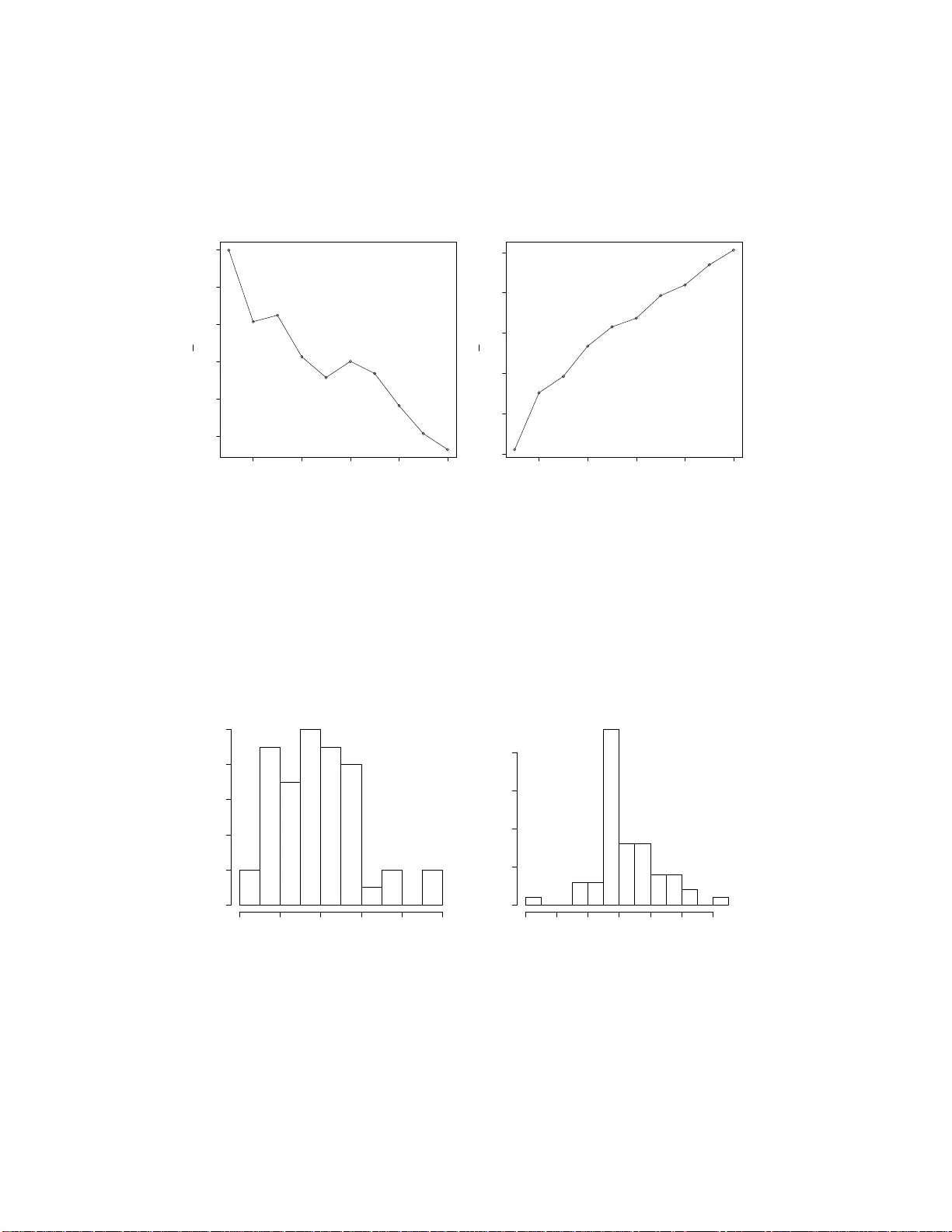
Public Discourse in the W eb Do es Not Exhibit Group P olarization F ang W u and Bernardo A. Hub erman HP La bor atories P al o Alto, CA 943 04 No vem b er 2, 201 8 Abstract W e p erformed a massive study of the dy n a m i cs of group d e lib era- tion among sev eral websites con taining millions of opinions on topics ranging from b ooks to media. Con trary to the common phenomenon of group p olariza tion observed offline, we measured a strong tendency to w ard s mo derate views in th e course of time. This p henomenon p ossi- bly op e r a tes through a self-select ion bias whereby previous commen ts and ratings elicit contrarian views that soften the pr e vious opin io n s. 1 No aspect of the massiv e participation in con ten t creation that the w eb enables is more eviden t than in t he coun tless num b er of opinions, news and pro duct reviews that are constantly posted on the In ternet. Since these opinions pla y s uch an imp ortant role in trust b uilding and t he creation of consensus ab out many iss ues and pro ducts, there ha v e been a num ber of recen t of studies fo cused on the design, ev aluation and utilization of online opinion systems [5, 6 , 1 0, 11] (for a surv ey , see [7]). Giv en the imp o r t ance of group opinions to collectiv e so cial pro cesses such as group p olarization and information cascades [2, 3, 4 , 15] it is surprising that with the exception of one study [13], little researc h has b een done on the dynamic asp ects of online opinion formation. It remains unclear, f o r example, whether the opinions ab out b o oks, movies o r so cietal views fluctuate a lo ng time b efore r eac hing a final consensus , or they undergo any systematic c hanges as time go es o n. Th us the need to understand ho w online opinions are created and ev olve in time in order to dra w accurate conclusions from that data. Within this con text w e studied the dynamics o f o nline opinion expression b y analyzing the temp oral ev olution of a very larg e set of user views, rang ing from millions of online reviews of the b est selling b o oks at Amazon.c om , to thousands of mo vie reviews at the In ternet Mov ie D atabase IMDB.com . Surprisingly , our analysis rev ealed a trend that runs coun ter to the w ell kno wn herding effect studied under infor ma t ion cascades, and in t he smaller instance of group p o la rization. Online, a self selection mec hanism is at pla y whereb y previous commen ts and rat ing s elicit con traria n views that soften the previous opinions. It is well known that in the case of gro up p olarization, mem b ers of a discussion group tend to adv o cate more extreme p ositions and call for riskier courses of action than individuals who did not participate in an y such discus- sion [1, 17 ]. How ev er, o n the massiv e scale that the w eb offers, w e observ ed that later opinions in the course of time tend to sho w a la rge difference with previous ones, th us softening the ov erall discourse. This is a robust a nd quan titative observ ation fo r whic h w e can only offer a ten t a tiv e explanation in terms of the cost of expressing an opinion to the group at large. In order to p erform t his study w e first analyzed b o ok ratings p osted on Amazon.com . Our sample consisted of t he b o ok ratings of the top 4,000 2 b est-selling titles of Amazon in eac h of the follow ing 12 catego ries, as of July 1, 2007: art s & photo graph y , biographies & memoirs, history , lit era t ur e & fiction, m ystery & thrillers, r eference, religion & spiritualit y , sp orts, trav el, nonfiction, science, a nd entertainmen t. F or eac h of the 48,000 b o oks, a series of user ratings was collected in time order, where eac h rating is an in teger b et we en 1 and 5. Among the 48 ,0 00 b o oks, 16,4 5 4 b o oks hav e no less than 20 ratings, and 11,920 ha ve an av erage rating ab o ve 4. W e first che ck ed the av erage rating of the 16,454 b o oks a s a function of the index of the rating ( n = 1 , . . . , 20). As can b e seen from Fig. 1(a), E X n decreases almost linearly with n , so there is a clear dynamical trend in the ratings, whic h corrob o rates the observ ation rep orted in [13 ]. Later users tend to write differen t reviews from those of earlier users. Like in the exp erimental setup of group p olarization, an Amazon user observ es the existing av erage rating of that b o ok b efore she lea v es her own (usually shown at the top of the b o ok page, rig h t under the title). Ho w ev er, a s o pp osed to group p olarization, the o verall opinion on Amazon tends to decrease a wa y from the extreme ones. One p oin t to b e stressed is tha t these results do not necessarily imply that as time go es on the av erage opinion of the whole p opulation changes , for the late review ers might come fr o m a differen t group than the earlier ones and need not b e represen tativ e of the whole p opulation. This is seen when plotting the av erage “helpful ratio” a s a function o f star ra ting in Fig. 2 for users of Amazon . As can b e seen, the whole p opulation finds high ratings in general more helpful than lo w rat ing s, implying that the ma jorit y of the p opulation do es not necessarily agree with the lo w ra t ings. This additional data suggests that rather than indicating a real opinion shift in the whole p opulation, the observ ed dynamic trend is more of an expression bias. On reflection, it is rather surprising that p eople con tribute opinions and reviews of topics whic h hav e a lready b een extensiv ely cov ered b y others. While p osting views is easy to understand when it in volv es no effort, lik e clic king on a button of a w ebsite, it is more puzzling in situations where it is costly , suc h as comp osing a review. 1 If the opp ortunity to affect the ov erall 1 When a user of Amaz on decides to revie w a b o o k, she is r equired to write a shor t paragr aph of r e view in addition to a simple s tar ra ting. The average word co un t of Amazo n 3 5 10 15 20 4.3 4.4 4.5 4.6 n EX n extreme less extreme Figure 1: (a) The av erage rating of 16,45 4 b o oks on Amazon.com with more than 20 reviews. E X n is the sample av erage rating of all the 16,454 n ’th ratings. As o ne can see from the figure, E X n decreases b y 0.4 stars in 20 steps. W e did not obtain enough data fro m lo w selling b o oks to sho w the opp osite trend. opinion or rating diminishes with the n um b er of published ones, wh y do es an yone b other to incur the cost of contributing y et another review? F ro m a rational c hoice theory p oint of view, if the utilit y to b e gained do es not out we ig h the cost, p eople w o uld refra in fr om expressing their views. And ye t they do. This is reminiscen t of the w ell analyzed v oter’s paradox [9, 14, 16], where a rat io nal calculation of their success probability at determining the outcome of an election w ould make p eople sta y home rather t han v ote, and y et they sho w up at the p olls with high t ur no ut rat es. In con trast to a p olitical election, there is no concept of winning in online opinion systems. Rather, by contributing her own opinion to an existing opinion p o o l, a person affects the a ve ra ge or the distribution of opinions b y a marginal amount tha t diminishes with the size of that p o ol. One p ossible explanation for t hese results is that in cases lik e Amazon , p eople will deriv e more utilit y the more they can influence the ov erall rating, as in the voter’s para do x. T o b e precise , in cases where users’ opinions can reviews is 181.5 words [12], so the c o st o f o pinion expressio n is indeed high. 4 1 2 3 4 5 0.50 0.55 0.60 0.65 0.70 0.75 rating helpful ratio (a) 1 2 3 4 5 750 800 850 900 950 1000 1050 rating review length (characters) (b) Figure 2: (a) The av erage helpful ratio of fiv e differen t star ra tings. (b) The a ve ra ge review length of fiv e differen t star ratings in the nu mber of c hara cters. The data is calculated for 4,000 b estselling mys t ery b o oks. By comparing the tw o figures it is clear that p eople find high r a tings more helpful not just b ecause they are long er. F or instance, 5-star reviews are on av erage shorter than 4 -star and 3-star reviews but are nev ertheless more helpful. 5 b e quantified and ag gregated into an av erage v alue, the influence of a n online opinion can b e measured by ho w muc h its expression will c hange the av erage opinion. Supp ose that n users hav e expressed their opinions, X 1 , . . . , X n , o n a giv en topic at a webs ite, with X i denoting the quan tified v alue of the i ’th opinion. If the ( n + 1)’th p erson expresses a new o pinion X n +1 , it will mov e the a ve ra ge rating to ¯ X n +1 = n ¯ X n + X n +1 n + 1 , (1) and the a bsolute c hange in the a ve r a ge rating is give n by | ¯ X n +1 − ¯ X n | = | X n +1 − ¯ X n | n + 1 . (2) Th us a p erson is more lik ely to express her opinion whenev er | X n +1 − ¯ X n | is la r ge — a n opinion is lik ely to b e expressed if it deviates by a significan t amoun t from those already stated. Indeed, what is the p oin t of lea ving another 5-star review after one h undred p eople hav e already done so? 2 In order to test this hy p othesis, w e measured directly how muc h o ne’s rating deviates from t he observ ed a v erage rat ing . W e plot the exp ected deviation E d n = E | X n − ¯ X n − 1 | as a function of n in F ig. 3, where X n is the rating left by the n ’th user, and ¯ X n − 1 is the av erage rating the n ’th user observ es. As can b e seen, E d n increases with n . Since the exp ected deviation E d n of an i.i.d. sequence normally de cr e ases with n , this increasing trend is indeed significan t . This again supp o rts our conjecture that those users who disagree from the public opinion will b e more willing to express themselv es and thus soften the o v era ll opinion o f a give n b o ok. Next w e examined whether this dynamical trend is still prominent at the lev el o f eac h individual b o ok. W e defined d = ¯ X 20 − ¯ X 10 as a measure of the c hange in a b o ok’s rating ov er time. The histogram of 16,454 d ’s is sho wn in Fig. 4 . As can b e seen, most of the changes are negative. A t - test of the alternativ e hy p othesis “ d < 0” yields a p -v alue less than 0 . 0 001, whic h further confirms the declining trend. 2 This point has also b e e n ma de within the “brag-a nd-moan” mo del [8, 11] which as - sumes that consumers only choo se to write reviews when they ar e very satisfied with the pro ducts they purc has ed (brag), or very disgr un tled (moan). Note ho wever, that the brag- 6 5 10 15 20 0.60 0.65 0.70 0.75 0.80 n Ed n Figure 3: The av erage deviation of Amazon rating s increases with the n um b er of p eople. Histogram of d d Frequency −1.5 −1.0 −0.5 0.0 0.5 1.0 0 500 1000 1500 Figure 4: Histogram of the change in a ve ra ge b o ok rating s ( d = ¯ X 20 − ¯ X 10 ) on Amazon.com . Most of the c hanges are negative , testifying a declining trend in the a verage ratings. 7 While our hypothesis o f a costly expression bias seems to explain the softening of opinions observ ed in Amazon , it w o uld b e more conclusiv e if one could conduct a test that directly compares p eople’s opinions expressed at differen t cost lev els. In order to address this issue w e conducted a study of IMDB.com (The In ternet Mo vie D atabase). Unlike users of Amazon who are required to write a review when rating a b o ok, users of IMDB are free to cho ose the effort lev el when reviewing a movie. Sp ecifically , after observing the curren t a verage r a ting o f a mo vie, a user can either submit a quic k ra ting b y clic king on a scale of 10 stars, or can mak e the extra effort inv olv ed in writing a commen t b et w een 10 and 1000 w o rds. Our study fo cused o n t w o sets of mo vie titles. The first consists of the 50 most top-rated mo vies released after y ear 2000, whic h w e call the “go o d mo vies”, and the second consists of the 50 most low-rated, whic h w e call the “bad movies ”. F or each mo vie w e know its a verage rating (take n among a ll ratings with or without a commen t), as well a s the v alue and date-stamp of its eac h commen ted rating, but w e do no t ha ve any sp ecific information ab out eac h uncommen ted rat ing. The trend of the ratings asso ciated with commen ts of the tw o sets of mo vies is sho wn in Fig. 5. Similar to Amazon , a softening of the expressed view is o nce again observ ed for b oth sets. Tw o histograms of d = ¯ X 10 − ¯ X 5 for the g o o d mov ies and the bad movies are show n in Fig. 6. A t -test of the alternativ e hypothesis d < 0 for the g o o d mo vies yields a p -v alue 0 .44. A t -test o f d > 0 f or the bad mo vies yields a p -v alue 0.018. While it is not to o reliable to conclude that go o d mo vies tend to receiv e low er ratings ov er time, it is safer to conclude that bad movies accum ulate higher ratings as time go es on. W e also examined the difference b etw een the ov erall av erage rating (with or without a commen t) and the a v erage rating asso ciated with a commen t for eac h mo vie, and the result is sho wn in F ig . 7. It can b e seen that those who decide to sp end t he time to write a commen t tend to sp eak differen tly fro m the ma jority users, who simply leav e a star rating without an y justification. Fig. 7 is thus a direct v erification of our hypothesis that high cost induces and-moan mo del is static and th us predicts that ¯ X n is constant over time, in contradiction with the observed dynamical trends. 8 20 40 60 80 100 8.45 8.50 8.55 8.60 8.65 8.70 n EX n (a) Go o d mov ies 10 20 30 40 50 2.4 2.6 2.8 3.0 3.2 3.4 n EX n (b) Ba d mo vies Figure 5: Av erage rating asso ciated with a commen t of the (a) go o d and (b) bad movies , as a function of the n umber of existing ratings. It can b e seen that g o o d movies tend to receiv e low er ratings as time go es on, and bad mo vies tend to receiv e higher ratings. Good movies d Frequency −2 −1 0 1 2 3 0 2 4 6 8 10 (a) Bad movies d Frequency −3 −2 −1 0 1 2 3 0 5 10 15 20 (b) Figure 6: Histogra m of d = ¯ X 10 − ¯ X 5 for the go o d mo vies and bad mov ies. 9 2 4 6 8 10 2 4 6 8 10 average rating average rating with user comments + + + + + + + + + + + + + + + + + + + + + + + + + + + + + + + + + + + + + + + + + + + + + + + + + + + + + + + + + Figure 7: Expression bias of commen t ed ratings. Eac h p oint in this figur e corresp onds to one movie title. The horizontal co ordinate represen ts the mo vie’s o ve ra ll av erage rating ( ¯ r ) take n ov er b oth commen ted and uncom- men ted ratings. The v ertical coo rdinate represen ts the mo vie’s a v erage rating tak en ov er only commente d rat ing s ( ¯ r c ). Go o d and bad movies ar e repre- sen ted by circles a nd crosses, resp ectiv ely . Clearly , those users who sp end the additional cost to write a commen t tend to sp eak opp o sitely to the ma- jorit y . A t -test of the alternativ e h yp othesis that ¯ r c < ¯ r for go o d movie s and a similar t -test of ¯ r c > ¯ r for ba d mo vies b o t h yield a p -v alue less than 0 . 001. expression bias. These results show that in the pro cess of a rticulating and expressing their views online, p eople tend to follow a different pattern fro m that observ ed in information cascades or group p olarization. What is observ ed is an a n ti p olar- ization effect, whereb y previous commen ts a nd rat ing s elicit con tra r ian views that soften the previous opinions. This is in con trast to the phenomenon of herding a nd opinion p ola rization observ ed in b oth group dynamic s and online sites. 3 3 W e p oint out that in a w ebs ite like J yte.c om , where it takes o nly one clic k to a gree or 10 In closing, b esides their intrinsic nov elt y , these results throw a cautionary note on the interpretation of online public opinion. This is b ecause a simple c hange in the order or fr equency of giv en sets of views can change the ongoing expression in the comm unity , and thus the p erceiv ed collectiv e wisdom that new users will find when accessing that information. References [1] Solo mon E. Asc h. Opinions and so cial pressure. Scientific Americ an , 193(5):31– 35, Nov em b er 1 9 55. [2] Abhijit V. Banerjee. A simple mo del of herd b eha vior,. [3] Sushil Bikhc ha nda ni, D a vid Hirshleifer, and Iv o W elch. A theory of fads, fashion, custom, and cultural c hange a s informational cascades. Journal of Politic al Ec onomy , 100(5):9 92–1026 , 1 9 92. [4] Judith A. Chev alier and Dina Mayz lin. The effect of w ord of mouth online: Online b o ok reviews . Journal of Marketing R ese ar ch , 43(3):345– 354, 2006. [5] D an Cosley , Sh yong K. Lam, Istv an Alb ert, Joseph A. Konstan, and John Riedl. Is seeing b elieving? Ho w recommender in t erfa ces affect users’ opinions. In CHI 200 3 , Ft. Lauderdale, Florida , USA, April 2 003. [6] Chrysan tho s Dellaro cas. Imm unizing online reputatio n rep orting sys- tems aga inst unfair ratings and discriminatory b eha vior. In A CM EC’00 , Minneap olis, Minnesota, USA, O cto b er 2000. [7] Chrysan tho s Dellaro cas. The digitization of word of mouth: Promise and challenges of online feedbac k mec ha nisms. Management Scien c e , 49(10):140 7–1424, Octob er 2003. disagree with a n arbitra ry claim, we did see a strong gr oup p ola rization [1 5]. It is poss ible that the latter is due to the fact that such a vote is costles s co mpared to the opinions on Amazon and IM DB . 11 [8] Chrysan tho s D ellaro cas and Rit u Nara yan. What motiv ates consumers to review a pro duct online? A study of t he pro duct-sp ecific anteced ents of online mo vie reviews. In WISE 2006 , Ev anston, Illinois, USA, D e- cem b er 2006. [9] Anthon y D o wns. An Ec onomic The ory of Demo cr acy . Harp er & Ro w, New Y ork, 1957. [10] G uo dong Gao, Bin Gu, a nd Mingfeng Lin. The dynamics of online consumer reviews . In WISE 2006 , Ev anston, Illinois, USA, Decem b er 2006. [11] Na n Hu, P aul A. P av lo u, a nd Jennifer Z hang. Can online reviews rev eal a pro duct’s t rue qualit y? Empirical findings and analytical mo deling of online word-of-mouth comm unication. In ACM EC’06 , Ann Arb or, Mic higan, USA, June 2006. [12] Erik Ketzan. Amazon.com and the new demo cracy o f opinion. http://www. themodernword.com/pynchon/papers_ketzan1.html , No v ember 200 2. [13] Xinxin L i and Lorin M. Hitt. Self selection and informa t ion role of online pro duct reviews. In WISE 2004 , Brisbane, Australia, Nov em b er 2004. [14] Willia m H. Rike r and P eter C. Or desho ok. A theory of the calculus of v oting. Americ an Politic al Scien c e R eview , 62:25–42, 1968. [15] Mat t hew J. Salganik, Pete r Sheridan D o dds, and Duncan J. W atts. Exp erimental study o f inequalit y and unpredictabilit y in an artificial cultural mark et. Sc i e nc e , 311(57 6 2):854–85 6, F ebruary 2006. [16] Alexander A. Sc h uessler. Expressiv e v oting. R ationality and S o ciety , 12(1):87–1 19, 200 0. [17] Cass R. Sunstein. Delib erativ e trouble? Wh y g roups g o to extremes. Y ale L aw Journal , 110(1) , Octob er 200 0. 12 Histogram of d d Frequency −5 0 5 0 500 1000 1500 2000
Original Paper
Loading high-quality paper...
Comments & Academic Discussion
Loading comments...
Leave a Comment