An Approach to Learning Research with a Wireless Sensor Network in an Outdoor Setting
Automated collection of environmental data may be accomplished with wireless sensor networks (WSNs). In this paper, a general discussion of WSNs is given for the gathering of data for educational research. WSNs have the capability to enhance the scop…
Authors: Tom Adam Frederic Anderson, Yean-Fu Wen
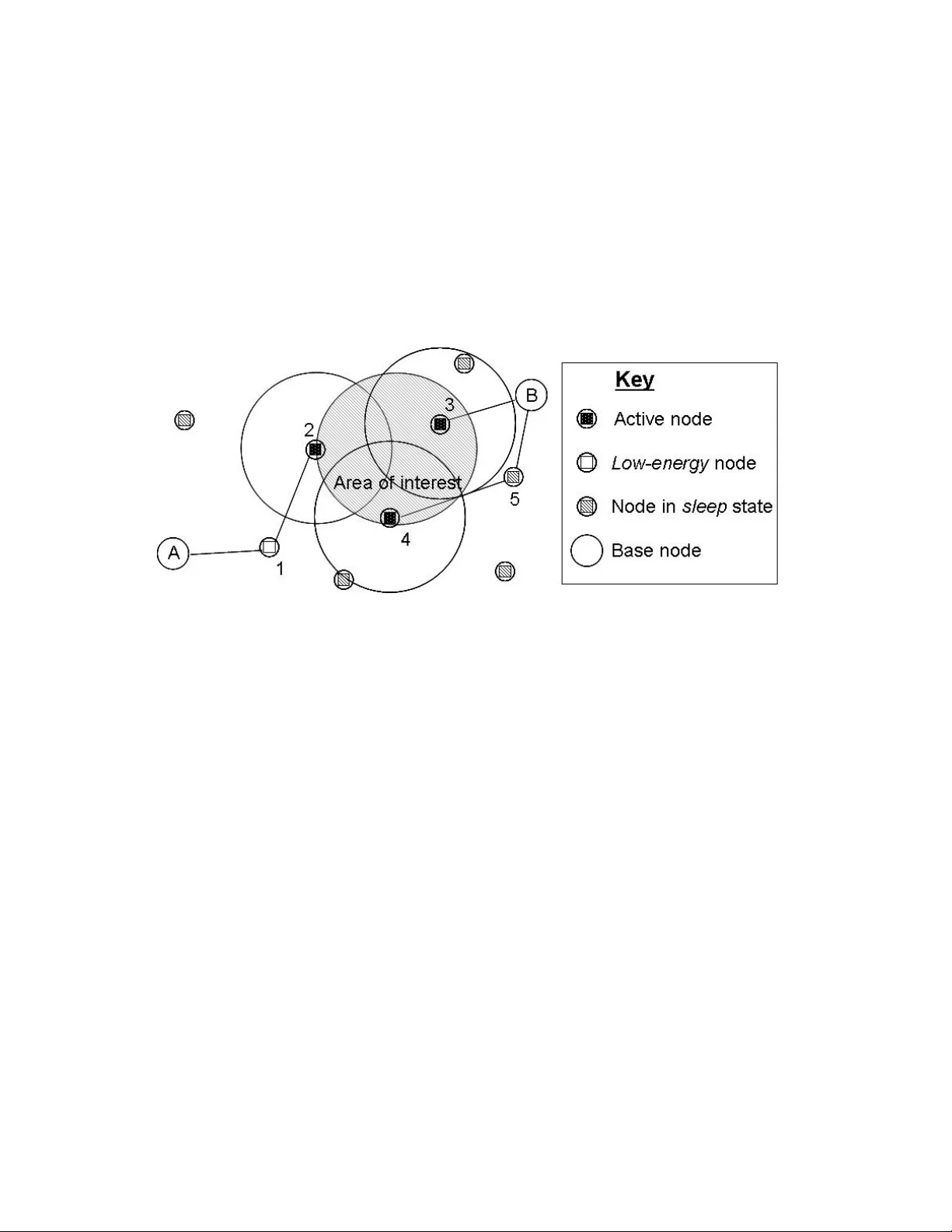
An Appr oach to Learning Resear ch with a W ir eless Sensor Network in an Outdoor Setting ANDERSON, Tom Adam Frederic a , WEN, Yean-Fu b a Graduate Institute of Network Learning Tec hnology, National Central University, Taiwan b Department of Information Management, Chinese Culture University, Taiwan ta@cl.ncu.edu.tw Abstract: Autom ated collection of e nvironmenta l data may be accompl ished with wireless sensor networks (WS Ns). In this paper, a ge neral discussion of WSNs is given for the gathering of data for ed ucational resear ch. WSNs have the ca pability to enhance the sco pe of a researcher to include multiple streams of data: environmental, locat ion, cyberdata, video, and RFID. The locati on of data stored in a database can allow reconstruct ion of the learning activity for the eval uation of significanc e at a later time. A brief overview of the technology forms the basis of an exploration of a sett ing used for outdoor learning. Keyword s: Wireless sensor networks, education rese arch, ecology, RFID, video ethnogr aphy Introduction A pervasive information-gathering technology co mprised of wirelessly connected nodes with remote sensing and computing capabilities, wireless sensor networks (WSNs) are fundamental to hundreds of applications in research and industry. For more general information on WSNs, we reco mmend the work of [2] and [11], indispensible in th e preparation of this work. This paper aims at a general data-gathering syste m for outdoor learning. A wireless sensor transmits information about aspects of the environment that it senses. In education al settings, w ireless RFID enable wireless identification and locatio n of radio frequency tags, with resear ch applications in learning, such as languag e learning [7] yet not without ch allenges [8]. With more robust WSNs, researchers have en abled the creation of kindergarten objects that are responsive to stimulus [12], and for capturing many streams of information from lecturers and stude nts in university classe s [1]. Although many challenges are involved in using WSNs fo r e ducational research , WSNs affo rd new capabilities to multidisciplinary research groups including educational research ers. 1. Behavior Settings The behaviors of parti cipants are synomorphic with, or similar to, the setting, which includes locat ions, physical and temporal attrib utes and other participants [10]. Elements of the environmental are implici t in learning acti vities, but the scope of manual data collection techniques is limited in focus. Just as the evaluation of exhibit s and visitor studies can be enhan ced by aut omate d data gat hering in a museum [14], WSNs can ai d in the m onitorin g of the behaviors of learners and other participants in outdoor settings. We address the specific purpose of investi gat ing an outdoor mobile learning activity. In such a location, learning researchers typically use field study techniques such as participant observation, interviews, and handheld video recording. Usage of devices for data collection should be a carefully planned part of research design, and techniques should be piloted to en sure success in the field [9 ]. The proposed site for deployment is an outdoor area. Established for recreational purposes and including a pond, trees, and abundant wildlife, this natur e area is a popular desti nation on wee kends a nd holida ys; however, during the workweek it is underused. Teachers can direct educational day trips during the week when the p ark is less populated, but to better study the education value of such visits, the WSN will allow researchers to unobtrusively observe activities, as shown in Figure 1, in order to improve the understanding of the activities that take place. 2. Wireless sensor network design The feasibility of constructing a wireless m ulti media sensor network [2] for outdoor research is primarily constrained by system cost, battery lifetime, and bandwidth considerations, but allo w the automated collecti on and tagg ing of the following data types: • Environmental factors – This data, including temperature, humidity , ambient audio, population density [Lewis’04], can be assessed for impact on learning. • Cyberdata – The recording of devices used by learners. The design of mobile learning activities, such as bird-watching expedition using PDAs [4], and study ing plants [3], could potentially be enhanced by collecting cyberdata, location-tagg ed for analysis. Audio can also be co llected through on-person devices. • Video sensor network – In this work, w e adopt low-power/solar-powered 360-degree video sensors as introduced by [6], suitable fo r remote deployment. Nodes periodically wake to co mpare the field of view with prior images. If there ar e no cha nges, a node will ente r sleep mode to conserv e energy. Inst ructions t o wake are transmitted to neighboring nodes when movem ents are sensed. • RFID – An RFID scanner is capable of collecting identification and location of tagged people and ob jects. This information will su bsequently be used for associating s treams of environ mental, cy ber, and video d ata in the database. Learne rs and teache rs may also profit from environ mental, cyber-, video and RFID data. Due to energy considera tions, communications between wireless sensors are connected by low-powered frequencies, and higher bandwidth s video feeds, are sent over 802.11a/b/g. Environment sensing enhances automatic labeling, tracking movements and conditions. Fig. 1. Learner activity remote ly monitored by three wireless sensors, shown in foreground. 2.1 Deployment and data gathering The primary goal of sensor deployment is the maximum coverage of the area of interest within constraints of sensor life and trans mis sion radius. Sensor deployment is divided into two major approaches, pre- and post-deployment . Pre-deployment is appropriate for video sensor networks and RFID sensor networks th at require good point o f view to identify objects. Accordingly, sensor nodes will be placed so as to provide maximum coverage of the area of inter est, such th at all par ticipants and items of interes t are captured . Post-deploy ment WSN communications are self-configured; sensor node data is aggregated and forwarded via location-based routing to the gateway, as in Figure 2. Query-based, negotiation-ba sed, QoS-based routings are adopted, allowing data to be obtained interactively in real-time, enabled by wireless communicatio ns techniques addressed in [2] [5] [13]. Fig. 2. Sensor nod es (2, 3, 4) capture data from shaded area of interest, which is then routed to base stations (A, B) ove r paths [4, 5, B], [3, B], [2, 1, A]. Adjustments to sensors and cameras are central ly controlled in teractively according to application. The transpar ency of nodes relieves researchers of constant reconfiguring of the network. Cyberdata collected from a mobile learning device such as a PDA may be forwarded on demand for real tim e analysis, coupled with data from audio streams captured by learner-worn microphones. Audio, video and cyberdata is identified via RFID for future analys is. Recordings of learn ers and researchers will fac ilitate subsequen t discussions and refinement of findings. Data mining and databa se theory applying to large datasets allow researchers to determine patt erns in existing data, from wh ich theo ries can be developed. 3. Discussion and Implications Wireless sensor networks allow researchers to collect co mprehensive data from wide ranges of time and place. A large database of multiple streams of data will be a great asset for researchers; however, the difficulty of discoverin g patterns within such a database re mains a crucial concern for the future. Future work will focus on improving fault tolerance and quality, maximizing the coverag e and lifetime of the network while minimizing costs, and better meeting the needs o f researchers. We ai m to demonstrate that environmental factor s such as weather and learner dens ity can be conn ected with learning. We a nticipate potent ial expansions including location-based real-time surveys using mobile devices, and the gathering of bio medical dat a from the learners such as h eart rate, and so on. Ident ifying th e suitability of the data for the needs of the re searchers remains a vital concern. In the long term, we seek to develop ways that real-time data can be used to create environments that actively react to ev ents. 3.1 Conclusion Wireless sensor networks have found wi despread utility in many research domains. WSNs will be found to provide benefit to educational research in the coming decade and beyond. The contribution of this paper is to provide a basic overview of a WN S system designed for automated data gathering in an outdoor learning setting, so as to deter mine relationships between environmental features and observab le behaviors of learners. The work would have multifold purposes, including: to gather data that influences educational theory; to develop concepts of how educational researchers can us e WSNs t o enhance data gathe ring abili ties within bounds of affordability and ef ficiency; to expand kno wledge of wireless multimedia sensor networks, such as battery life, routing and topology. The purpose of collecting many different streams of data is no t for the simple purpose of generating data, but rather, these tools w ill be used d eliberately for th e purposes of establishing significant phenomena in scales th at are otherwise too difficult, too expensive, or too time intensive. Further invest igations will probe the use of WSN s to enrich learning experiences by allowing tea chers and learners to use th e capabilities o f WSNs and by facilitating greater degrees of interactivity in learning environments. References [1] Aboud, G. D. (1999). Classroom 2000: An exper iment with the i nstrumentation of a liv ing educational environment. IBM Systems Journal : Spec ial issue on pe rvasive compu ting , 38(4), 508-530. [2] Akyildiz, I. F., Su, W., Sankarasubramania m, Y., & Cayirci, E. (2007). A survey o n wireless multimedia sensor networks. Com puter Network s, 51, 921-960. [3] Chen, F. C., Lai, C. H, Ya ng, J. C., Liang, J. S., Chan, T. W. (2008). Evaluating the e ffects of mobile technolog y on an o utdoor expe rienti al learning . The Fifth Interna tional Conference on Wireless, Mobile, and Ubiquitou s Technologies in Education (pp. 107-114). IEEE Computer Society CPS. [4] Chen, Y.S., Kao, T.C., Sheu, J .P. (2003 ) A mobile learning system fo r scaffoldi ng bird wa tching l earning Journal of Comp uter Assisted Lea rning, 19(3), 34 7–359. [5] Lin, F.Y.S & Wen, Y.F. ( 2006). Multi-sink data aggregation rout ing and schedul ing with dynamic ra dii in WSNs. IEEE Co mmunications Letters , 10(10), 692- 694. [6] Little, T. D. C., Ishwa r, P., Konrad, J. (2007) A wireless video sensor net work for autonomous coasta l sensing, Proc eedings of Coastal Environm ental Sensing Network s 2007 , (PAGES). Bo ston, MA. [7] Ogata, H. & Yano, Y. (2004) Context-a ware s upport for computer-supported ub iquitous learning. Proceedings of the 2nd IEEE Internatio nal Workshop on Wireless and Mobile Technologies in Education , (pp. 27-34). [8] Roccetti, M., Li u, Z, Furini, M., Zhang, X.P ., Yu, H. (2008) Preface to the special issue on new achievements in pe rvasive and interactive multimedia systems and app lications. Multimedia Tools and Applications , 37, 261-262. [9] Roschel le, J. (2000). Cho osing and using vide o equipment for data collection. I n A. Kelley & R. Lesh (Eds.) , Handbook of researc h design in mathematics and scienc e education (pp. 709-729). Lon don: Lawrence Erlbaum Associate s, Publishers. [10] Schoggen, P . (1989) Behav ior settings: A revision and extensio n of Roger G. Barker’s ‘Ecological psychology’ . Stanford, CA: Stanford University Press. [11] Sohraby, K., Minoly, D., & Znati, T. (2007) Wireless sensor network s: Technology, protoco ls, and applicat ions . Hoboken, NJ: John Wiley & Sons, Inc. [12] Sr ivastava, M., Muntz, R., Potkonjak, M. (2001) Smart kind ergarten: Sensor-ba sed wireless networ ks for smart developm ental problem- solving environments. M obiCom ’01: Proc eedings of the 7 th Annual Conference on Mobile Compu ting and Network ing , (pp. 132-138). New York, NY: ACM. [13] Wen, Y. F. & Lin, F. Y. S. (2006) Cross-la yer duty cycle sche duling with da ta aggregation rou ting in wireless sensor networks. Lecture Not es Comput er Science , 4096, 894-903. [14] Wessel, D. & Mayr, E. (2007) Potentia ls and challenges of mobile media in museums. Inte rnational Journal: Int eracti ve Media Technol ogies , 1(1), 32-39.
Original Paper
Loading high-quality paper...
Comments & Academic Discussion
Loading comments...
Leave a Comment