Dynamics of Non-Conservative Voters
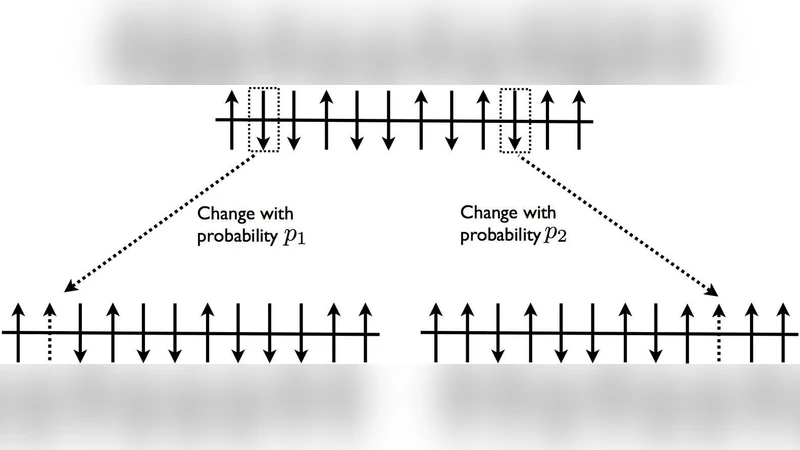
We study a family of opinion formation models in one dimension where the propensity for a voter to align with its local environment depends non-linearly on the fraction of disagreeing neighbors. Depending on this non-linearity in the voting rule, the population may exhibit a bias toward zero magnetization or toward consensus, and the average magnetization is generally not conserved. We use a decoupling approximation to truncate the equation hierarchy for multi-point spin correlations and thereby derive the probability to reach a final state of a given consensus as a function of the initial magnetization. The case when voters are influenced by more distant voters is also considered by investigating the Sznajd model.
💡 Research Summary
The paper introduces a class of one‑dimensional opinion‑formation models in which the probability that a voter changes its state depends non‑linearly on the fraction of disagreeing neighbors. In the traditional voter model the flip probability is linear in the number of opposite neighbors, which guarantees conservation of the average magnetization (the net opinion). By contrast, the authors define a transition rule
(w_i = f(k/2)) where (k) is the number of disagreeing nearest‑neighbors (0, 1, 2) and (f(x)=x^{\alpha}). The exponent (\alpha) controls the non‑linearity: (\alpha=1) recovers the linear voter model, (\alpha>1) makes disagreement highly “dangerous” (the flip probability rises sharply with more opposite neighbors), while (\alpha<1) suppresses the influence of disagreement. Because the flip probability is no longer proportional to the local field, the average magnetization is not conserved; the system is therefore termed “non‑conservative”.
To obtain analytic results the authors write the master equation for the full hierarchy of multi‑point spin correlations. Direct solution is impossible, so they employ a decoupling (or mean‑field‑type) approximation: all three‑point and higher correlations are factorized into products of one‑ and two‑point functions, and the two‑point correlation is further approximated by the square of the average magnetization. This truncation yields a closed ordinary differential equation for the average magnetization (m(t)=\langle\sigma\rangle): \
Comments & Academic Discussion
Loading comments...
Leave a Comment