Physics of Atmospheric Electric Discharges in Gases: An Informal Introduction
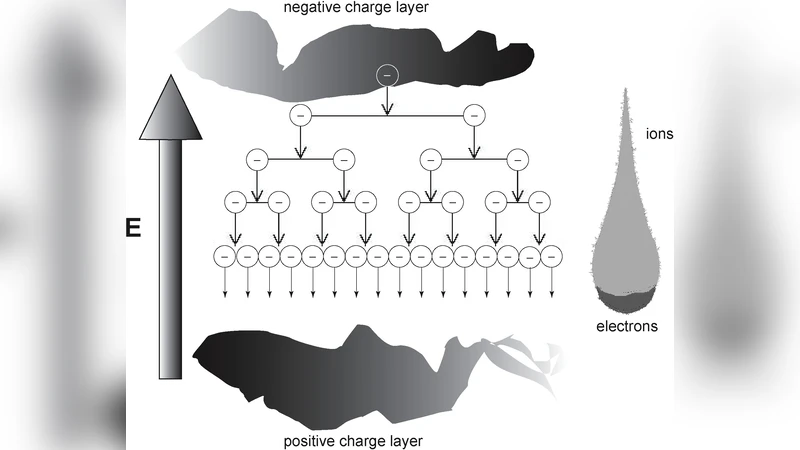
A short account of the physics of electrical discharges in gases is given in view of its historical evolution and application to planetary atmospheres. As such it serves as an introduction to the articles on particular aspects of electric discharges contained in this book, in particular in the chapters on lightning and the violent discharges which in the recent two decades have been observed to take place in Earth’s upper atmosphere. In addition of briefly reviewing the early history of gas discharge physics we discuss the main parameters affecting violent atmospheric discharges like collision frequency, mean free path and critical electric field strength. Any discharge current in the atmosphere is clearly carried only by electrons. Above the lower bound of the mesosphere the electrons must be considered magnetized with the conductivity becoming a tensor. Moreover, the collisional mean free path in the upper atmosphere becomes relatively large which lowers the critical electric field there and more easily enables discharges than at lower altitudes. Finally we briefly mention the relation of such discharges as sources for wave emission.
💡 Research Summary
The paper provides a concise yet comprehensive overview of the physics governing electrical discharges in gases, with a particular focus on how these processes manifest in planetary atmospheres. It begins with a brief historical sketch, recalling the pioneering laboratory work of the late‑19th and early‑20th centuries that first identified the voltage‑current‑breakdown relationship and laid the groundwork for modern plasma physics. From this foundation the authors move to the key parameters that control atmospheric discharges: collision frequency (ν = nσv), mean free path (λ = 1/(nσ)), and the critical electric field (Eₖ) required to sustain electron avalanches.
A central thesis of the article is that all atmospheric discharge currents are carried exclusively by electrons. Because electrons are orders of magnitude lighter than ions, they respond rapidly to electric fields, but their energy is continually moderated by collisions with neutral molecules. At low altitudes (below roughly 50 km) the neutral density is high, making ν large and λ short; consequently electrons lose energy quickly and a relatively high Eₖ (on the order of several kilovolts per centimetre) is needed to initiate a breakdown. In the mesosphere and lower thermosphere (50–100 km), the neutral density drops dramatically, reducing ν and extending λ to tens of metres. This altitude‑dependent change lowers the critical field by more than an order of magnitude, facilitating the formation of high‑altitude, transient luminous events such as sprites, jets, and gigantic jets that have been observed over the past two decades.
The paper further emphasizes that, above the lower mesosphere, electrons become magnetized because the electron gyro‑frequency (Ωₑ = eB/mₑ) exceeds the collision frequency. In this regime the conductivity is no longer a scalar but a tensor with parallel (σ∥), perpendicular (σ⊥), and Hall (σ_H) components. This anisotropic conductivity alters the direction and magnitude of the current relative to the applied electric field and has profound implications for the generation of electromagnetic radiation. Rapid current variations in the magnetized region produce broadband electromagnetic pulses, very‑low‑frequency (VLF) emissions, and even optical signatures that can be detected by ground‑based and satellite instruments.
Beyond Earth, the authors briefly discuss how the same physical framework can be applied to other planetary atmospheres. Differences in composition (e.g., CO₂‑rich Venus and Mars versus H₂/He‑rich Jupiter), pressure profiles, and magnetic field strengths lead to distinct values of ν, λ, and Eₖ. For instance, Jupiter’s strong magnetic field and low‑density upper atmosphere imply a very large electron gyro‑frequency and long mean free paths, making magnetized discharges potentially more common despite the planet’s different chemical makeup.
In summary, the paper identifies four inter‑related determinants of atmospheric discharge behavior: (1) collision frequency, (2) mean free path, (3) critical electric field strength, and (4) electron magnetization. These parameters vary systematically with altitude and planetary environment, and their combined effect dictates where and how violent electrical phenomena can arise. Accurate modeling of atmospheric discharges therefore requires altitude‑resolved atmospheric density, composition, and magnetic field data, integrated into a multi‑parameter framework that captures both collisional and magnetized regimes. The authors conclude by noting that such discharges are not only fascinating plasma phenomena but also important sources of electromagnetic waves, offering valuable diagnostic tools for probing the electrical state of planetary atmospheres.
Comments & Academic Discussion
Loading comments...
Leave a Comment