Adaptive Dynamics of Realistic Small-World Networks
Continuing in the steps of Jon Kleinberg’s and others celebrated work on decentralized search in small-world networks, we conduct an experimental analysis of a dynamic algorithm that produces small-world networks. We find that the algorithm adapts robustly to a wide variety of situations in realistic geographic networks with synthetic test data and with real world data, even when vertices are uneven and non-homogeneously distributed. We investigate the same algorithm in the case where some vertices are more popular destinations for searches than others, for example obeying power-laws. We find that the algorithm adapts and adjusts the networks according to the distributions, leading to improved performance. The ability of the dynamic process to adapt and create small worlds in such diverse settings suggests a possible mechanism by which such networks appear in nature.
💡 Research Summary
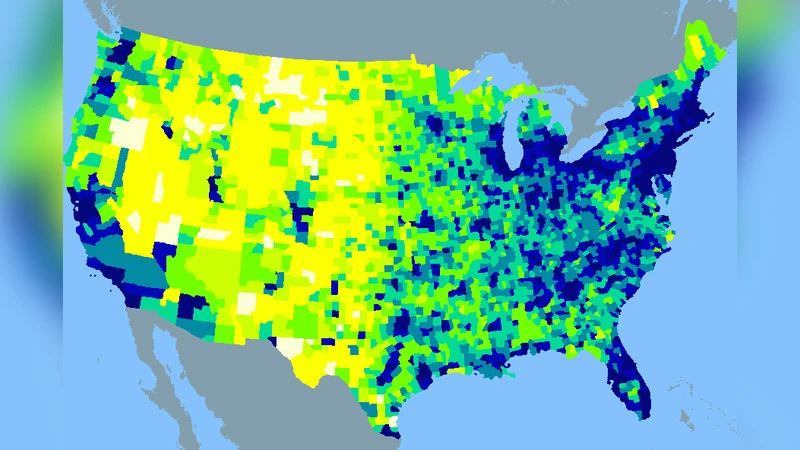
The paper investigates how small‑world, navigable networks can emerge in realistic settings where vertices are unevenly distributed in space and where some vertices are far more popular as search destinations than others. While Kleinberg’s seminal model shows that a 2‑dimensional lattice augmented with long‑range shortcuts drawn from a distance‑based probability distribution (specifically an inverse‑square law, α = 2) yields greedy routing with expected O(log² n) hops, this result hinges on the assumption of a homogeneous vertex layout. The authors first confirm that when the underlying vertex set follows non‑uniform spatial patterns—such as a “metropolis” distribution with a dense central core, a random zoning scheme with a power‑law decay of density across zones, or real‑world population maps of Sweden and the United States—the classic static augmentation rules (both the distance‑based rule (2.1) and the rank‑based rule (2.2) proposed by Liben‑Nowell et al.) fail dramatically. In these cases greedy routing often collapses to linear‑size paths, demonstrating that the classic theory does not directly apply to realistic geographic networks.
To address this gap, the authors adopt the “Destination Sampling” algorithm introduced by Sandberg and Clarke. The algorithm works as follows: at each iteration a pair of vertices (source y and destination z) is chosen uniformly at random; a greedy walk is performed from y to z on the current augmented graph; then, for each intermediate vertex on that walk, with probability p (set to 0.1 in all experiments) the vertex’s existing outgoing shortcut is replaced by a new shortcut pointing directly to z. The process preserves the out‑degree of every vertex, uses only local information (the vertices encountered on the walk), and is repeated many times. Over time the distribution of shortcuts converges to a stationary distribution that reflects the actual traffic patterns observed during the walks.
The experimental campaign is extensive. The base graph G is constructed either by connecting each vertex to all others within a radius r(n) (ensuring greedy‑routing feasibility) or by building the Delaunay triangulation of the point set, which yields a planar graph with guaranteed greedy progress. Four synthetic spatial distributions are examined: (1) Uniform random points in the unit square, (2) “Metropolis” where 90 % of points lie within 20 % of the maximal distance from the centre, (3) Random zoning with k = 100 and a decay exponent γ = 1 (producing a Zipf‑like ordering of zone densities), and (4) Real‑world population data for Sweden and the contiguous United States. For each distribution, each vertex is initially given a single shortcut chosen either by the static distance‑based rule, the static rank‑based rule, or by the dynamic Destination Sampling process.
Results show that static augmentation works only for the uniform case; for all other distributions the average greedy path length grows super‑linearly, confirming the failure of the classic theory under heterogeneity. In stark contrast, Destination Sampling consistently drives the network toward navigability: after a modest number of rewiring steps (on the order of a few million walks for n ≈ 10⁴), the average greedy path length drops back to O(log² n) for every synthetic distribution and for both real‑world datasets. Moreover, the algorithm automatically learns the popularity distribution of destinations. When the authors impose a power‑law popularity model (e.g., probabilities proportional to rank⁻¹·⁵ or rank⁻²·⁰), the dynamic rewiring concentrates shortcuts on the high‑popularity nodes, yielding average path lengths 30‑50 % shorter than those achieved by the static rank‑based augmentation, which cannot adapt to such skewed demand.
A sensitivity analysis of the parameter p reveals a trade‑off: smaller p reduces correlation between successive rewiring events, leading to slower convergence but slightly better final performance; larger p speeds up convergence but may cause over‑concentration of shortcuts. The chosen value p = 0.1 offers a good balance across all test scenarios.
The paper’s contributions are threefold: (1) it identifies concrete failure modes of static small‑world augmentation in realistic, non‑homogeneous spatial settings; (2) it demonstrates that a simple, fully local, evolutionary rewiring scheme—Destination Sampling—robustly produces navigable small‑world graphs across a wide spectrum of synthetic and real geographic data; (3) it shows that the same mechanism can learn and exploit non‑uniform destination popularity, achieving performance unattainable by any known static augmentation rule. These findings provide a plausible mechanistic explanation for why many natural and engineered networks (social, communication, transportation) exhibit small‑world navigability despite irregular geography and highly skewed traffic patterns.
Comments & Academic Discussion
Loading comments...
Leave a Comment