On complexity of special maximum matchings constructing
For bipartite graphs the NP-completeness is proved for the problem of existence of maximum matching which removal leads to a graph with given lower(upper)bound for the cardinality of its maximum matching.
💡 Research Summary
The paper introduces and studies a novel decision problem concerning maximum matchings in bipartite graphs. Given a bipartite graph G and an integer k, the question is whether there exists a maximum matching M such that, after removing the edges of M from G, the resulting subgraph G − M has a maximum matching whose cardinality satisfies a prescribed bound – either at least k (lower‑bound version) or at most k (upper‑bound version). This “special maximum matching” problem differs from the classic maximum‑matching problem because it asks not only for a maximum matching but also for a matching whose removal influences the structure of the remaining graph in a controlled way.
The authors first show that the problem belongs to NP. A candidate matching M can be verified in polynomial time: one checks that M is indeed a maximum matching (using, for example, the Hopcroft‑Karp algorithm) and then computes the size of a maximum matching in G − M, which again is polynomial. Hence a nondeterministic polynomial‑time verifier exists.
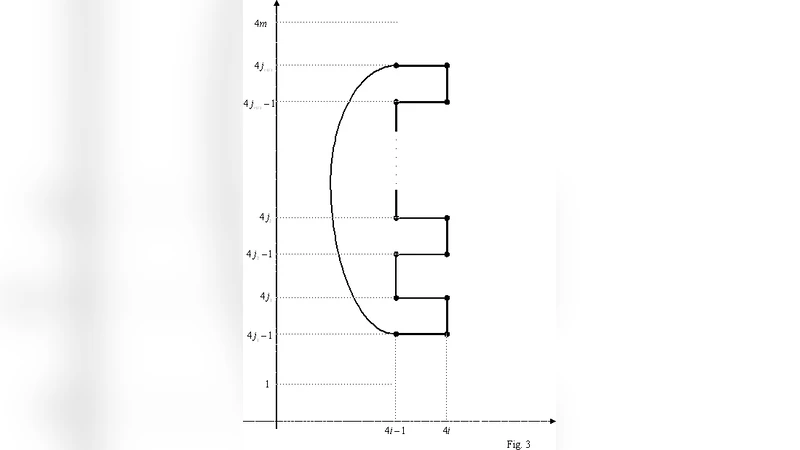
The core contribution is the proof that the problem is NP‑complete. To establish NP‑hardness, the paper presents a polynomial‑time reduction from a known NP‑complete problem, such as 3‑SAT or Vertex Cover. The reduction constructs a bipartite graph composed of several carefully designed gadgets:
-
Variable gadgets – each variable is represented by a small bipartite subgraph that admits exactly two distinct maximum matchings. Selecting one of these matchings corresponds to assigning the variable true, while the other corresponds to false.
-
Clause gadgets – each clause of the formula is represented by a subgraph that can accommodate a certain number of matchings only if at least one of its incident literals is satisfied. The internal structure forces the number of matchings that survive after the removal of the variable‑gadget matching to be either sufficient (≥ k) or insufficient (< k) depending on the truth assignment.
-
Connector gadgets – edges linking variable and clause gadgets propagate the choice made in a variable gadget to the appropriate clause gadgets. These connectors are built so that the bipartite nature of the whole graph is preserved and the removal of a chosen matching does not create unintended augmenting paths.
The reduction guarantees a one‑to‑one correspondence: the original 3‑SAT instance is satisfiable if and only if the constructed bipartite graph possesses a special maximum matching meeting the required bound. The authors handle both the lower‑bound and upper‑bound versions by minor adjustments to the gadgets (e.g., adding auxiliary vertices that increase or decrease the residual matching size by a fixed amount). Consequently, both versions are shown to be NP‑complete.
Beyond the hardness proof, the paper discusses several implications. It highlights that the special maximum‑matching problem cannot be solved by simply applying existing maximum‑matching algorithms, because the choice of the matching itself is part of the solution space. The problem can be viewed as a parametric matching problem where the parameter is the size of a maximum matching after a prescribed edge deletion. The authors also note that the result opens a new line of inquiry: investigating approximation algorithms, fixed‑parameter tractability with respect to k, or polynomial‑time algorithms for restricted graph classes (e.g., trees, planar bipartite graphs).
In summary, the paper establishes that determining the existence of a maximum matching whose removal forces the residual graph’s maximum matching to lie within a given bound is NP‑complete for bipartite graphs. The reduction is intricate, employing variable, clause, and connector gadgets that tightly control the post‑deletion matching size. This work enriches the theory of graph matchings by introducing a new dimension—how the removal of a matching reshapes the combinatorial landscape of the graph—and sets the stage for future research on algorithmic strategies and complexity boundaries for this and related problems.