Semigroup cohomology and applications
This article is a survey of the author's research. It consists of three sections concerned three kinds of cohomologies of semigroups. Section 1 considers `classic' cohomology as it was introduced by Eilenberg and MacLane. Here the attention is concen…
Authors: B. V. Novikov
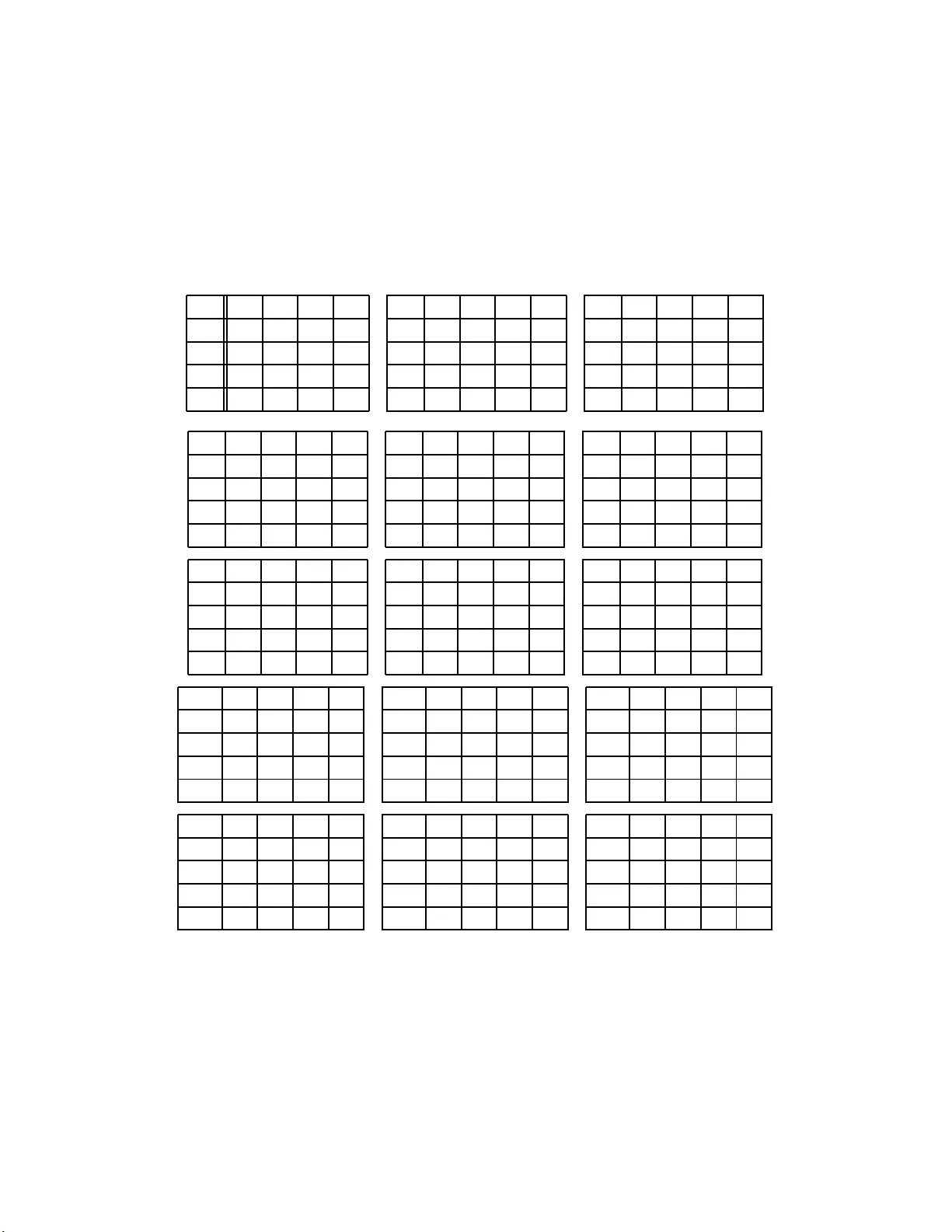
Semigroup cohomology and applicati ons B. V. No viko v (Kharko v, Ukrai ne) This article is a surv ey of the author’s researc h. It consists of three sections concerned three kinds of cohomologies of semigroups. Section 1 con- siders ‘classic’ cohomology a s it w a s in tro duced b y Eilen b erg and MacLane. Here the attention is concen trated mainly on semigroups ha ving coho mo lo g- ical dimension 1. In Section 2 a generalization of the Eilen b erg–MacLane cohomology is in tro duced, the so-called 0-cohomology , whic h app ears in ap- plied topics (pro jectiv e represen tations of semigroups, Bra uer monoids). At last Section 3 is dev oted to further generalizing: partia l cohomology defined and discussed in it are used then for calculation of t he classic cohomolog y for some semigroups. I am indebted to Prof. K. Roggenk a mp and Prof. M. S ¸ tefanescu for the supp ort of my part icipatio n in the W orkshop. 1 EM-cohomolo gy In this section w e deal with the Eile nberg– MacLane cohomology of semi- groups [3] (shortly EM-cohomology). Its definition is the same as for groups: H n ( S, A ) = Ext n Z S ( Z , A ) . Here S is a semigroup, A a left S -mo dule (i. e. a left mo dule o ver the in tegral semigroup ring Z S ), Z is considered as a trivial S - mo dule (i. e. xa = a for all x ∈ S , a ∈ Z ); H n ( S, A ) is called a n th c o h omolo gy gr oup of S (with the co efficien t mo dule A ). Another definition (equiv alen t to preceding one) of H n ( S, A ) is f ollo wing. Denote by C n ( S, A ) the group of all maps f : S × . . . × S | {z } n times → A (a group of 1 n -co c ha ins); a cob oundary homomorphism ∂ n : C n ( S, A ) → C n +1 ( S, A ) is giv en by the f o rm ula ∂ n f ( x 1 , . . . , x n +1 ) = x 1 f ( x 2 , . . . , x n +1 ) + n X i =1 ( − 1) i f ( x 1 , . . . , x i x i +1 , . . . , x n +1 ) + ( − 1) n +1 f ( x 1 , . . . , x n ) (1) Then ∂ n ∂ n − 1 = 0, i. e. Im ∂ n − 1 = B n ( S, A ) (a group of cob oundaries) ⊆ Ker ∂ n = Z n ( S, A ) (a group of co cycles) and cohomology groups are defined as H n ( S, A ) = Z n ( S, A ) /B n ( S, A ) . It is w orth noting tw o simple prop erties of the semigroup cohomology [1] whic h are useful b elo w. (1) Adjoin t o a giv en semigroup S an extra elemen t 1 and extend the op eration (m ultiplication) of S to S 1 = S ∪ { 1 } b y ∀ s ∈ S s · 1 = 1 · s = s, 1 · 1 = 1 . Then S 1 b ecomes a mono id (i. e. a semigroup with an iden tity elemen t) and is called a semigr oup with an ad joint iden tity . Ev ery S -mo dule turns natura lly in to a (unitary) S 1 -mo dule and w e ha ve H n ( S 1 , A ) ∼ = H n ( S, A ) , n ≥ 0 . (2) If S p ossesses a zero elemen t 0 then H n ( S, A ) = 0 for eac h S - mo dule A and for all n ≥ 1. In particular, for any semigroup S we can define the semigr o up S 0 with an a djoint zer o (analogously to S 1 ); then w e hav e H n ( S 0 , A ) = 0 ( n ≥ 1). The semigroup EM-cohomology has not so wide applications as the co- homology of groups. Nev ertheless it is interesting for homologists at least as a mo del for testing homological metho ds. The problem of describing semi- groups having cohomological dimension 1 is suc h an example. This problem has its own story . Cohomolo gic al dimens i o n (c. d.) of a semigroup S is the maximal integer n suc h t ha t H n ( S, A ) 6 = 0 for some S -mo dule A . There are many reasons to study algebraic ob jects of c.d. 1 (see, e. g., [4]). 2 It is an easy exercise to prov e tha t b oth a free group and a free semigroup (or a f ree monoid) ha v e c.d. 1 [3]. F or groups the con ve rse is true — this is the well-kno wn Stallings–Swan theorem [2]. So a gr oup has cohomological dimension one if and only if it is free. No w, what ab out semigroups? First, as we hav e men tioned ab ov e, ev ery semigroup with 0 has c.d. ≤ 1. This is the main reason wh y w e ha ve to confine ourselv es to considering cancellativ e semigroups only . Second, a free group is not free as a semigroup. So ev en for cancellativ e semigroups the Stalling s–Swan theorem do esn’t hold. B. Mitc hell [13] has sho wn that a so-called par t ia lly f ree monoid (the free pro duct o f a f r ee group and a free monoid) has c.d. 1. He has supp osed that if c. d. S = 1 for S cancellative then S is partially free. In [1 6] I hav e built the first coun ter-example for Mitc hell conjecture: S = h a, b, c, d | ab = cd i (2) and in [17] I ha ve fo rm ulated a ‘w eakene d Mitc hell conjecture’. It turned out true: Theorem 1 [22] Every c anc el lative semigr oup of c.d. 1 c an b e em b e dde d into a fr e e gr oup. In the pro o f o f this theorem the passage fr om the homological language to the semigroup one is realized b y the following lemma (whic h may b e helpful not only for semigroups). Let A b e a left mo dule o ve r an arbitr ary ring R , . . . d 2 − → P 2 d 1 − → P 1 d 0 − → P 0 − → 0 its pro jectiv e resolution. Eviden tly , d n ma y b e considered as a ( n + 1)- dimensional co cycle with v alues in the R - mo dule Im d n . Lemma 2 The c o cycle d n ∈ Z n +1 ( A, Im d n ) is a c ob oundary iff the p r oj e ctive dimension of A is not gr e ater than n . Applying Lemma 2 to a bar- resolution of the S -mo dule Z w e obta in the next prop erty of a cancellativ e semigroup S with c.d. 1. Consider a graph 3 with the elemen ts of S as v ertices and with the pairs ( a, b ) ∈ S × S suc h that aS ∩ bS 6 = ∅ as edges. Then ev ery circuit of this graph is triang ulable. This prop ert y allows to prov e that S can b e em b edded into a group (the latter turns out free b y the Sta lling s–Sw an theorem). Note that the conv erse assertion is certainly not true: there is a subsemigroup of a free semigroup, whic h has c.d. 1, while c.d. of its an ti-isomorphic is equal to 2 (see t he examples b elo w). A nice answ er is only obtained in the commutativ e case [19]: the c.d. of a comm utative cancellativ e semigroup is equal to 1 if and only if this semigroup can b e em b edded in to Z . So a new problem a r ises: to describe subsemigroups of a f ree gro up havin g c.d. 1. This ques tion seems rather difficult eve n if we restrict ourselv es to subsemigroups of a free semigroup. The fo llowing results are ta ken out o f [24]. Let S b e a subsemigroup o f a free semigroup F . F urther dev elopmen t of the pro of o f Theorem 1 giv es us the next assertion: Theorem 3 L et c.d. S = 1 and aS ∩ S 6 = ∅ 6 = S a ∩ S for some a ∈ F \ S . Ther e exists such x ∈ aS ∩ S that aS ∩ S ⊂ xF 1 . This theorem allo ws to build a lot of subsemigroups of F ha ving c.d. > 1. Example 1 Let a, p, q , r are differen t elemen ts of F suc h that: 1) min ( | a | , | p | , | q | , | r | ) = | a | ( | a | denotes the length of the w ord a ), 2) p and q b egin with differen t letters. Then the subsemigroup S = h p, q , r , ap, aq , r a i has c.d. > 1 . F rom The o rem 3 a solution of the prop osed problem for left ideals is obtained: Prop osition 4 A l e ft ide al of a fr e e semigr oup has c.d. 1 iff it i s fr e e. Corollary 5 Every pr op er two-side d ide al of a fr e e sem igr o up has c. d . > 1 . F or principal righ t ideals the situation is similar: Prop osition 6 A princip al right ide al of a fr e e semigr oup has c.d. 1 iff it is fr e e. 4 Ho we ver for arbitra ry right ideals the analo g of Prop o sition 4 is not true: Example 2 Let F = h a, b i b e a free semigroup. Then R = { b, aba } F 1 is not free but c. d. R = 1. By the w ay , from these results a counter-example to another conjecture follo ws. Y u. Drozd suppo sed tha t for any S ∈ F either S or the antiisomor- phic to S has c.d. 1. Consider the principal left ideal L = F 1 aba in a fr ee semigroup F = h a, b i . It is not free since its generators aba, ( ab ) 2 , ( ab ) 2 a , ( ab ) 3 ob ey the relat io n ( ab ) 2 · ( ab ) 2 a = ( ab ) 3 · aba. By Prop osition 4 c.d. L > 1. Of course its an tiisomor phic R = abaF 1 is not f ree to o and c.d. R > 1 b y Prop osition 6. Hence the pair ( L, R ) g ives a coun ter-example t o the conjecture. 2 0-cohomol ogy In order to see how 0-coho mo lo gy app ears let us try to define a pro jectiv e represen tation of a semigroup. Let K be a field, K × its m ultiplicative gr o up, n a p ositiv e in teger, M ( n, K ) the semigroup of all n × n matrices ov er K . D efine an equiv alence: for A, B ∈ M ( n, K ) A ∼ B ⇐ ⇒ ∃ λ ∈ K × A = λB . Then ∼ is a cong r uence o n the semigroup M ( n, K ) and we can consider a fac- tor semigroup P M ( n, K ) = M ( n, K ) / ∼ , ‘the pro jectiv e linear semigroup’. Lik e for gr o ups w e call a pr oj e ctive r epr esentation of a given semigroup S a homomorphism Γ : S → P M ( n, K ). Fix an elemen t in eac h ∼ -class. Then Γ induces a map Γ ′ : S → M ( n, K ) . No w we can redefine a pro jectiv e represen tation o f S : it is a map Γ ′ : S → M ( n, K ) such that 1) Γ ′ ( x )Γ ′ ( y ) = 0 ⇐ ⇒ Γ ′ ( xy ) = 0, 2) Γ ′ ( x )Γ ′ ( y ) = Γ ′ ( xy ) ρ ( x, y ), where ρ : S × S → K × is a partial function defined on the subset { ( x, y ) | Γ ′ ( xy ) 6 = 0 } . 5 Certainly ρ yields the equation ρ ( x, y ) ρ ( xy , z ) = ρ ( x, y z ) ρ ( y , z ) for Γ ′ ( xy z ) 6 = 0 and can b e used as the corresp onding 2-co cycle (lik e a factor system in Group Theory) excepting its partialit y . Therefore we m ust anew define suitable cohomolog y as follows . Let S b e an arbitrary semigroup with a zero. An Ab elian group A is called a 0-mo dule ov er S , if an action ( S \ { 0 } ) × A → A is defined whic h satisfies fo r all s, t ∈ S \ { 0 } , a, b ∈ A the following conditions: s ( a + b ) = sa + sb, st 6 = 0 = ⇒ s ( ta ) = ( st ) a. A n-dimensio n al 0-c o chain is a partial n -place map from S t o A whic h is defined for a ll n -tuples ( s 1 , . . . , s n ), suc h that s 1 · . . . · s n 6 = 0. A cob oundary homomorphism is given lik e for the usual cohomology b y the formula (1). The equalit y ∂ n ∂ n − 1 = 0 is v alid to o. W e denote Im ∂ n − 1 = B n 0 ( S, A ) (a group of 0-cob oundaries) ⊆ Ker ∂ n = Z n 0 ( S, A ) (a group of 0- co cycles) and 0-c o homolo gy gr oups are defined as H n 0 ( S, A ) = Z n 0 ( S, A ) /B n 0 ( S, A ) . Note that for a semigroup T 0 = T ∪ { 0 } with an adjointed zero H n 0 ( T 0 , A ) ∼ = H n ( T , A ) , so the 0 -cohomology ma y b e considered as a generalization of the Eilen b erg– MacLane cohomolo gy . Prop erties of 0- cohomology are not considered here since they follo w from the pro p erties of partial cohomolo gies (see Section 3). Before returning to the pro jectiv e represen tations w e need a semigroup- theoretic construction, t he so- called semilattice o f groups [6]. Let Λ b e a semilattice (i. e. a partially ordered set in whic h ev ery t w o elemen ts λ, µ hav e the greatest low er b ound λµ ) and let { G λ | λ ∈ Λ } b e a family of disjoint groups. F or each pair λ, µ ∈ Λ suc h that λ ≥ µ , let ϕ λ µ : G λ → G µ b e a homomorphism. Supp o se that 6 1) ϕ λ λ is identical for ev ery λ ∈ Λ , 2) ϕ λ µ ϕ µ ν = ϕ λ ν for a ll λ ≥ µ ≥ ν . Define a multiplication on the set T = S λ ∈ Λ G λ b y the rule: if x ∈ G λ , y ∈ G µ xy = ( ϕ λ λµ x )( ϕ µ λµ y ) . Then T becomes a semigroup whic h is called a sem ilattic e of gr oups . No w return to the pro jectiv e represen ta tions. Recall [8 ] t ha t if S is a group then one defines an equiv a lence on the se t of the f actor systems of S (whic h corresp o nds to the equiv alence of pro jectiv e represen tations); the factor set by this equiv alence is a group Sc h ( S, K ) whic h is called a Sc hur multiplic ator and describ es (in some sense) all pro jectiv e represen tations of S ov er K . It is w ell-know n that Sc h( S, K ) ∼ = H 2 ( S, K × ), where K × is considered a s a trivial S -mo dule. What will b e for semigroups? In this situation Sc h ( S, K ) is not a group (more exactly , it b ecomes an in verse semigroup). Let Λ b e a semilattice of all t wo-side d ideals of S (including ∅ and S ) with resp ect to the inclusion and the union as a greatest low er b ound. Then restriction of 0-co c hains induces homomorphisms ϕ I J : H n 0 ( S/I , K × ) − → H n 0 ( S/J, K × ) for ideals I ⊆ J and w e ha v e a semilattice of groups S I ∈ Λ H n 0 ( S/I , K × ) (here for I = ∅ w e set H n 0 ( S/ ∅ , K × ) = H n ( S, K × )). The next assertion w as prov ed in [15]: Theorem 7 F or every se m igr oup S and ev e ry field K Sc h( S, K ) ∼ = [ I ∈ Λ H 2 0 ( S/I , K × ) Note that eve n if 0 6∈ S w e hav e to use 0-coho mo lo gy for describing of Sc h( S, K ). Another application of the 0- cohomology a pp ears in connection with the Brauer monoid. This notion was in tro duced by Haile, Larson and Swee dler [9], [10] while they studied the so-called strongly primary algebras (a gen- eralization of cen tra l simple ones). I shall no t giv e their origina l definition whic h is rather complicated. But it turned out that the Brauer monoid can 7 b e defined in terms of the 0 - cohomology [20]. T o do it one must in tro duce a new notion, a mo dification of a group. By a mo dific ation G ( ∗ ) of a gr o up G w e mean a semigroup on the set G 0 = G ∪ { 0 } with an op eration ∗ suc h that x ∗ y is equal either to xy or to 0, while 0 ∗ x = x ∗ 0 = 0 ∗ 0 = 0 and the identit y of G is the same for the semigroup G ( ∗ ). In other w ords, to obtain a mo dification, one m ust erase the con ten ts of some inputs in the mu ltiplication table of G and insert there zeros so tha t the new op eratio n w ould b e asso ciativ e. Note some general prop erties of mo difications. First, a mo dification of G satisfies the weak cancellation condition: fro m x ∗ z = y ∗ z 6 = 0 it fo llo ws x = y and analogo usly for left cancellation. Second, let U b e a subgroup of all inv ertible elemen ts in G ( ∗ ). Then its complemen t I = G ( ∗ ) \ U is a t wo-side d ideal. One can sho w that if G is finite, I is nilp ot ent. Let S = G ( ∗ ) and T = G ( ⋆ ) b e mo difications of G . It is clear that S ∩ T = G ( ◦ ) is a mo dification to o, where x ◦ y 6 = 0 ⇐ ⇒ x ∗ y 6 = 0 6 = x ⋆ y . W e write S ≺ T if x ⋆ y = 0 implies x ∗ y = 0 for all x, y ∈ G . Ob viously , all mo difications of G constitute a semilattice M ( G ): t he gr eatest low er b o und in it is S ∩ T . Eac h G -mo dule A can b e turned into a 0-mo dule o ver a mo dification S in a natural wa y . Moreo ver, if S ≺ T then each 0- mo dule ov er T is transformed in to a 0-mo dule o ve r S . Therefore f o r S ≺ T a homomorphism is defined ϕ T S : H n 0 ( T , A ) − → H n 0 ( S, A ) and w e obtain a semilattice of groups S S ∈ M ( G ) H n 0 ( S, A ). In pa r t icular, let L b e a finite-dimensional normal extension of a field K with the G a lois group G . Then L × is a G -mo dule. W e define a ( r elative) Br auer mono id as Br( G, L ) = [ S ∈ M ( G ) H 2 0 ( S, L × ) (the adjectiv e ‘relativ e’ will b e omitted since in this art icle relativ e Brauer monoids a re o nly considered). 8 In the case when op eration ∗ is defined in suc h a wa y that x ∗ y = xy for x, y 6 = 0, w e ha v e H 2 0 ( S, L × ) ∼ = H 2 ( G, L × ) , so t he Brauer group is a subgroup of the Brauer monoid. One can hop e that the Brauer monoid will b e useful. F or example, it is w ell-kno wn that the Brauer group is tr ivial for any finite field whereas the Brauer monoid is not trivial for each non- trivial field extension. The Brauer monoid classifies strongly primary algebras ov er a field lik e the Bra uer g roup classifies division algebras. The use of 0- cohomology a llows us to split t he study of the Brauer monoid in to tw o problems: 1) describing all mo difications of a giv en finite group, 2) computing 0-cohomology of a mo dification. Both of them seem rather difficult, esp ecially the first. Its solution is unkno wn ev en for cyclic gro ups. In [21] some class of mo difications of simple cyclic g r o ups is describ ed. It implies that the num b er of mo difications of t he group Z p is O ( p 2 ). All m ultiplication t a bles of the mo difications S 1 , . . . , S 15 of Z 5 (up to aut o morphisms of the group) are sho wn in T able 1; for Z 7 their n um b er equals 145. As to the second problem, the initial step in solving it may consist in eliminating the influence o f in vertible elemen ts o f mo difications on the struc- ture of the Brauer monoid. Some results in this direction were obta ined in [12], [20 ]. As ab o v e let G b e the G alois gro up of a finite-dimensional extension L/K , S = G ( ∗ ) it s mo dification, U the subgroup o f inv ertible elemen ts of S , P the subfield o f all U -fixed elemen ts: P = { a ∈ L | U a = a } . The inclusion U ֒ → S induces a homomo r phism ψ : H 2 0 ( S, L × ) − → H 2 ( U, L × ) W e shall study this homomorphism in the situation when U is a normal subgroup o f S (i. e. x ∗ U = U ∗ x fo r all x ∈ S ). Then the factor semigroup S/U is well-define d. F urther, if U ⊳ S then P × is a 0-mo dule ov er S/U . The inclusion P × ֒ → L × and the epimorphism S → S/U induce a homomorphism χ : H 2 0 ( S/U, P × ) − → H 2 0 ( S, L × ) 9 S 1 a 1 a 2 a 3 a 4 a 1 0 0 0 0 a 2 0 a 4 0 a 1 a 3 0 0 a 1 0 a 4 0 a 1 0 0 S 2 a 1 a 2 a 3 a 4 a 1 0 0 0 0 a 2 0 a 4 0 0 a 3 0 0 a 1 0 a 4 0 0 0 0 S 3 a 1 a 2 a 3 a 4 a 1 0 0 0 0 a 2 0 0 0 a 1 a 3 0 0 a 1 a 2 a 4 0 a 1 a 2 a 3 S 4 a 1 a 2 a 3 a 4 a 1 0 0 0 0 a 2 0 0 0 a 1 a 3 0 0 a 1 0 a 4 0 a 1 0 0 S 5 a 1 a 2 a 3 a 4 a 1 0 0 0 0 a 2 0 0 0 a 1 a 3 0 0 a 1 0 a 4 0 0 0 0 S 6 a 1 a 2 a 3 a 4 a 1 0 0 0 0 a 2 0 0 0 0 a 3 0 0 a 1 a 2 a 4 0 0 a 2 0 S 7 a 1 a 2 a 3 a 4 a 1 0 0 0 0 a 2 0 0 0 0 a 3 0 0 a 1 0 a 4 0 a 1 0 0 S 8 a 1 a 2 a 3 a 4 a 1 0 0 0 0 a 2 0 0 0 0 a 3 0 0 a 1 0 a 4 0 0 a 2 0 S 9 a 1 a 2 a 3 a 4 a 1 0 0 0 0 a 2 0 0 0 0 a 3 0 0 0 a 2 a 4 0 0 a 2 0 S 10 a 1 a 2 a 3 a 4 a 1 0 0 0 0 a 2 0 0 0 0 a 3 0 0 0 a 2 a 4 0 0 a 2 a 3 S 11 a 1 a 2 a 3 a 4 a 1 0 0 0 0 a 2 0 0 0 0 a 3 0 0 0 0 a 4 0 a 1 0 0 S 12 a 1 a 2 a 3 a 4 a 1 0 0 0 0 a 2 0 0 0 0 a 3 0 0 0 0 a 4 0 a 1 0 a 3 S 13 a 1 a 2 a 3 a 4 a 1 0 0 0 0 a 2 0 0 0 0 a 3 0 0 0 0 a 4 0 0 a 2 0 S 14 a 1 a 2 a 3 a 4 a 1 0 0 0 0 a 2 0 0 0 0 a 3 0 0 0 0 a 4 0 0 0 0 S 15 a 1 a 2 a 3 a 4 a 1 0 0 0 0 a 2 0 0 0 0 a 3 0 0 0 0 a 4 0 0 0 a 3 Figure 1: The mo difications of Z 5 10 Theorem 8 L et U ⊳ S . Then the s e quenc e 0 − → H 2 0 ( S/U, P × ) χ − → H 2 0 ( S, L × ) ψ − → H 2 ( U, L × ) is e x act. Corollary 9 If the field L is finite then H 2 0 ( S, L × ) ∼ = H 2 0 ( S/U, P × ) Therefore, fo r finite fields the pro blem is reduced to the computatio n of 0-cohomology of a nilp oten t 0-cancellativ e semigroup ( S/U ) \ { 1 } . I b eliev e that suc h an algorithm can b e built. A t last note that W. Clark [5] used 0-coho mo lo gy (ho wev er with trivial 0-mo dules only) for inv estigation of some matrix a lg ebras. 3 P artial cohomologies 0-Cohomology has one more application: fo r calculating of EM-cohomology . Ho we ver from this p o in t of view it is w ort h once more to generalize our construction. One can ask: what w o uld b e if we considered partia l maps as co c hains, starting from an a r bit r a ry subset W ⊆ S , not necessary from S \ { 0 } ? It was sho wn in [17] that this question is reduced to t he following particular case. Let a semigroup S b e generated by a subset W with defining relations of the form xy = z for some x, y , z ∈ W . Suc h a W will b e called a r o ot of S . W e denote b y W n a set of all n -tuples ( x 1 , . . . , x n ) suc h tha t x i x i +1 · . . . · x j ∈ W for all 1 ≤ i ≤ j ≤ n . Eve ry map from W n to a S - mo dule A is called a p a rtial n -dimensional c o chain of W or a W -c o chain with v alues in A . n - Dimensional W -co c hains form an Ab elian gr o up C n ( S, W, A ) for n > 0. W e set C 0 ( S, W, A ) = A , and if W n = ∅ then C n ( S, W, A ) = 0 . The cob oundary homomorphism is giv en b y the same formu la (1); the corresp onding p artial c o h omolo gy gr oups (or W -c ohomolo gy gr oups ) are denoted b y H n ( S, W, A ). It is clear that w e obtain EM-cohomology if W = S . Reducing 0- cohomology to a partia l one lo oks more complicated: if S is a semigroup with 0, W = S \ { 0 } , then w e generate a new semigroup T = h W i with the 11 op eration ∗ and defining r elat io ns of the form u ∗ v = w , where u, v , w ∈ W and uv = w in S . Then W is a ro ot in T and H n 0 ( S, A ) ∼ = H n ( T , W, A ) . Ha ving a presen tation of a semigroup S one can easily build some of its ro ots. Example 3 Let S = h a, b, c , d | ab = cd i (see (2 )). Then W = { a, b, c, d, x = ab } , W 2 = { ( a, b ) , ( c , d ) } , W 3 = ∅ and S = h a, b, c, d, x | ab = x, cd = x i Ho w are H n ( S, W, A ) and H n ( S, A ) connected? The em b edding W ֒ → S induces homomorphisms θ n W : H n ( S, A ) − → H n ( S, W, A ) , Prop osition 10 [18] If W is a r o ot of a s e m igr oup S then θ n W is an isomor- phism for n ≤ 1 and a monom orphism for n = 2 . Generally sp eaking, θ 2 W can b e non-surjectiv e (b y the w ay it means that partial cohomology ough t not b e a derive d functor in the category of S - mo dules). Prop osition 10 enables us to use part ia l cohomology fo r calculating 1- dimensional EM-cohomology of semigroups (and getting some information ab out 2- dimensional one) in the case when o ne succee ds to find a ‘go o d’ ro ot in a giv en semigroup. F or instance, consider the semigroup S from Example 3. Define for each f ∈ Z 2 ( S, W, A ) the 1- dimensional W -co chain h by h ( s ) = f ( a, b ) , if s = a, f ( c, d ) , if s = c, 0 , otherwise . (3) Then f = ∂ h , so H 2 ( S, W, A ) = 0. Since θ 2 W is injectiv e, H 2 ( S, A ) = 0 to o . T o study θ n for n > 1 w e need some new definitions. Let S b e a semigroup, W b e it s ro o t. A decomp osition x = x 1 . . . x k ( x i ∈ W ) of an elemen t x ∈ S \ W is called r e duc e d if x i x i +1 . . . x j 6∈ W 12 for eac h i, j, 1 ≤ i < j ≤ k . W e mean tha t a reduced decomp osition of an elemen t x ∈ W is its decomp osition in to the pro duct of o ne m ultiplier. A ro ot W is said to b e c anonic if eac h elemen t x ∈ S has the unique reduced decomp osition. F or example, the set of all elemen t of S is a canonic ro ot. A ro ot W is called a J -r o ot if xy = x, y z = z implies xz ∈ W for all x, y , z ∈ W . Theorem 11 [18, 23] If W is a c anoni c J -r o ot of S , then θ n W ar e isomo r- phisms for al l n ≥ 0 . As ab ov e, w e can use Theorem 11 for calculating EM-cohomology in higher dimensions. F or example, if S = T ∗ U is t he free pro duct of semigroups T and U , then W = T ∪ U is its canonic J -ro ot and W n = T n ∪ U n . Th us, w e get H n ( S, A ) ∼ = H n ( S, W, A ) ∼ = H n ( T , A ) ⊕ H n ( U, A ) for eve r y S -mo dule A . Below w e consider less trivial examples. Example 4 Let S = h a, b 1 , b 2 , . . . | aP = Q i b e suc h a semigroup t ha t the w ords P and Q do not contain the letter a . Denote W = F ∪ { a } , where F = h b 1 , b 2 , . . . i is a subsemigroup of S . Then W is a canonic J -ro ot. The fact that F is free facilitat es the calculation of W -cohomolo gy of S ; so w e obtain H 2 ( S, A ) = 0 for ev ery X -mo dule A (that is c.d. S = 1). Example 5 The semigroup S op = h a, b 1 , b 2 , . . . | P a = Q i , is antiisomorphic to S (see Example 4). Lik e for S , the subset W = F ∪ { a } is a canonic J -ro ot. How eve r c.d. S op = 2 . Bes ides, H 2 ( S op , A ) ∼ = A/B , where B = P A + X i ∂ P ∂ b i − ∂ Q ∂ b i ! A ; here ∂ ∂ b is an analog o f the F ox ’ deriv at iv e [7] adapted to semigroups in [18]. Consider one more pair of an tiisomor phic semigroups. 13 Example 6 Let U b e an a rbitrary semigroup, T = h U, p | U p = p i ( p 6∈ U ) This notation means that T is generated by its subsemigroup U and b y an elemen t p 6∈ U and is defined by relations of the form u · v = u v , u · p = p ( u, v ∈ U ) The subset W = U ∪ { p } turns out a canonic J -ro ot. W e get c.d. T = 1 a nd H 1 ( T , A ) ∼ = A/ ( p − 1) A for ev ery T -mo dule A . Example 7 Now consider the semigroup T op = h U, p | pU = p i , an tiisomorphic to T . Its EM-cohomology is m uch more complicated: Prop osition 12 L et A b e a T op -mo dule, A 1 b e its ad ditive gr oup c onsider e d as a trivial T op -mo dule. The homomorphisms ψ n : H n ( T op , A ) → H n ( U, A ) induc e d by the em b e dding U ֒ → T op ar e in s e rte d into the lo ng exa c t se quenc e 0 → H 0 ( T op , A ) ψ 0 → H 0 ( U, A ) → H 0 ( U, A 1 ) → H 1 ( T op , A ) ψ 1 → ... ... → H n ( T op , A ) ψ n → H n ( U, A ) → H n ( U, A 1 ) → ... (4) By the last tw o examples w e can build a semigroup T suc h that c.d. T = 1 and c.d. T op = ∞ . T o do it take the additiv e group of the ring Z 9 as A and its m ultiplicative group as U . The action o f U o n A coincides with the m ultiplication in Z 9 . Then H n ( T op , A ) ∼ = Z 3 for n > 1. It is w orth to a dd that the notion of a canonic ro ot can b e applied to algorithmic problems. F or instance, with its help a new family of semigroups with solv able w ord pro blem w a s obtained [11]. References [1] N. Bernstein. On the c ohomol o gy of semigr oups. Dissert. Abstrs., 25 (1965), N1, 6644-66 45. 14 [2] K. S. Brown. Cohomolo gy of Gr o ups. Springer-V erlag, 1982. [3] H. Cartan and S. Eilen b erg. Homo l o gic al Algebr a . Princeton, 1 9 56. [4] C. C. Cheng and B. Mitc hell. DCC p osets of c ohomolo gic al dimension one. J. Pure a nd Appl. Algebra, 13 (197 8), N2, 125-1 37. [5] W. E. Clark. Cohomolo gy of semigr oups via top olo gy with an applic ation to semigr oup algebr as. Comm un. Alg ebra, 4 (1 9 76), 979- 997. [6] A. H. Clifford and G. B. Preston. The Algebr aic T he ory of Semigr oups. v ol.1, 2, AMS Math. Surv eys, 196 4, 19 6 7. [7] R. H. Crow ell and R. H. F o x. Intr o duction to Knot The ory. Ginn & Co, 1967. [8] C. W. Curtis and I. Reiner. R ep r es e n tation The ory of Finite Gr oups and Asso c i a tive Algebr as . Willey & Sons, N.-Y., L., 196 7. [9] D . E. Haile. The Br auer monoid of a field. J. Alg ebra, 81 (1983), N2, 521-539 . [10] D . E. Ha ile, R. G. Larson and M. E. Sw eedler. A new invariant for C over R : almost invertible c ohomolo gy the ory and the classi fi c a tion of idemp otent c ohomolo gy classes an d algebr as by p artial ly or de r e d sets with Galois gr oup action. Amer. J. Math., 105 (1983), N3, 689-814. [11] O. S. Kashche ev a and B. V. No vik ov. Canonic subsets in semigr oups. Filomat (Y ugosla via), 12 (1998), N1, 2 1-27. [12] V. V. Kiric henk o and B. V. Nov iko v. On the Br auer mo n oid for finite fields. In: Proc. o f 5th In ternat . Conf. on Finite Fields and Appl. ( t o app ear). [13] B. Mitche ll. On the dimension of obje cts a n d c ate gories. I. Monoids . J. Algebra, 9 (1968), N3, 314 – 340. [14] B. V. Novik ov. On 0-c ohomolo gy o f sem igr oups. In: “Theor. and Appl. Quest. of Diff. Equat. a nd Algebra”. Kiev, Nauko v a dumk a, 1978, 1 85- 188 ( in Russian). 15 [15] B. V. Novik ov. On pr oje ctive r epr esentations of semigr oups. Doklady AN USSR, 19 7 9, N6, 474-4 7 8 (in Russian). [16] B. V. Novik ov. An c ounter-exam p le to a Mitchel l c onje ctur e. T rudy Tbiliss. matem. inst. AN GSSR, 70 (198 2 ), 52-55 (in R ussian). [17] B. V. Novik ov. On p artial c ohomolo gies o f semigr oups. Semigroup F o- rum, 28 ( 1984), N1-3, 355-364. [18] B. V. Novik ov. Partial c ohomolo gies and thei r applic ations. Izv. vuzo v. Matem., 1988, N11, 25-3 2 (in Russian). T ranslation in So viet Math. (Iz. VUZ) v.32 (198 8), N11 , 38- 48. [19] B. V. Novik ov. Commutative c anc el lative semigr oups of dimension 1. Matem. Zametki, 48 (1990), N1, 148 - 149 (in Russian). [20] B. V. Novik ov. On the Br auer monoid. Matem. Zametki, 57 (1995), N4, 633-636 (in Russian). T ranslation in Math. Notes 57 ( 1 995), no. 3-4, 440-442 . [21] B. V. Novik ov. On mo dific ation of the Galois g r oup. Filoma t ( Y u- gosla via), 9 (1995), N3, 86 7-872. [22] B. V. Novik ov. Semigr oups of c ohomo l o gic al dimension 1. J. Algebra, 204 (1998), 386-393 . [23] B. V. Novik ov. Partial c ohom olo gies and c anonic r o ots in sem igr oups. Matem. studii (Ukraine), 12 (1999), N1, 7- 14 (in Russian). [24] B. V. Novik ov. On c ohomolo gic al dimension of ide als of fr e e s emigr oups. In: Collo q. on Semigroups. July 17-21, 2 000. Szeged. Abstracts, 1 9. B.V.No vik ov, Salto vsk oy e shosse 2 58, a pt .2 0, Khar ko v, 68178, Ukraine e-mail: b oris.v.no vik ov @univer.k hark ov.u a 16
Original Paper
Loading high-quality paper...
Comments & Academic Discussion
Loading comments...
Leave a Comment