Vortices, circumfluence, symmetry groups and Darboux transformations of the (2+1)-dimensional Euler equation
The Euler equation (EE) is one of the basic equations in many physical fields such as fluids, plasmas, condensed matter, astrophysics, oceanic and atmospheric dynamics. A symmetry group theorem of the (2+1)-dimensional EE is obtained via a simple dir…
Authors: S. Y. Lou, M. Jia, X. Y. Tang
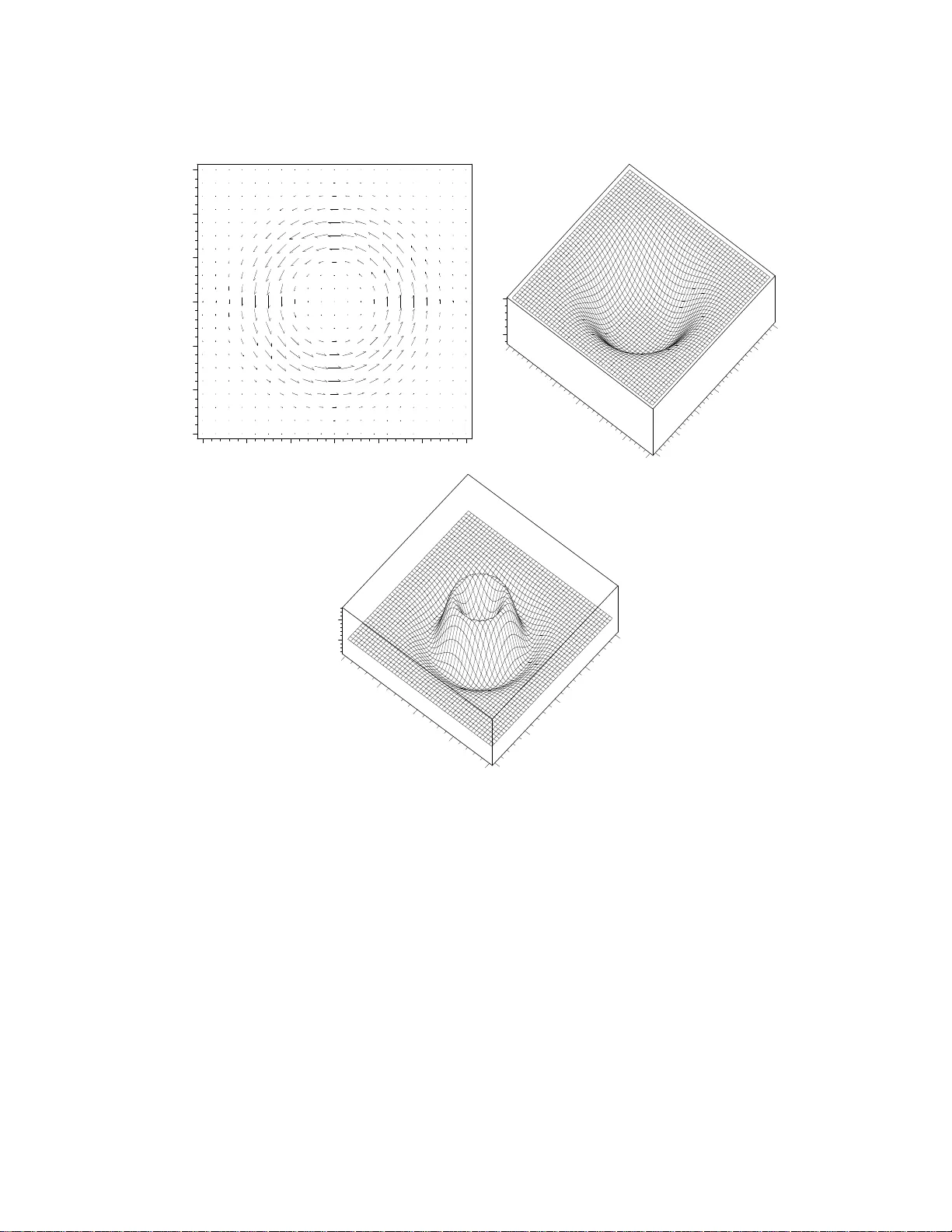
V ortices, circumfluence, symmetry groups and Darb oux transformations of the (2+1)-dimensional Euler equation S. Y. Lou 1 , 2 , M. Jia 1 , X. Y. T ang 1 , 2 and F. Huang 1 , 2 , 3 1 Dep artment of Physics, N ingb o University, Ni n gb o, 315211, China 2 Dep artment of Physics, Shanghai Jiao T ong University, Shanghai, 20003 0, China 3 Dep artment of Marine M ete or olo gy, Oc e an University of China, Qingdao 26600 3, China Abstract The Eu ler equation (EE) is one of the basic equations in man y physica l fi elds s uc h as fluids, plasmas, c ondensed mat ter, astroph ysics, o ceanic and atmospheric dynamics. A symmetry group theorem of the (2+1)-dimensional EE is obtained via a simple direct metho d which is th us uti- lized to find exact analytic al vortex and circumfluence solutions. A weak Darboux trans f ormation theorem of the (2+1)-dimensional EE can b e obtained for arbitr ary sp e ctr al p ar ameter from the general symmetry grou p theorem. Po ssible applications of the vortex and circumfluence solutions to tropical cyclones, esp ecially Hurricane Katrina 2005 , are demonstr ated. P A CS nu m ber s: 47.32 .-y; 47.35.-i; 92.60 .-e; 02.30.Ik 1 I. INTR ODUCTION. There are v ar io us imp ortant op en pro blems in fluid phy sics. One o f the most imp ortant problems is the existence and smo othness problem of the Na vier-Stok e s (NS) equation. The NS equation ha s b een recognized as the ba sic equation a nd the v ery start ing p oint of all problems in fluid phys ics [1]. Due to its imp ort a nce and difficult y , it is listed as one of the millennium problems of the 21st cen tury [2]. One of the most significan t recen t dev elopme n ts related to the ab ov e problem ma y b e the discov ery of Lax pairs of t w o- and three- dimensional Euler equations ( EEs) whic h are the limit cases of the NS equation for a large Reynolds num b er [3, 4]. Actually , for the t w o- dimensional EE, the Lax pair given in [3, 4] is w eak (see Remark 2 of the next se ction) while the Lax pairs o f the three-dimensional EE are strong (see Theorems 3 and 4 of [5] whic h can b e prov e d in a similar w a y as Theorem 1 of this pap er). Hence, the EEs a r e (we ak) Lax in tegrable under the meaning tha t they p ossess (w eak) Lax pairs, and subsequen tly the NS equations with larg e R eynolds n um ber are singular p erturbat ions of (w eak) Lax-integrable mo dels. The (3 + 1)-dimensional EE E 1 ≡ ~ ω t + ( ~ u · ∇ ) ~ ω − ( ~ ω · ∇ ) ~ u = 0 , (1) ~ ω = ∇ × ~ u, (2) with ~ ∇ · ~ u = 0 is t he original springb oa r d for inv estigating incompressible in viscid fluid. In Eqs. (1) and (2), ~ ω ≡ { ω 1 , ω 2 , ω 3 } is the v orticit y and ~ u ≡ { u 1 , u 2 , u 3 } is the v elocity of the fluid. In (2+1 ) -dimensional case, the EE has the form of E ≡ ω t + [ ψ , ω ] = 0 , ω = ψ xx + ψ y y , (3) where the v elocity ~ u = { u 1 , u 2 } is determined b y the stream function ψ thro ugh u 1 = − ψ y , u 2 = ψ x (4) and the Jacobian op erator (or, namely , comm utator) [ A, B ] is defined as [ A, B ] ≡ A x B y − B x A y . (5) 2 It is kno wn that the EEs are imp ortan t not o nly in fluid phys ics [6 ] but also in man y other ph ysical fields such as plasma phy sics [7 ], o ceanogra ph y [8], atmospheric dynamics [9], sup erfluid and sup erconductivit y [10 ], cosmograph y and astrophy sics [11], statistical ph ysic s [12], field and particle physic s[13] a nd condensed matter including Bose-Einstein condensation [14], crystal liquid [15] a nd liquid metallic h ydrogen [16], etc.. As a b eginning p oin t o f v arious phy sical problems, the EEs hav e b een studied extensiv ely and in tensiv ely , whic h is manifested by a larg e n um ber o f related pap ers on EEs in the literature. F or instance, a lot o f exact analytical solutions of the EEs ha v e b een presen ted, some of whic h can b e found in the classical b o ok of H. Lamb [17]. In [18], the a ut ho r s studied the planar ro t a tional flo ws of a n ideal fluid and the addressing metho d was deve lop ed to obtain exact solutions o f t he EEs in [19]. In addition, some types of exact solutions w ere obtained via a B¨ ac klund transfor ma t io n in [20]. How eve r, rather few exact analytic solutions of the EEs ha v e b een obt a ined from the ( weak) Lax pa ir since it w as rev eale d b y Charles Li [3] aro und five y ears ago. A sp ecial t ype of Darb oux transformation (DT) with zero sp ectral parameter for the (2+1)- dimensional EE w as sho wn in [3], and some types of DTs (or w eak DTs) with nonzer o sp ectral parameter(s) for b oth (2 + 1)- and ( 3 +1)-dimensional EEs w ere presen te d in our unpublished pap er [5]. Lie gro up theory is one of the most effectiv e metho ds o f seeking exact and analytic solutions of phys ical sy stems. How ev er, ev en for a mat hematician, it is still rather difficult to find a symmetry group, esp ecially non-Lie and non-lo cal symmetry groups. So for phy sicists, it w o uld b e more significan t and meaningful to establish a simp l e metho d to obtain mo r e gener al symmetry groups of nonlinear systems without using complicated gr o up theory . T o our kno wledge, there is little exact analytic understanding of the v ortices and circum- fluence, although they are most general observ a t ions in some ph ysical fields; in part icular, v ery ric h vortex structures exis t in fluid sys tems. In fact, if o ne could find the full symmetry groups of the EEs, then many kinds of exact v ortex and circumfluence solutions could b e generated from some simple trivial solutions. This pap er is a n enlarged ve rsion of our earlier, unpublished pap er [5]. In section I I, w e first establish a simple direct metho d to find a general group tra nsformation theorem for the (2+1)- dimensional EE, then utilize the theorem in some sp ecial cases to obt a in some solution t heorems whic h lead to a quite general symmetric v or t ex solution with some arbitrary functions. The applicatio ns of the exact v ortices and circumfluence solutions are 3 giv en in section I I I. It is indicated that the solutions can explain the tropical cyclone (TC) ey e, the trac k, and the relation b et wee n the trac k and the bac kground wind. The TC track s can th us b e predicted b y the relation. In section IV, b eginning with a general symmetry group theorem, the DT in [3] with zero sp ectral parameter is extended t o that with arbitra r y sp ectral parameter. The last section is a short summary a nd discussion. I I. SP A C E-TIME TRANSFORMA TION GR OUP OF THE TWO-DIMENSIONAL EE. In t he traditional theory , to find t he Lie symmetry group of a g iven nonlinear ph ysical system, one has to first find its Lie symmetry algebra and then use the Lie’s first fundamental theorem to solv e an “initial” problem. If one utilizes the standard Lie g roup theory to study the symmetry group of t he tw o -dimensional EE, it is easy to find tha t the only p ossible symmetry tr a nsformations ar e the arbitra r y time-dep enden t space a nd stream translations, constan t time translation, space rotation and scaling [21 ]. Recen tly , for simplicit y and finding m or e gener al symmetry groups, some types of new simple direct metho d without t he use of an y gro up theory ha ve b een established for b oth Lax-in tegra ble [22] and non-Lax-integrable [23] mo dels. F or the tw o-dimensional EE (3), w e hav e the following (w eak) L a x pair theorem. The or em 1 (L a x p ai r the or em [3]). The (2 +1)-dimensional EE (3) p ossesses the weak Lax pair ω x φ y − ω y φ x = λφ, (6) φ t + ψ x φ y − ψ y φ x = 0 , (7) with the sp ectral parameter λ . Pr o of. T o pro ve the theorem, we rewrite (6) a nd (7) a s Lφ = 0 , L ≡ [ ω , · ] − λ, (8) M φ = 0 , M ≡ ∂ t + [ ψ , · ] . (9) It is straightforw ard that the compatibilit y condition of Eqs. (8) and (9), LM − M L = 0, reads LM − M L = − [ ω t , · ] − [ ψ , [ ω , · ]] + [ ω , [ ψ , · ]] = 0 . (10) 4 Using the Jacobian iden tity fo r the commutator [ · , · ] defined b y (5) [ A, [ B , C ]] + [ B , [ C , A ]] + [ C , [ A, B ]] = 0 , Eq. (10 ) b ecomes [ ω t + [ ψ , ω ] , · ] = 0 . (11) The theorem is pro ven. R ema rk 1. The theorem w a s prov ed in a slightly weak w ay in [4], where the compatibility condition of Eqs. (6) and (7) w as [ ω t + [ ψ , ω ] , φ ] = 0 , (12) with the requiremen t that φ w as just the sp ectral function. Ho we ver, in our new pro of pro cedure, the sp ectral f unction φ in Eq. (12 ) can b e replaced by an y arbitr ary f unction. R ema rk 2. In Theorem 1, the Lax pair is termed we a k b ecause starting fro m the Lax pair, w e can only pro ve Eq. (11) instead of the EE (3) itself. F or instance, Eq. (11) is true for ω t + [ ψ , ω ] = c ( t ) with c ( t ) b eing an arbitr a ry function of t . Therefore, all the conclusions obtained from the Lax pair hav e to b e treated carefully b y substituting the final results to the original EE to rule out the additional freedoms. F rom Theorem 1, w e kno w that t he (2+1)-dimensional Euler equation is w eak Lax in te- grable. So we can apply the new direct metho d dev elop ed in [22] to find some complicated exact solutions from some simple sp ecial trivial ones a f ter ruling out the am big uit y men- tioned in remark 2. Using the metho d in [22], w e hav e the following transformatio n theorem: The or em 2. (Gr oup The or em). If { ω ′ ( x, y , t ) , ψ ′ ( x, y , t ) , φ ′ ( x, y , t ) } is a known solution of the tw o-dimensional EE ( 3 ) and its Lax pair (6) and (7) with the sp ectral parameter λ ′ , { ω , ψ , φ } with φ = exp( g ) φ ′ ( ξ , η , τ ) ≡ exp( g ) φ ′ (13) is a solution of Eq. (1 1) and its Lax pair with the sp ectral par a meter λ , if and only if the 5 follo wing three conditions are satisfied: ([ τ , ω ] ψ ′ ξ + [ ω , η ]) λ ′ − λω ′ ξ + [ ω , g ] ω ′ ξ φ ′ + [ τ , ω ] ω ′ τ + [ ω , η ] ω ′ η + [ ω , ξ ] ω ′ ξ φ ′ ξ = 0 , (14) η t + [ ψ , η ] − ( τ t + [ ψ , τ ]) ψ ′ ξ λ ′ + ( g t + [ ψ , g ]) ω ′ ξ φ ′ + ( τ t + [ ψ , τ ]) ω ′ τ + ( η t + [ ψ , η ]) ω ′ η + ( ξ t + [ ψ , ξ ]) ω ′ ξ φ ′ ξ = 0 , (15) ω = ψ xx + ψ y y , (16) where the argumen ts { x, y , t } of the functions ω ′ , ψ ′ and φ ′ ha ve b een tra nsformed to { ξ , η , τ } , and ξ , η , τ and g are functions of { x, y , t } . Pr o of. Because { ω ′ ( x, y , t ) , ψ ′ ( x, y , t ) , φ ′ ( x, y , t ) } is a solution of t he EE and its Lax pair with the sp ectral parameter λ ′ , then { ω ′ ( ξ , η , τ ) , ψ ′ ( ξ , η , τ ) , φ ′ ( ξ , η , τ ) } satisfies ω ′ ξ φ ′ η − ω ′ η φ ′ ξ = λ ′ φ ′ , (17) φ ′ τ + ψ ′ ξ φ ′ η − ψ ′ η φ ′ ξ = 0 , (18) and ω ′ τ + ψ ′ ξ ω ′ η − ψ ′ η ω ′ ξ = 0 . (19) Substituting Eq. (13) in to Eqs. (6) and (7) , w e hav e [ ω , ξ ] φ ′ ξ + [ ω , η ] φ ′ η + [ ω , τ ] φ ′ τ + ([ ω , g ] − λ ) φ ′ = 0 , (20) ξ t + [ ψ , ξ ] φ ′ ξ + η t + [ ψ , η ] φ ′ η + τ t + [ ψ , τ ]) φ ′ τ + g t + [ ψ , g ] φ ′ = 0 . (21) Applying Eqs. (17), (18) and (19) to Eqs. (20) and (21) b y ruling out the quan tities φ ′ τ and φ ′ η yields Eqs. ( 14) and (15). It is noted tha t Eq. (16) in Theorem 2 is only the definition equation of the v or ticit y . Theorem 2 is pr ov en. F rom Theorem 2, w e hav e only three determinan t equations for six undetermined f unc- tions ξ , η , τ , ψ , ω a nd g , whic h means that the determinan t equation system (16) is underdetermined. Therefore, there exist abundant interes t ing exact solutions. Here w e consider t wo sp ecial in teresting cases of Theorem 2. Cor ol lary 1 . If ψ ′ ( x, y , t ) is a solutio n of the P oisson equation ω 0 = ψ ′ xx + ψ ′ y y (22) 6 with a constant ω 0 , then { ω , ψ } is a solution o f (11) if t he f o llo wing three conditions hold: [ τ , ω ] ψ ′ ξ + [ ω , η ] = 0 , (23) η t + [ ψ , η ] − ( τ t + [ ψ , τ ]) ψ ′ ξ = 0 , (24) ω = ψ xx + ψ y y , (25) where ψ ′ ≡ ψ ′ ( x, y , t ) has b een redefined as ψ ′ ( ξ , η , τ ). Pr o of. It is clear that the EE (3) [and then Eq. (11)] p o ssesses a trivial constan t v orticit y solution { ω ′ , ψ ′ } = { ω 0 , ψ ′ } with ψ ′ b eing a solutio n of the Poiss o n equation. Substituting ω ′ = ω 0 = const . into Theorem 2 results in the Corollary 1 at once. Cor ol lary 2. If { ω ′ ( x, y , t ) , ψ ′ ( x, y , t ) } is a kno wn solution of t he tw o- dimensional EE (3), then { ω , ψ } with the conditions [ τ , ω ] ω ′ τ + [ ω , η ] ω ′ η + [ ω , ξ ] ω ′ ξ = 0 , (26) ( τ t + [ ψ , τ ]) ω ′ τ + ( η t + [ ψ , η ]) ω ′ η + ( ξ t + [ ψ , ξ ]) ω ′ ξ = 0 , (27) ω = ψ xx + ψ y y (28) is a solution of Eq. ( 1 1), where t he arguments { x, y , t } of the functions ω ′ and ψ ′ ha ve b een transformed to { ξ , η , τ } , a nd ξ , η a nd τ are functions of { x, y , t } . Corollary 2 can b e readily obtained fro m Theorem 2 by taking λ ′ = λ = g = 0. R ema rk 3. Coro llary 1 and Corolla r y 2 are indep enden t of the Lax pair though they are deriv ed by means o f the La x pair. By solving Coro llary 2, w e can get the fo llowing theorem. The or em 3 (So l ution the or em). The (2+1)-dimensional EE p o ssesses a sp ecial solution { ω , ψ } with ω = F ( f ( x, y , t )) ≡ F , (29) ψ = G ( f ( x, y , t ) , t ) − Z x f t ( z , r , t ) f r ( z , r , t ) d z ≡ G + h, (30) where f ≡ f ( x, y , t ) , h ≡ h ( x, y , t ) , F ( f ) and G ( f , t ) are functions of the indicated v ariables, the v ariable r = r ( x, y , z , t ) is determined by f ( z , r, t ) = f ( x, y , t ) and the functions F , G and f ( h ) are link ed by t he follo wing constrained condition F = G f f ( f 2 x + f 2 y ) + G f ( f xx + f y y ) + h xx + h y y . (31) 7 Pr o of. After rewriting Eqs. (2 6 ) a nd (27) as [ ω , ω ′ ] = 0 , (26 ′ ) ω ′ t + [ ψ , ω ′ ] = 0 , (27 ′ ) it is not difficult to find that the general solution o f Eq. (26) [i.e. Eq. (26’)] is ω = F ( ω ′ , t ) . (32) Though ω ′ ( x, y , t ) should b e an exact known solution of the EE, ω ′ ( ξ , η , τ ) ≡ f can still b e considered as an arbitrary function of { x, y , t } due to t he fact t ha t ξ , η and τ are all undetermined arbitrary functions of { x, y , t } . Then Eq. (32 ) b ecomes ω = F ( f , t ) . (33) The general solution of Eq. (27’) [or Eq. (27)] is rightly Eq. (30), while Eq. (31) is just the direct substitution of Eqs. (33) and (30) to Eq. (28). Finally , to rule out the am biguity bro ugh t by the w eak Lax pair b y substituting Eqs. (33) and (30 ) into Eq. (3), o ne can find that Eq. (33) with Eq. (30) is r eally a solution of the EE (3 ) o nly if F ( f , t ) = F ( f ). Theorem 3 is prov en. Because of the arbitrary function f , w e can obtain man y ph ysically interesting solutions from Theorem 3. F or instance, if the arbitra ry function f is assumed to b e t he f o rm f = ( x − x 0 ) 2 + ( y − y 0 ) 2 + h 0 ≡ r + h 0 , (34) where x 0 , y 0 and h 0 are all arbitrar y functions of t , then w e readily hav e t he following sp ecial solution theorem. The or em 4 ( Sp e cial solution the or em ). The (2 + 1 )-dimensional EE (3) p ossesses an exact solution ψ = y 0 t x − x 0 t y + F 1 ln r + F 2 − 1 2 h 0 t tan − 1 x − x 0 y − y 0 + 1 4 Z F ( r + h 0 ) r d r , (35) ω = F r ( r + h 0 ) , (36) where x 0 , y 0 , h 0 , F 1 and F 2 are arbitrary functions of t , and F ≡ F ( r + h 0 ) is an arbitr a ry function of r + h 0 . The in trusion of ma ny arbitrary functions in to the exact solution (35) allows us to find v arious vortex and circumfluence structures b y selecting them in differen t w ays . 8 –3 –2 –1 0 1 2 3 y –3 –2 –1 0 1 2 3 x FIG. 1: T he stru ctur e of the s in gular vo r tex expressed by (37) w ith the parameters (38). T he length of the arro w s tand s for the strength of the ve lo city fi eld and the v alues fr om in side to outside are 16/3 , 8/3, 16/9, 4/3, 16/15 , 8/9, 16/21 and 2/3, resp ectiv ely . In the solution (35), the first tw o terms y 0 t x − x 0 t y represen t the bac kground wind (induced flow ) with the time-dep enden t ve lo cit y field ~ u = { x 0 t , y 0 t } . The third term ( F 1 -dep enden t) F 1 ln r, (37) corresp onds to a time-dep enden t singular vortex. The detailed velocity field with F 1 = 1 , x 0 = y 0 = 0 (38) is sho wn in Fig. 1. All the quantities used in the figures of this pa p er are dimensionless except for the sp ecial indication in F ig . 8. The fourt h term F 2 is trivial b ecause of the existence o f the time-dep enden t translation freedom when one in tro duces the p ot ential of the ve lo cit y— i.e., the stream f unction. The fifth term ( h 0 t -dep enden t) 1 2 h 0 t tan − 1 x − x 0 y − y 0 (39) 9 –6 –4 –2 0 2 4 6 y –6 –4 –2 0 2 4 6 x –6 –4 –2 0 2 4 6 y –6 –4 –2 0 2 4 6 x FIG. 2: (a). The stru cture of the h ole expressed b y (39) w ith x 0 = y 0 = 0 , h 0 = t . (b). The source structure of (39) with x 0 = y 0 = 0 and h 0 = − t . T he length of the arrows expresses the strength of the v elo cit y field and the v alues from inside to outside are 0.71, 0.32, 0.20, 0.14, 0.11, 0.09, and 0.08, resp ectiv ely , b oth for (a) and (b). is related to a hole [Fig. 2(a)] or a source [Fig. 2(b)]. The last t erm o f Eq. (35) 1 4 Z F ( r + h 0 ) r d r , (40) is the most in teresting b ecause it is related to abundan t vortex structures due t o the arbi- trariness of the function F . Here are some sp ecial examples based on the different selections of t he a rbitrary function. (i) Lump-typ e vortic es. If the function F ( r ) is a rational solution of r , F ( r ) = P N i =0 a i r i P N i =0 b i r i ≡ P ( r ) Q ( r ) (41) with the conditions b N 6 = 0 and Q ( r ) 6 = 0 for all r ≥ 0, then t he solution (4 0 ) b ecomes an analytical lump- type vortex and/or circumfluence solution for the velocity field. F igure 3 displa ys a sp ecial lump-t yp e v or tex structure of the v elo cit y field describ ed by (40) with F ( r ) = 10 r 1 + 10 r 2 , x 0 = y 0 = 0 . (42) (ii) Dr o mion-typ e vo rtic es. When the function F ( r ) is fixed as a rational function of r 10 –1.5 –1 –0.5 0 0.5 1 1.5 y –1.5 –1 –0.5 0 0.5 1 1.5 x FIG. 3: A t ypical lump-t yp e vortex expressed b y (40) with (42). The s trength of th e velocit y fi eld is expressed b y the length of the arro ws and the v alues from inside to outside are 0.44, 0.87, 1.26, 1.52, 1.60, 1.48, 1.26, 1.01, 0.80, 0.62, 0.49, 0.39, 0.31, 0.25, 0.21, 0.17, and 0.14, resp ectiv ely . m ultiplied by a n exp onentially deca ying factor—fo r instance, F ( r ) = P N i =0 a i r i P N i =0 b i r i exp( − c 2 r ) , (43) with arbitrary constan ts a i , b i and c —then (40) turns in to an a nalytical dromion-ty p e v ort ex and/or circumfluence solution. Figure 4 exhibits a particular dromion-ty p e v o rtex structure of Eq. (40) with F ( r ) = r ex p( − r ) , x 0 = y 0 = 0 . (44) (iii) Ring so l i ton s and cir cumfluenc e. Recen tly , some kinds of r ing soliton solutions w ere disco v ered [24 , 25]. It is interesting that the basin and plateau types o f ring solitons may b e resp onsible fo r the circumfluence solution for fluid systems describ ed b y the EE. F or instance, if F ( r ) is assumed to ha ve the prop ert y d i F ( r ) d r i r =0 = 0 , i = 0 , 1 , ..., n, for n ≥ 2 , then (40) expresse s the circumfluence for the ve lo cit y field and the basin- or plateau-t yp e r ing soliton for the stream function. F igure 5(a) exhibits a special picture with F ( r ) = − 4 r 2 e − r (45) 11 –2 –1 0 1 2 y –2 –1 0 1 2 x FIG. 4: A typical dromion-t y p e v ortex expressed by (40) with Eqs. (44 ). The str en gth of the v elo cit y field is expressed by the length of the arrows and the v alues fr om inside to outside are 0.06, 0.12, 0.17, 0.20, 0.21, 0.20, 0.19, 0.17, 0.14, 0.11, 0.08, 0.06, 0.04, 0.032 , and 0.02, resp ectiv ely . of the circumfluence structure fo r the v elo city field, Fig. 5(b) displa ys the corresp onding basin-t yp e ring soliton shap e for the stream function ψ , and Fig . 5(c) sho ws t he structure of t he vorticit y . I I I. APPLICA TIO NS TO HURRICANE KA TRINA 2005. It is demonstrated in the last section that t he exact solutions ( 3 5)-(36) hav e quite ric h structures. Due to the richnes s of t he solution structures and wide applications o f the vortex in v ar io us fields such as fluids, plasma, o ceanic and atmospheric dynamics, cosmogra phy , astroph ysics, condensed matt er, etc. [6]–[16], our results may b e a pplied in all these fields. F or instance, in o ceanic and atmospheric dynamics, the analytical solution (35) can b e used to approx ima t ely describ e TCs whic h p ossess increasing destructiv eness ov er the past 30 y ears [26]. The relative ly tranquil part, the center of the circumfluence show n in Fig. 5(a) is resp o nsible for the TC ey e [27]. T o describe differen t types of v ortexes, one ma y select differen t types of f unction F ( r ). T o qualitative ly and ev en quan titatively characterize TCs, w e may require that F ( r ) hav e the form F ( r ) = ± a 2 r 1+ b 2 e − c 2 √ r , (46) 12 –3 –2 –1 0 1 2 3 y –3 –2 –1 0 1 2 3 x –3 –2 –1 0 1 2 3 x –3 –2 –1 0 1 2 3 y –0.4 0 –4 –2 0 2 4 x –4 –2 0 2 4 y 0 0.5 FIG. 5: (a) A field p lot of the circumfl uence (40) with Eq. (45) for the velocit y { u, v } . The strength of th e velocit y field is expr essed by the length of the arrows, and the v alues f rom inside to outside are 0.001, 0.027, 0.131, 0.295, 0.400, 0.370, 0.248, 0.125, 0.049, and 0.015, resp ectiv ely . (b) The corresp ond ing basin -typ e ring soliton for the stream f unction ψ related to (a). (c) The corresp ondin g b o w -t yp e ring soliton for the v orticit y ω . with constan ts a, b and c . In Eq. (46), the signs “ + ” and “ − ” dictate the TCs of the northern and southern hemisphere, resp ectiv ely . The constants a, b and c are resp o nsible for the strength, the size of the TC’s ey e, and the width of the TC. 13 FIG. 6: (Color online) Th e satellite image of Hurricane Katrina 2005 at 14:15, August 29, 2005, Co ordinated Univ ersal Time. The corresp o nding stream function related to the selection (46 ) reads ψ = y 0 t x − x 0 t y + a 2 (1 + b 2 ) 2 c 4+6 b 2 √ π r − b 2 2 e − c 2 √ r (2 b 2 + 1) 4 b 2 b 2 Γ( b 2 )Γ b 2 + 1 2 − √ π Γ(2 b 2 + 1 , c 2 √ r ) e c 2 √ r − r b 2 + 1 2 c 4 b 2 +2 o , (47) where Γ( z ) and Γ( a, z ) ar e the usual Gamma and incomplete Gamma functions, resp ectiv ely . F or more concreteness , w e ta ke Hurricane Ka trina 2 005 as an illustration. Figure 6 is the satellite image downloaded from the we b h ttp://www.k atrina .noaa.gov/ satellite/satellite.h tml [2 8] for Hurricane K a trina 2005 at 14:15, August 29, 2005 , Co ordi- nated Univ ersal Time (UTC). T o fix the constan ts a, b and c in Eq. (46) for Hurricane Katrina 200 5 sho wn in Fig . 6, w e need kno w the strength (the maxim um wind sp eed), t he ey e size, and the width of TC Katrina at 14:15 , August 29, 20 0 5 UTC. The strength o f K atrina can b e found in sev eral w ebsites. The data of T able I are downloaded f r o m [29]. 14 T a ble I. Data o f Hurricane Katrina dow nlo aded from [29]. Time (UTC) W. Long N. Lat. MPH Time (UTC) W. Lo ng N. Lat. MPH 2005 Aug 2 3 2 1:00 75.50 23.20 35 2005 Aug 27 03:00 83.60 24.60 105 2005 Aug 2 4 0 0:00 75.80 23.30 35 2005 Aug 27 06:00 84.00 24.40 110 2005 Aug 2 4 0 3:00 76.00 23.40 35 2005 Aug 27 09:00 84.40 24.40 115 2005 Aug 2 4 0 6:00 76.00 23.60 35 2005 Aug 27 12:00 84.60 24.40 115 2005 Aug 2 4 0 9:00 76.40 24.00 35 2005 Aug 27 15:00 85.00 24.50 115 2005 Aug 2 4 1 2:00 76.60 24.40 35 2005 Aug 27 18:00 85.40 24.50 115 2005 Aug 2 4 1 5:00 76.70 24.70 40 2005 Aug 27 21:00 85.60 24.60 115 2005 Aug 2 4 1 8:00 77.00 25.20 45 2005 Aug 28 00:00 85.90 24.80 115 2005 Aug 2 4 2 1:00 77.20 25.60 45 2005 Aug 28 03:00 86.20 25.00 115 2005 Aug 2 5 0 0:00 77.60 26.00 45 2005 Aug 28 06:00 86.80 25.10 145 2005 Aug 2 5 0 3:00 78.00 26.00 50 2005 Aug 28 09:00 87.40 25.40 145 2005 Aug 2 5 0 6:00 78.40 26.10 50 2005 Aug 28 12:00 87.70 25.70 160 2005 Aug 2 5 0 9:00 78.70 26.20 50 2005 Aug 28 15:00 88.10 26.00 175 2005 Aug 2 5 1 2:00 79.00 26.20 50 2005 Aug 28 18:00 88.60 26.50 175 2005 Aug 2 5 1 5:00 79.30 26.20 60 2005 Aug 28 21:00 89.00 26.90 165 2005 Aug 2 5 1 7:00 79.50 26.20 65 2005 Aug 29 00:00 89.10 27.20 160 2005 Aug 2 5 1 9:00 79.60 26.20 70 2005 Aug 29 03:00 89.40 27.60 160 2005 Aug 2 5 2 1:00 79.90 26.10 75 2005 Aug 29 05:00 89.50 27.90 160 2005 Aug 2 5 2 3:00 80.10 25.90 80 2005 Aug 29 07:00 89.60 28.20 155 2005 Aug 2 6 0 1:00 80.40 25.80 80 2005 Aug 29 09:00 89.60 28.80 150 2005 Aug 2 6 0 3:00 80.70 25.50 75 2005 Aug 29 11:00 89.60 29.10 145 2005 Aug 2 6 0 5:00 81.10 25.40 70 2005 Aug 29 13:00 89.60 29.70 135 2005 Aug 2 6 0 7:00 81.30 25.30 70 2005 Aug 29 15:00 89.60 30.20 125 2005 Aug 2 6 0 9:00 81.50 25.30 75 2005 Aug 29 17:00 89.60 30.80 105 2005 Aug 2 6 1 1:00 81.80 25.30 75 2005 Aug 29 19:00 89.60 31.40 95 2005 Aug 2 6 1 3:00 82.00 25.20 75 2005 Aug 29 21:00 89.60 31.90 75 2005 Aug 2 6 1 5:00 82.20 25.10 80 2005 Aug 30 00:00 88.90 32.90 65 2005 Aug 2 6 1 5:30 82.20 25.10 100 2 0 05 Aug 30 03:00 88.50 33.50 60 2005 Aug 2 6 1 8:00 82.60 24.90 100 2 0 05 Aug 30 09:00 88.40 34.70 50 2005 Aug 2 6 2 1:00 82.90 24.80 100 2 0 05 Aug 30 15:00 87.50 36.30 35 15 F rom T able I, we know that the maxim um wind sp eed of the Katrina 2005 at 14:15 , August 29, 2005 UTC is ab out 130 mph (miles p er hour) — i.e., v max ∼ 130 mph ∼ 200 km ph ∼ 2 degree ph , v ≡ q ψ 2 y + ψ 2 x . (48) Comparing Katrina’s satellite image sho wn in Fig. 6 with the map of New Orleans—sa y the map sho wn in Fig. 7 do wnloaded from [30]—one can estimate t ha t the eye size ( E ) is ab out E ∼ 1 degree ∼ 100 km and the width ( W ) of the hu rricane is approxim ately W ≈ 10 degree ≈ 10 0 0 km for Katrina at 14:15, August 29, 2005 UTC. Using these data, w e can find that the stream function of Katrina 2005 near the time at 14:15, August 29, 2005 UTC can b e a ppro ximately described b y ψ Katrina ≈ y 0 t x − x 0 t y − 4(2 + 2 √ r + r ) exp( − √ r ) , ( r ≡ ( x − x 0 ) 2 + ( y − y 0 ) 2 ) , (49) whic h corresp o nds to the parameter selections a 2 ∼ 8 , b 2 ∼ 0 . 5 , c 2 ∼ 1 , in Eq. (46). In the real case, the quan t it ies a, b and c should b e time dep enden t. So the description here is only appro ximate b ecause it is only a solution of the EE instead of the NS equation. If the strength v max , the size of the h urr icane ey e E , and the width W are assumed to ha ve some errors, v max ≈ 130 ± 10 mph , E ≈ 1 ± 0 . 2 degree , W ≈ 10 ± 2 degree , (50) then the parameters a, b and c in Eq. (46 ) o r (47) ha ve the ranges a 2 ≈ 6 . 75 ∼ 9 . 35 , b 2 ≈ 0 . 25 ∼ 1 . 25 , c 2 ≈ 0 . 9 ∼ 1 . 2 . (51) In ( 49), x 0 ≡ x 0 ( t ) and y 0 ≡ y 0 ( t ) can b e obtained from the data in T able I. According to T able I, we can find the theoretical fit o f hurricane K a trina 2005 from 22:00, August 25 , 2005 to 15:00, August 30, 2005 can b e approxim ately describ ed b y x 0 = 0 . 00022 t 2 − 0 . 14 t − 79 , y 0 = 0 . 00 0 73 t 2 − 0 . 07 t + 26 (5 2 ) 16 FIG. 7: (Color online) The map with the longitude and latitude d egree co ordinates near the New Orleans and the real trac k of Hurricane Katrina 2005 from 21:00 T ues., August 23, 2005, to 21:00 W e d nes., August 31, 2005 UTC. b efore 21:00 , August 27, 200 5 and x 0 = 0 . 00 2 9 t 2 − 0 . 5 t − 68 , y 0 = 0 . 00 2 3 t 2 − 0 . 2 t + 29 (53) after 21:00, August 27, 2005 . In Eqs. (52) and (53), the units of x 0 , y 0 and t are longitude degree, latitude degree, and hour, respectiv ely , while the initial time t = 0 is take n as 22:00, August 25, 2005 UTC. R ema rk 4. If w e fit the track only for the [Longit ude, Latitude] p ositions, we ma y get a b etter fit without using any switc h p oin t. How ev er, if we fit the trac k not only f or the p ositions but a lso for times, we ha ve to select some switc h p oin ts. Phy sically speaking, when w e use a parab olic line suc h as (52) to fit the track of a TC, w e ha ve to assume that t he TC mov es under a constant f o rce during the fit time p erio d. The necess a ry selections of the switc h p oin ts are caused by the fact that the driv en force o f the TC is time dep enden t. Here we find that if w e select 21:00, August 27, 2 005 as a switc h p oin t, then Eqs. (52) and (53) can fit t he track quit w ell ( t he square error [see later, Eq. (56)] b ecomes smallest). This means that the TC is approx imately drive n b y t wo constan t f orces b efor e and af ter the turning time, respectiv ely . Actually , a ppr ox imately sp eaking, after this switc h p oin t , the TC b ecomes stronger and stronger (see F ig . 7 and/or T able I). Figure 8 describes the v elo city field of K a trina at 14 :15, August 2 9 , 2005 UTC ( t = 88 . 1 5 ) when the stream function is giv en b y Eqs. (49) with (53 ) . In addition, the solution (35)-(36) also provides a relation b et wee n the TC tra c k given 17 24 26 28 30 32 34 36 Latitude –94 –92 –90 –88 –86 –84 Longitude FIG. 8: The field and densit y p lot for the vel o cit y field Hurricane Katrina 2005 at 14:15/29/ 08 describ ed by Eqs. (49) with (53). The str ength of the velocit y fi eld is expressed b y the length of the arrows an d the v alues from left to righ t at y = 0 are 0.14, 0.30, 0.53, 0.82, 1.17, 1.55, 1.86, 1.95, 1.6 0, 0.69, 0.18, 0.8 9, 1.87, 2.33, 2.31, 2.03, 1.66, 1.30, 0.9 9, 0.75, and 0.5 8 (degree p er hour ), resp ectiv ely . b y { x 0 , y 0 } and the strength of the bac kgro und wind (steering flow). The stream function o f the steering flo w, ψ s , can b e obtained b y eliminating the TC term (v ortex term) in Eq. (35) with F 1 = F 2 = h 0 = 0 by setting F = 0 and then the ve lo cit y field flow − → u s of t he ba ckground wind r eads − → u s = {− ψ sy , ψ sx } = { x 0 t , y 0 t } . (54) This fact implies that once the bac kground wind, or the large-scale steering flow in the upp er air, is know n then the motion of the h urricane cen ter can b e obtained. In v ersely , if the motio n of the hurricane cen ter is know n then the steering flow will b e obtained at the same t ime. Therefore, if the p osition { x 0 , y 0 } o f t he hurricane cen ter is determined, in a not v ery long time (say , shorter than one day), o ne can consider that the v elo city of the TC will appro ximately k eep the latest kno wn v elo city and then the TC ’s new p osition { x 1 ( t 1 ) , y 1 ( t 1 ) } a t time t 1 can b e determined b y using x 1 ( t 1 ) = x 0 ( t 0 ) + x 0 t ( t 0 )( t 1 − t 0 ) , y 1 ( t 1 ) = y 0 ( t 0 ) + y 0 t ( t 0 )( t 1 − t 0 ) . (55) The concrete steps to predict the track and p osition of a TC are as follows. 18 (i) Get the o riginal known p o sition da ta of a TC from professional meteorologic w eb site. The concrete p osition data of a happ ening TC, sa y , Katrina, can be read off from some web sites, sa y , [29, 31], whic h ar e giv en b y some in ternatio na l satellites and up dated eve r y six hours and usually three hours (or ev ery hour) close to the landing time. (ii) T ak e the co ordinate of the fit tr a c k. F rom the web site w e can get the p osition described b y longitude and la titude. Because the TCs happ en in a quite small a rea compar ed to the whole Earth, t he fit curv e can b e taken in a tw o- dimensional pla ne. T o simplify , the longitude and latitude a re defined a s X a xis Y axes, r esp ective ly . The first time recorded on the w eb site is set as initial time, a nd the following times a re added in order b y the time in terv al. (iii) Fit the function curv e and forecast the t r a c k and p osition. F rom the first few kno wn p ositions, it is easy to calculate the fit curv e whic h is the function of time t . Usually we can tak e it p ossesses the p olynomial forms of the time t , say , { X = x 0 ( t ) = P N i =0 a i t i , Y = y 0 ( t ) = P N i =0 b i t i } . In this pap er, we tak e N = 2. F inally w e should minimize the square error, ∆, a mong the fit trac k and the real trac k ∆ ≡ n 2 X j = n 1 ( x 0 ( t j ) − x j ) 2 + ( y 0 ( t j ) − y j ) 2 (56) b y fixing the constan ts a i and b i , where { x j , y j } a nd { x 0 ( t j ) , y 0 ( t j ) } are the real and fit p ositions of the hurricane cen ter at time t j , n 1 , n 1 + 1 , ..., n 2 are related to the p oints used to fit the theoretical tra c k { x 0 ( t ) , y 0 ( t ) } , t = t n 2 corresp onds to the time to mak e the further prediction. Usually , we tak e t n 2 − t n 1 ∼ 24 (ho urs) that means the earlier history can b e neglected to the h ur r icane track . Based on the a b o v e descriptions, we can use first few know n p osition data of the h urricane cen ter to predict the p ossible p o sition of the h urricane some ho urs later. Figure 9 displa ys an example o n the TC trac k [Fig. 9(a)] and the related bac kgro und wind field [F igs. 9( b)–9(f )]. The zigzag line in Fig . 9 (a) is the real trac k of Katrina 2 005 from 21:00/ 2 5/08 to 15:00 /30/08 (data a re read off from [29]), and the solid line is o ur fit (b y using all the data in T able I) giv en b y Eqs. (52) and (53). F ig ures. 9(b)–9(f ) rev eal the corresp onding steering flo ws a t fiv e differen t times. It is sho wn tha t t he back ground wind leads to the change of the direction of the TC t rac k. According to the relation b et we en the trac k a nd t he steering flow, w e can predict the TC track b y using sev eral b eginning data. The cross p oin ts in Fig. 9(a) are our predicted trac k 6 h b efore the real one. The same idea 19 (f) (e) (d) (b) (c) (a) Katrina 2005 FIG. 9: (a). The zigz ag line stands for the real TC trac k of Hurricane Katrina 200 5 from 21:00/ 25/08 to 15:00/3 0/08 for time and from [79.9,26.2] to [87.5,36.3 ] for [Lon gitud e, Latitude] p osition, the smo oth line is the fit trac k by u sing all the data in T able I and the cross p oin ts express our pred icted trac k six h ou r s b efore the real time. (b )–(f ). Th e corresp ondin g steering flo ws at 23:00/25 /08, 21:00/ 27/08, 15:00/28/ 08, 05:00 /29/08 and 00:00/3 0/08 with the strengths 1.33, 1.92, 2.92, 2.67, and 1.08 (degree p er hour), resp ective ly . has b een applied to ty pho on Chanc hu 2006 [33] and Hurricane Andrew 1992 [5]. IV. D ARBOUX T RANSF ORMA TION O F THE (2+1)-DIME NSIONAL EE In Sec. I I, w e ha ve established a g eneral group theorem (Theorem 2) for the (2+1 )- dimensional EE, whic h can yield v ar io us solutions. F urthermore, t wo solution corollaries on the (2+1)-dimensional EE are obtained by utilizing pa r t icular seed solutions. It is noted that the we ak DT theorems given in [3, 5, 3 4] are sp ecial cases of the general group Theorem 2. In [3], Li found a (weak ) D T of t he EE (3) with the Lax pair (6) and (7) for a zer o sp ectral para meter. In [5 ], the w eak DT w as extended t o a general nonzer o sp ectral parameter and ma ny kinds of exact solutions including the solitary , Rossb y , conoid, and Bessel w av es w ere obtained subsquen tly . Here we deriv e the w eak DT theorem directly from the general gr o up Theorem 2 . The or em 5 (We ak DT the or em). If { ω ′ , ψ ′ , φ ′ } is a solution of the ( 2 +1)-dimensional EE (3) a nd its Lax pair (6 ) and (7) with the sp ectral parameter λ ′ , g ( f ) b eing an arbitr ary 20 function of f whic h is a giv en sp ectral function of (6) and (7) under the sp ectral parameter λ 0 , then { ω , ψ , φ } = { ω ′ + q , ψ ′ + p, exp( g ) φ ′ } (57) with the sp ectral parameter λ is a solution of the w eak Lax pair (6) and ( 7) and then Eq. (11) where p a nd q are determined by q = p xx + p y y (58) [ p, ln φ ] = 0 , (59) [ q , ln φ ′ ] + λ ′ − λ + λ 0 f g f = 0 . (60) Pr o of. Known from the pro of of the group Theorem 2 , Eqs. (1 4 ) and (15) a r e equiv alen t to Eqs. (2 0) a nd (21). T a king ξ = x, η = y and τ = t in Eqs. (20) and (21), we hav e [ ω , φ ′ ] + ([ ω , g ] − λ ) φ ′ = 0 , (20 ′ ) [ ψ , φ ′ ] + φ ′ t + ( g t + [ ψ , g ]) φ ′ = 0 . (21 ′ ) Substituting Eq. (57) in to Eq. (2 0’), we hav e [ ω ′ , φ ′ ] + [ q , φ ′ ] + ([ ω ′ , g ] + [ q , g ] − λ ) φ ′ = λ ′ φ ′ + [ q , φ ′ ] + g f λ 0 f φ ′ + ([ q , g ] − λ ) φ ′ = { λ ′ − λ + λ 0 f g f + [ q , ln φ ′ ] } φ ′ = 0 . Equation (60) is pro ven . Substituting Eq. (57) in to Eq. (21 ’) yields [ ψ ′ , φ ′ ] + [ p, φ ′ ] + φ ′ t + ( g t + [ ψ ′ , g ] + [ p, g ]) φ ′ = [ p, φ ′ ] + [ p, g ] φ ′ = [ p, ln φ ′ + g ] φ ′ = [ p, ln φ ] φ ′ = 0 . Equation (59) is prov en, and Eq. (58) is a direct result f r o m the definition equation of t he v orticity . Theorem 5 is prov en. It is in teresting that if all the parameters λ, λ 0 and λ ′ are zero and the v orticity of the seed solution is not a constan t, the B¨ ac klund transformation ω = ω ′ + q , ψ = ψ ′ + p 21 with Eqs. (59) and (6 0) is equiv alent to what w ere obtained b y Li [3]. T o see it more clearly , one can write Eqs. (59) and (60) in the alternativ e forms b y eliminating φ ′ y via t he Lax pair (6) and (7), λ ′ ω ′ x − [ λ + λ 0 f g f ]( ω ′ + q ) x + [ ω ′ , q ][ln φ ] x = 0 , (61) [ ω ′ + q , p ][ln φ ] x + λ ′ p x = 0 . (6 2 ) The equiv alen t f orms of Eqs. (61) and (62) can also b e obta ined directly f rom Eqs. (14) and (15) b y setting ξ = x, η = y a nd τ = t . R ema rk 5 . If the seed solution has a constan t v ort icit y , the equation systems (59)–(6 2) are completely not equiv alen t. Actually , when one tak es a constan t v orticity as a seed for the zero sp ectral parameters, nothing can b e obtained from Eqs. (61) and (6 2). How ev er, one can really find some non trivial solutions from Eq. (60) with a constant v ort icity seed. In [34], the w eak DT theorem has been used to obtain some types of exact solutions suc h as the solitary w a ve s, the conoid p erio dic w av es, the Rossb y wa v es, and many kinds of Bessel w av es. Here we will not discuss them further. V. SUMMAR Y AND DISCUSSION. The analytical and exact for ms of the v ort ices and circumfluence of the t w o-dimensional fluid are studied b y means of the g eneral symmetry group Theorem 2 of the (2+1)- dimensional EE. Some solution theorems for the ( 2+1)-dimensional EE are obta ined from the group theorem by taking sp ecial seed solutions. A sp ecial weak DT of the (2 +1)-dimensional EE is also obtained from the general group theorem. The sp ecial solution Theorem 4 giv es a quite general exact explicit solution whic h cov ers man y kinds of p ossible vortices and circumfluence suc h as the lump-ty p e vortices , dromion- t yp e vortices , ring solitons, etc. The v ort ex and circumfluence solutions may ha ve applica- tions in v arious ph ysical fields men tioned in the Introduction a nd Refs. [6]–[16]. Particularly , they can qualitatively explain some fundamental problems of TCs suc h as their ey e, track, and the relation b et wee n the track and the bac kgro und wind, and the relation can b e used to predict w ell the TC tracks . Hurricanes and/or typh o ons ha ve tremendously and increas- ingly caused destruction of our w orld. The metho d in this pap er provides a p ossible w ay to understand and study similar disas ters intens ively . As a n original study in this asp ect, some 22 in tro ductory analysis by means of our metho d of Hurricane Katrina 2005 (whic h almost completely destro yed a whole city , New Orleans) are presen ted. The technological observ a- tions and phenomenological discuss io ns on Hurricane Katrina 2005 can b e found in man y pap ers [32]. In this pap er, an a ppro ximate analytical expression for the (2+1)-dimensional stream function of Katrina 200 5 is obtained. The expression is a n exact solution o f the (2+1)-dimensional EE and includes some messages including the ey e size, the hurricane size, the strength, the relatio n b etw een the h urricane center and the steering flo w, etc. The relation is also used to predict the track of the h urricane. The disco v ery of the general group theorem may lead to the disco very of v arious in ter- esting exact solutions whic h can b e applied to many real ph ysical fields. This pap er is just the b eginning study in this asp ect. There are v arious imp ortant problems should b e studie d further. F or instance, the p ossible solutions from the general g r o up Theorem 2 a re only discusse d in three v ery sp ecial cases: (i) the constan t v o r ticit y seed (Corollary 1), (ii) the zero sp ectral parameters without t he gaug e transforma t io n (Coro llary 2 , Theorems 3 and 4), a nd (iii) the pure w eak DT case (Theorem 5). In this pa p er, we only discuss the (2 +1)-dimensional EE. Tw o types of Lax pairs of the (3+1)-dimensional EE ha v e a lso b een giv en in [4] and some sp ecial D Ts of these Lax pairs ha ve also b een giv en in [5]. Ho wev er, these DTs hav e not ye t b een utilized to find exact solutions of the (3+1)- dimensional EE. F urthermore, the corresp onding symmetry groups similar to that of the (2 +1)-dimensional EE giv en in t his pap er ha v e not ye t b een discus sed. The Lax pair and then t he DT found in this pap er hav e only w eak meaning. Whether the ( 2 +1)-dimensional EE is in t egr a ble under some stronger meanings [similar to those of (3+1)-dimensional EE] is still op en. The more general applications of the v ortex solutions g iv en in this pap er b oth in atmo- spheric dynamics and in o ther phy sical fields deserv e more in ves tig ations. Esp ecially , to describe the hurricane more effectiv ely and accurately , some other imp ortant factors such as the Coriolis force and the viscosit y o f the fluid m ust b e considered. Because of the imp ortance of the EEs and the NS system and their wide applications, the mo dels and all the problems men tio ned ab o v e are w orth y of further study . 23 Ac kno w ledgmen ts The authors ar e grateful for helpful discussions with Professor. Y. S. Li, Professor D. H. Luo, Professor Y. Chen, Professor X. B. Hu, and Professor Q. P . Liu. This w o rk w as supp orted b y the National Natural Science F oundation of China (Gra n ts No. 10475055 , No. 40305009 , No. 90503 006, and No. 10547124 ) , Progra m for New Century Excellen t T alen t s in Univers ity (NCET-05-0591), Shanghai P ost-do ctoral F oundation (06R214139), Shando ng T a ishan Sc holar F oundation and Natio na l Basic Researc h Program of China (97 3 program) (Grant No. 2005 CB42 2 301). [1] D. S undkvist, V. Krasnoselskikh, P . K. Shukla, A. V a iv ads, M. Andr´ e, S. Buc h ert and H. R ` eme, Nature, 436 825 (2005); G. Pedrizzett i, Phys. Rev. Lett. 94 194502 (2005). [2] C. L. F e ffer m an, http:/ /www.cla ymath.org /millennium /Na vier-Stok es Equations /Offi- cial Problem Description. p d f (200 0). [3] Y. G. Li, J. Math. Phys. 42 3552 (2001 ). [4] Y. G. Li and A. V. Y uro v, S tud. Appl. Math. 111 101 (2003). [5] S. Y. Lou, X. Y. T ang, M. Jia and F. Huang, V ortic es, cir cumfluenc e, symmetry gr oups and Darb oux tr ansformations of the Euler e quations, nlin.PS/0509039. [6] P . H. Ch a v anis and J. S ommeria, Phys. Rev. Lett. 78 3302 (1997); P . H. Ch a v anis, ib i d 84 5512 (2000 ). [7] E. Cafaro, D. Grasso, F. Peg oraro, F. Porcell i and A. Saluzzi, Phys. Rev. Lett. 80 4430 (1998 ); D. Del Sarto, F. Califano and F. P egoraro, ibid 91 235001 (2003). [8] V. M. Canuto and M. S . Dub o viko v, Ocean Mo delling 8 1 (2005). [9] C. Girard , R. Benoit, M. Desgagne, Monthly W eather Rev. 133 1463 (2005); S. Kurien, V. S. L’v ov, I. Pro caccia and K. R. Sreeniv asan, P h ys . Rev. E 61 407 (2000). [10] F. D. M. Haldane and Y. S. W u, Ph ys. Rev. Lett. 55 2887 (1985). [11] S. Bonazzola , E. Gourgoulhon and J. A. Marc k, Phys. Rev. D 56 7740 (1997). [12] A. J. Niemi, Phys. Rev. L ett. 94 12450 2 (2005). [13] L.F addeev, A.J.Niemi, and U.Wiedner, hep-ph /03082 40 . [14] A. J. Leggett, Rev. Mo d. Phys. 73 307 (2001). 24 [15] I. Chuang, R. Durr er, N. T urok, and B. Y u rke , Science 251 1336 (1991); M. J. Bo w ic k, L. Chandler, E.A. Schiff, and A. M. S riv asta v a, S cience 263 943 (1994) . [16] E. Babaev, A. Sudb ø, and N.W. Ash croft, Nature (London) 431 666 (2004 ). [17] H. Lam b , Hydr o dynamics, 6th ed. (Do ver, New Y ork, 1945). [18] A. A. Abrashkin and E. I. Y a kub ovic h , Sov. Ph ys. Dokl. 276 370 (1984). [19] A. V. Y uro v and A. A. Y uro v a, Theor. Math. Phys., 147 501 (2006) . [20] S. Y. L ou, M. Jia, F. Huang and X. Y. T ang, Int. J. Th eor. Ph ys . (2007 ) DOI:10.1007/ s10773- 006-9 327-5. [21] F. Huang and S. Y. Lou, Phys. Lett. A 320 428 (2004); V. L. Sav eliev, M. A. Gorokhovski, Ph y s . Rev. E 72 016302 (2005). [22] S. Y. Lou and H. C. Ma, Chaos, Solition & F ract als 30 804 (2006). [23] S. Y. Lou and H. C. Ma, J. Phys. A: Math. Gen. 38 L129 (2005), S. Y. Lou, Chin . Ph y s . Lett. 21 1020 (2004). [24] S. Y. Lou, J. Math. Phys. 41 6509 (2000). [25] X. Y. T ang, S. Y. Lou and Y. Zhang, Ph ys. Rev. E. 66 046601 (2002). [26] K. Eman u el, Nature, 436 686 (2005). [27] Q. H. Zhang, S. J. Chen, Y. H. Kuo and R. A. Anthes, Monthly W eather Rev. 133 725 (2005); [28] h ttp://www.k atrina.noaa.go v/satellite/satellite.h tml . [29] h ttp://fermi.jhuapl.edu/h ur r/05/k atrina/k atrina.txt . [30] h ttp://www.n cdc.noaa.go v/img/climate/researc h/2005/k atrina/k atrina.gif . [31] h ttp://wea th er .u nisys.com/h u rricane/atlan tic/2005H/KA T RINA/trac k. dat . [32] A. Ap ple, Na ture 437 462 (200 5); R. Dalton, ibid 300; E. Stokstad, S cience 310 1264 (2005 ); J. Kaiser, ibid 1267 (2005) . [33] M. Jia, C. Lou and S. Y. Lou, Chin. Phys. Lett. 23 2878 (2006). [34] S. Y. Lou and Y. S. Li, Chin. Phys. Lett. 23 2633 (2006). 25
Original Paper
Loading high-quality paper...
Comments & Academic Discussion
Loading comments...
Leave a Comment