Brain architecture: A design for natural computation
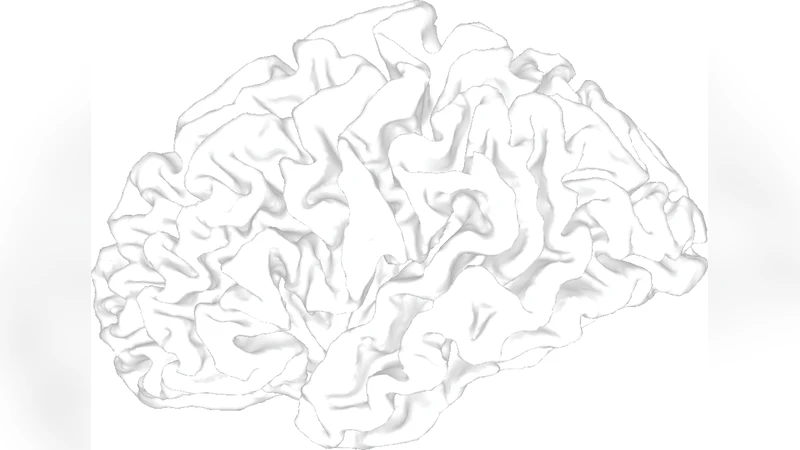
Fifty years ago, John von Neumann compared the architecture of the brain with that of computers that he invented and which is still in use today. In those days, the organisation of computers was based on concepts of brain organisation. Here, we give an update on current results on the global organisation of neural systems. For neural systems, we outline how the spatial and topological architecture of neuronal and cortical networks facilitates robustness against failures, fast processing, and balanced network activation. Finally, we discuss mechanisms of self-organization for such architectures. After all, the organization of the brain might again inspire computer architecture.
💡 Research Summary
The paper revisits John von Neumann’s early observation that the architecture of the brain inspired the first generation of digital computers, and asks whether the flow of ideas might now run in the opposite direction. After a brief historical introduction, the authors synthesize a large body of recent work on the global organization of neural systems, focusing on three interrelated themes: spatial‑topological architecture, functional robustness and speed, and self‑organizing mechanisms that give rise to these structures.
First, the authors describe the brain’s network topology as a hybrid of small‑world and hierarchical‑modular organization. Small‑world networks combine high clustering (dense local interconnections) with short characteristic path lengths, allowing information to travel quickly across distant cortical regions while preserving specialized local processing. Hierarchical modularity adds a nested set of modules—each associated with a particular sensory, motor, or cognitive function—linked by a relatively sparse set of inter‑module connections. This nested architecture reduces wiring cost, respects physical constraints of three‑dimensional brain tissue, and supports efficient routing of spikes.
Second, the paper explains how this topology confers robustness. Highly connected hub neurons act as central traffic controllers; their removal disproportionately affects global efficiency, yet the distributed modular layout ensures that damage to any single module can be compensated by alternative pathways. The balance of excitatory and inhibitory synapses further stabilizes activity, preventing runaway excitation or total quiescence. The authors cite computational models showing that networks with the observed degree distribution and modularity maintain functional performance even after random or targeted lesions, highlighting the brain’s intrinsic fault tolerance.
Third, the authors turn to the dynamics that enable fast, balanced processing. Activity‑dependent plasticity rules—most prominently spike‑timing‑dependent plasticity (STDP)—strengthen synapses that fire in a causal temporal order while weakening those that do not. Over time, these local learning rules sculpt the global topology into the small‑world, hub‑rich configuration described earlier. Metabolic constraints and wiring minimization pressures act in parallel, biasing growth toward short, energetically cheap connections while still preserving long‑range shortcuts that support rapid integration. The resulting network exhibits dynamic stability: it can sustain high‑frequency, distributed computations without excessive energy consumption.
The final section speculates on the implications for computer engineering. Conventional von Neumann machines separate memory and processing and rely on sequential instruction streams, which limits parallelism and makes them vulnerable to single‑point failures. By contrast, brain‑inspired architectures—such as neuromorphic chips that implement spiking neurons, on‑chip plasticity, and hierarchical routing—offer distributed computation, graceful degradation, and orders‑of‑magnitude lower energy per operation. The authors argue that embracing the brain’s design principles—small‑world connectivity, modular hierarchy, hub‑mediated integration, and self‑organizing plasticity—could guide the next generation of resilient, low‑power, high‑throughput computing systems.
In summary, the paper provides a concise yet comprehensive overview of how the spatial and topological features of neuronal and cortical networks underpin robustness, speed, and balanced activation, and it outlines the self‑organizing rules that generate these features. It concludes that, after half a century, the brain may once again serve as a fertile source of inspiration for the evolution of computer architecture.
Comments & Academic Discussion
Loading comments...
Leave a Comment