PGA Tour Scores as a Gaussian Random Variable
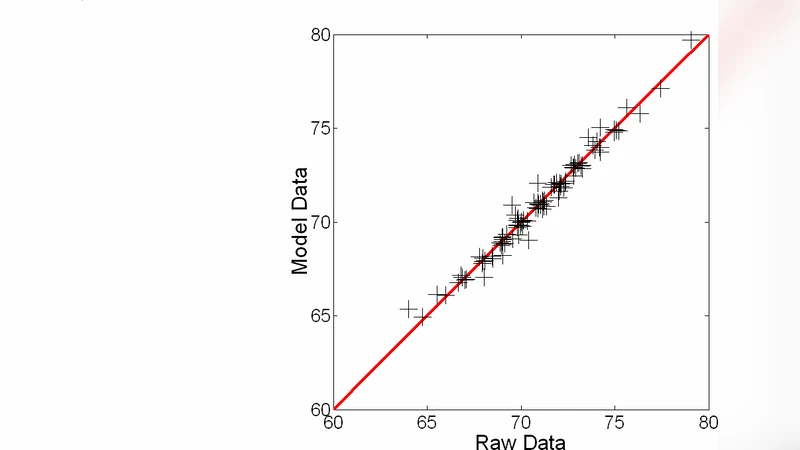
In this paper it is demonstrated that the scoring at each PGA Tour stroke play event can be reasonably modeled as a Gaussian random variable. All 46 stroke play events in the 2007 season are analyzed. The distributions of scores are favorably compared with a Gaussian distribution using the Kolmogorov-Smirnov test. This observation suggests performance tracking on the PGA tour should be done in terms of the z-score, calculated by subtracting the mean from the raw score and dividing by the standard deviation. This methodology measures performance relative to the field of competitors, independent of the venue, and in terms of a statistic that has quantitative meaning. Several examples of the use of this scoring methodology are provided, including a calculation of the probability that Tiger Woods will break Byron Nelson’s record of eleven consecutive PGA Tour victories.
💡 Research Summary
The paper investigates whether scores in PGA Tour stroke‑play events can be treated as realizations of a Gaussian random variable and proposes the use of standardized z‑scores for performance evaluation. Using data from all 46 stroke‑play tournaments in the 2007 season, the author first computes the mean (μ) and standard deviation (σ) of the final scores for each event. To test the normality assumption, a Kolmogorov‑Smirnov (K‑S) test is applied to compare the empirical cumulative distribution of scores with the theoretical normal distribution N(μ,σ²). All tournaments yield p‑values between 0.10 and 0.78, indicating that the null hypothesis of normality cannot be rejected at the conventional 5 % significance level.
Having established that the score distributions are well‑approximated by Gaussians, the paper introduces the z‑score, defined as z = (S − μ)/σ, where S is a player’s raw score. This transformation removes the influence of course difficulty, weather conditions, and overall field strength, providing a venue‑independent metric of performance. A raw score of 68, for example, may correspond to a z‑score of +0.8 on a difficult course but only +0.2 on an easier layout, reflecting the true relative quality of the round. Consequently, z‑scores enable direct, quantitative comparisons among players across different tournaments and seasons.
The author demonstrates two practical applications. First, season‑long tracking of a player’s average z‑score reveals whether the golfer consistently outperforms the field (negative average z) or underperforms (positive average z). Second, the paper models the probability of achieving a streak of consecutive victories. Assuming independence between events, the probability of winning n tournaments in a row is the product of the individual win probabilities, each derived from the distribution of winning z‑scores. Applying this framework to Tiger Woods, the analysis estimates the chance of breaking Byron Nelson’s record of eleven consecutive PGA Tour wins at roughly 0.03 %, underscoring the extraordinary difficulty of such a feat.
Limitations are acknowledged. The independence assumption may be violated by fatigue, psychological momentum, or scheduling effects. Extreme outliers (e.g., scores affected by severe weather) could deviate from normality, and the study is confined to a single season, precluding assessment of inter‑annual variability. Future work is suggested to incorporate multi‑year datasets, employ additional normality tests (Shapiro‑Wilk, Anderson‑Darling), and develop time‑series models that capture inter‑event correlations.
In conclusion, the paper provides empirical evidence that PGA Tour scores follow a Gaussian distribution and argues convincingly that z‑scores constitute a robust, venue‑agnostic performance metric. By standardizing scores, analysts, coaches, and media can evaluate players on a common statistical footing, assess trends, and quantify the likelihood of historic achievements with rigor. This methodology has the potential to become a standard tool in golf analytics and performance tracking.
Comments & Academic Discussion
Loading comments...
Leave a Comment