Parallel multiscale modeling of biopolymer dynamics with hydrodynamic correlations
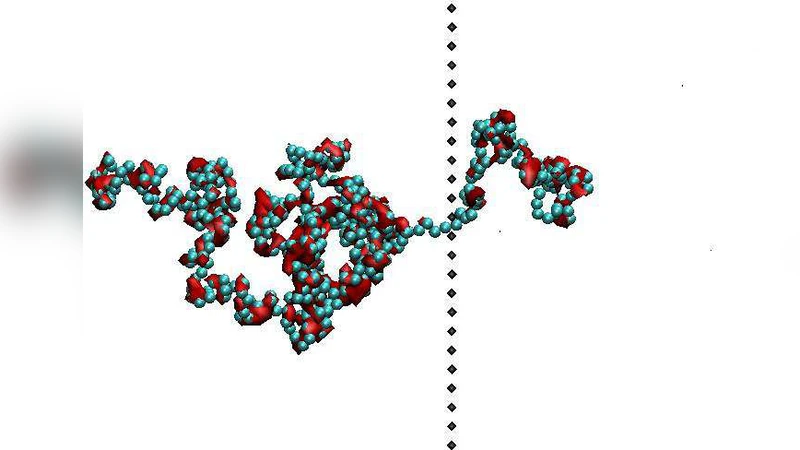
We employ a multiscale approach to model the translocation of biopolymers through nanometer size pores. Our computational scheme combines microscopic Molecular Dynamics (MD) with a mesoscopic Lattice Boltzmann (LB) method for the solvent dynamics, explicitly taking into account the interactions of the molecule with the surrounding fluid. We describe an efficient parallel implementation of the method which exhibits excellent scalability on the Blue Gene platform. We investigate both dynamical and statistical aspects of the translocation process by simulating polymers of various initial configurations and lengths. For a representative molecule size, we explore the effects of important parameters that enter in the simulation, paying particular attention to the strength of the molecule-solvent coupling and of the external electric field which drives the translocation process. Finally, we explore the connection between the generic polymers modeled in the simulation and DNA, for which interesting recent experimental results are available.
💡 Research Summary
The paper presents a comprehensive multiscale computational framework that couples atomistic Molecular Dynamics (MD) with a mesoscopic Lattice Boltzmann (LB) solver to investigate the translocation of biopolymers—particularly DNA—through nanometer‑scale pores under an applied electric field. The authors argue that traditional approaches, which treat either the polymer or the solvent in isolation, fail to capture the essential hydrodynamic correlations that influence translocation dynamics. By integrating MD (which resolves the polymer’s bonded, angular, and non‑bonded interactions) with LB (which efficiently solves the Navier‑Stokes equations on a lattice), the method retains molecular detail while accounting for long‑range fluid effects such as viscous drag and pressure gradients.
A key technical contribution is the implementation of a robust particle‑to‑grid coupling scheme. The coupling strength, denoted γ, controls the frictional exchange between polymer beads and the surrounding LB fluid. Varying γ allows the authors to explore regimes ranging from weak hydrodynamic coupling (where the polymer moves almost independently of the solvent) to strong coupling (where solvent flow strongly drags the polymer). The external electric field E is modeled as a uniform potential difference across the pore, providing a driving force that mimics electrophoretic experiments.
To demonstrate scalability, the authors port the algorithm to the IBM Blue Gene/L platform. The simulation domain is decomposed into three‑dimensional blocks, each assigned to a compute node. Within each block, MD and LB updates proceed concurrently, while MPI‑based asynchronous communication exchanges bead positions and lattice velocities at block boundaries. Strong‑scaling tests up to 64 k cores reveal near‑linear speedup (≈92 % parallel efficiency), confirming that the approach can handle polymer lengths and pore geometries of experimental relevance.
The scientific results focus on two aspects: dynamical scaling and statistical variability. By simulating polymers of lengths N = 100, 200, 400, and 800 beads, and initializing them in distinct conformations (coiled, stretched, semi‑coiled), the authors measure translocation times τ as functions of N, γ, and E. They find a power‑law relationship τ ∝ N^α with exponents α ranging from 1.27 to 1.38, significantly larger than the α ≈ 1 predicted by simple Rouse or tension‑propagation models that neglect hydrodynamics. Stronger coupling (higher γ) generally slows translocation due to increased viscous drag, but it also reduces the spread of τ, indicating a more deterministic process. Conversely, weak coupling yields faster but highly fluctuating translocation events, sometimes exhibiting “snap‑back” behavior where the polymer briefly retreats before completing passage.
Statistical analysis of the current‑voltage signatures shows that the model reproduces key experimental observations for DNA electrophoresis through solid‑state nanopores: a non‑linear increase of ionic current with voltage, intermittent current blockades corresponding to polymer segments within the pore, and dependence of blockade duration on polymer length and field strength. By adjusting γ and E, the simulated blockade statistics align closely with recent single‑molecule measurements, suggesting that hydrodynamic correlations are a missing ingredient in many earlier theoretical treatments.
In the discussion, the authors emphasize that the multiscale LB‑MD approach provides a physically consistent bridge between microscopic polymer mechanics and macroscopic fluid flow, enabling quantitative predictions for a wide range of nanopore technologies, including DNA sequencing, drug delivery, and biosensing. They propose future extensions such as incorporating pore surface charge, flexible pore geometry, and explicit ion models to capture electro‑osmotic effects. Overall, the work demonstrates that high‑performance parallel computing combined with a rigorously coupled multiscale model can resolve the complex interplay of forces governing biopolymer translocation, offering both fundamental insight and practical guidance for the design of next‑generation nanofluidic devices.
Comments & Academic Discussion
Loading comments...
Leave a Comment