Complex base numeral systems
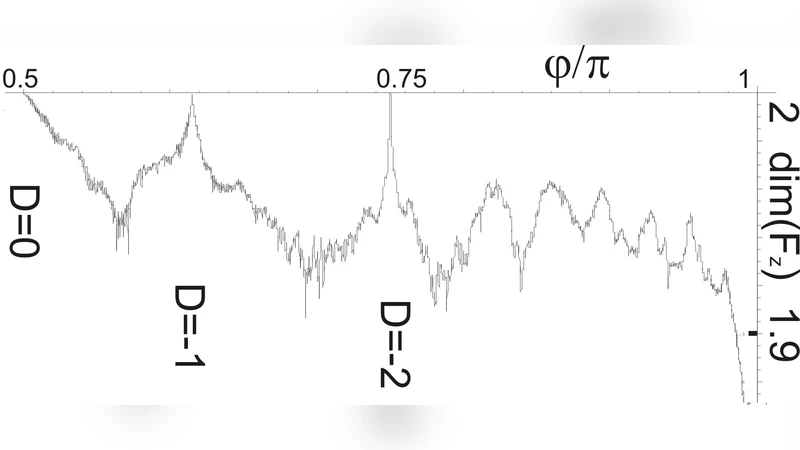
In this paper will be introduced large, probably complete family of complex base systems, which are ‘proper’ - for each point of the space there is a representation which is unique for all but some zero measure set. The condition defining this family is the periodicity - we get periodic covering of the plane by fractals in hexagonal-type structure, what can be used for example in image compression. There will be introduced full methodology of analyzing and using this approach - both for the integer part: periodic lattice and the fractional: attractor of some IFS, for which the convex hull or properties like dimension of the boundary can be found analytically. There will be also shown how to generalize this approach to higher dimensions and found some proper systems in dimension 3.
💡 Research Summary
The paper introduces a broad family of complex‑base numeral systems that satisfy a newly defined “proper” property. A system is called proper when two conditions hold: (1) the integer part of any representation lies on a periodic lattice generated by the complex base β (with |β| > 1), and (2) the fractional part belongs to the attractor of a finite iterated function system (IFS) built from a digit set D and the contraction z ↦ (z + d)/β. By choosing β and D so that the lattice and the IFS are compatible, the plane can be tiled by self‑similar fractal tiles in a hexagonal‑type arrangement. Except for a set of measure zero (the tile boundaries), every point of ℂ has a unique expansion
z = ∑_{k=−∞}^{N} d_k β^{k}, d_k ∈ D.
The authors first analyze the algebraic structure of the lattice L = ℤ
Comments & Academic Discussion
Loading comments...
Leave a Comment