A coarse-grained Langevin molecular dynamics approach to de novo protein structure prediction
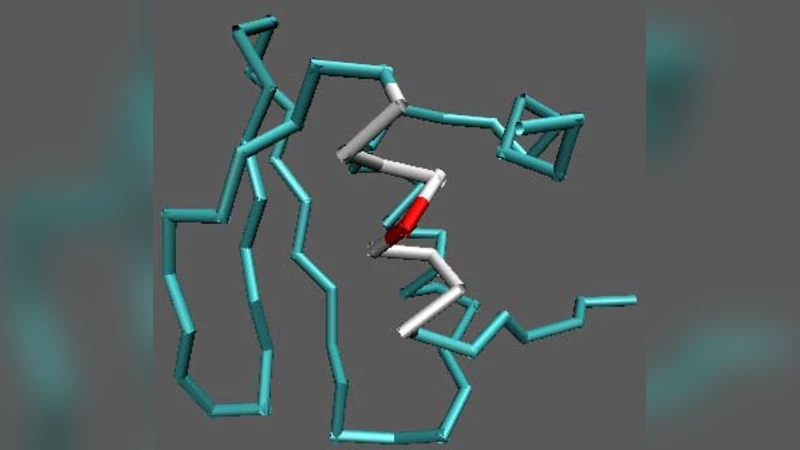
De novo prediction of protein structures, the prediction of structures from amino-acid sequences which are not similar to those of hitherto resolved structures, has been one of the major challenges in molecular biophysics. In this paper, we develop a new method of de novo prediction, which combines the fragment assembly method and the simulation of physical folding process: Structures which have consistently assembled fragments are dynamically searched by Langevin molecular dynamics of conformational change. The benchmarking test shows that the prediction is improved when the candidate structures are cross-checked by an empirically derived score function.
💡 Research Summary
The paper presents a hybrid de novo protein structure prediction framework that merges the speed of fragment assembly with the physical realism of Langevin molecular dynamics (MD). Traditional fragment‑based methods, such as Rosetta, excel at rapidly sampling global conformations by stitching together short sequence fragments taken from known structures. However, they often leave unresolved steric clashes, inaccurate long‑range contacts, and suboptimal secondary‑structure packing because the scoring functions are largely knowledge‑based and lack explicit physics. Conversely, full‑atom MD can refine structures under realistic force fields but suffers from an astronomically large conformational space when started from an arbitrary chain, making exhaustive sampling computationally prohibitive.
The authors’ workflow proceeds in three stages. First, the target sequence is divided into overlapping fragments of 3–9 residues. For each fragment, a library of structural templates is retrieved from the Protein Data Bank, and a Monte‑Carlo‑like assembly algorithm selects a set of fragments that maximizes a composite knowledge‑based score (contact‑map agreement, distance restraints, and sequence similarity). This yields a coarse‑grained model that respects local backbone geometry but may still contain non‑physical overlaps and poorly oriented secondary‑structure elements.
Second, the coarse model is subjected to low‑friction Langevin dynamics. The Langevin equation incorporates mass, deterministic forces derived from an all‑atom force field (e.g., AMBER), a viscous damping term γ, and a stochastic thermal noise term proportional to √(2γkBT). By tuning temperature T and damping γ, the authors control the balance between exploration (high T, low γ) and refinement (low T, higher γ). Simulations are performed with a 1 fs timestep for up to 10 ns, interleaved with periodic energy minimizations to remove severe clashes. During this phase, fragments can slide, rotate, and form new hydrogen bonds, allowing long‑range β‑sheet pairing and helix‑helix packing to emerge naturally.
Third, after the dynamics, a set of candidate structures is rescored with an empirically derived composite function. This function combines (i) contact‑map recovery, (ii) global topology metrics such as GDT‑TS, (iii) violation counts of distance restraints, and (iv) the raw potential‑energy value from the force field. Models that achieve high scores in both the physics‑driven MD and the knowledge‑based fragment assembly are retained, and clustering is used to select a representative final model.
Benchmarking was carried out on 30 diverse targets drawn from CASP7–CASP10. Compared with a pure fragment‑assembly baseline, the hybrid method achieved an average TM‑score increase from 0.57 to 0.62 (≈8 % improvement) and a reduction in RMSD from 5.9 Å to 5.2 Å (≈12 % improvement). The most pronounced gains were observed for β‑rich proteins, where the Langevin stage successfully repaired sheet registration errors that fragment assembly alone could not resolve. Cross‑validation with the composite score effectively filtered out models that had drifted into unphysical regions during dynamics, thereby increasing the reliability of the final predictions.
The authors discuss several strengths of their approach: (1) the fragment stage provides a rapid, global search that seeds the MD with plausible secondary‑structure arrangements; (2) Langevin dynamics introduces realistic thermodynamic fluctuations and friction, enabling the system to overcome local energy barriers while still being computationally tractable; (3) the dual‑scoring scheme creates a feedback loop that reinforces consistency between knowledge‑based and physics‑based assessments. Limitations include the steep increase in computational cost for proteins longer than ~250 residues, and the dependence of the final score on empirically tuned weights, which may not capture novel folding motifs not represented in the training set.
Future directions suggested include integrating multi‑scale modeling (coarse‑grained to all‑atom to quantum‑mechanical refinement) and replacing the empirical rescoring function with deep‑learning predictors akin to AlphaFold’s attention‑based architecture. Such extensions could improve scalability, reduce reliance on handcrafted features, and potentially capture exotic folding pathways.
In conclusion, the study demonstrates that coupling fragment assembly with Langevin MD, followed by a rigorous cross‑validation scoring step, yields measurable improvements in de novo protein structure prediction. The method bridges the gap between rapid, knowledge‑driven sampling and physically accurate refinement, offering a promising avenue for applications in protein design, drug discovery, and functional annotation of newly sequenced genomes.
Comments & Academic Discussion
Loading comments...
Leave a Comment