Quantifying Homology Classes
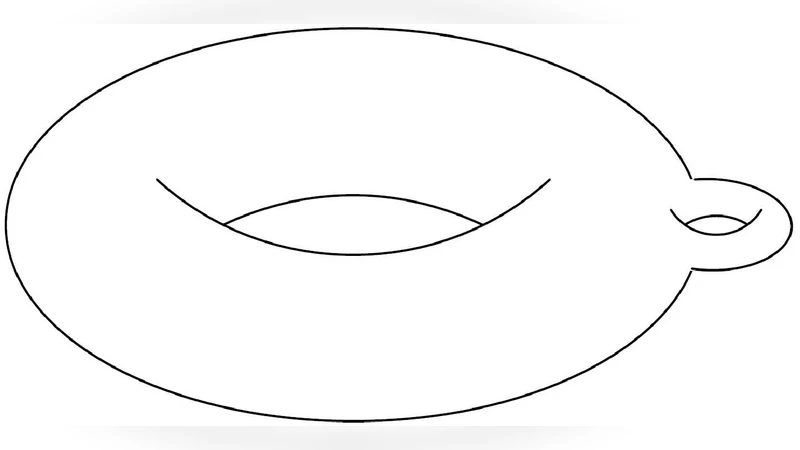
We develop a method for measuring homology classes. This involves three problems. First, we define the size of a homology class, using ideas from relative homology. Second, we define an optimal basis of a homology group to be the basis whose elements’ size have the minimal sum. We provide a greedy algorithm to compute the optimal basis and measure classes in it. The algorithm runs in $O(\beta^4 n^3 \log^2 n)$ time, where $n$ is the size of the simplicial complex and $\beta$ is the Betti number of the homology group. Third, we discuss different ways of localizing homology classes and prove some hardness results.
💡 Research Summary
The paper addresses three interrelated problems concerning the quantitative treatment of homology classes in simplicial complexes over the field Z₂. First, it introduces a notion of “size” for a homology class by employing relative homology together with a discrete geodesic distance. For each vertex p of a complex K, the authors define a geodesic ball Bᵣ(p) as the subcomplex consisting of all simplices whose vertices lie within distance r from p. The size S(h) of a class h is then the smallest radius r such that h becomes trivial in the relative homology group Hₙ(K, Bᵣ(p)). Intuitively, this measures the minimal region that must be “filled in” to kill the class, capturing the idea that larger topological features require larger neighborhoods.
Second, the paper defines an “optimal homology basis” for a given dimension d. If the Betti number is β, there are 2^β – 1 non‑trivial classes, but only β are needed to form a basis. The optimal basis is the set of β linearly independent classes whose total size Σ S(h_i) is minimal. By viewing the collection of non‑trivial classes H and the family L of linearly independent subsets as a matroid, the authors prove that the weight function w(h)=S(h) yields a weighted matroid. Consequently, the classic greedy algorithm that repeatedly picks the smallest‑weight class that remains independent produces the optimal basis.
The algorithmic core relies on persistent homology. For each vertex p, the distance function f_p is used as a filtration on K. Computing the persistence diagram reveals the birth time of the first essential (i.e., non‑trivial) class, which is exactly the radius r(p) of the smallest ball centered at p that carries a non‑trivial class. Scanning all vertices yields the globally smallest class h_min and its associated ball B_min(h_min). Within this ball, a basis for the cycles is extracted using sparse matrix rank algorithms (e.g., Wiedemann’s method), and a non‑bounding cycle is selected as a localized representative z_min.
The naive greedy approach would require O(β⁴ n⁴) operations, but the authors improve this to O(β⁴ n³ log² n) by integrating finite‑field linear algebra techniques. The resulting procedure computes the optimal basis and a localized cycle for each basis element in polynomial time, independent of any embedding of the complex.
Finally, the paper studies the localization problem: given a homology class, find the “shortest” cycle representing it under a natural size criterion. The authors prove that this problem is NP‑hard in general, showing that while measuring class size and selecting an optimal basis are tractable, obtaining a minimal‑length representative is computationally intractable.
Overall, the work provides a rigorous, embedding‑free framework for ranking homology classes by importance, selecting a basis that highlights large topological features, and extracting representative cycles. By combining concepts from relative homology, persistent homology, and matroid theory, it offers both theoretical insights and practical algorithms applicable to high‑dimensional data analysis, graphics, network science, and computational biology.
Comments & Academic Discussion
Loading comments...
Leave a Comment