First Observations on Prefab Posets Whitney Numbers
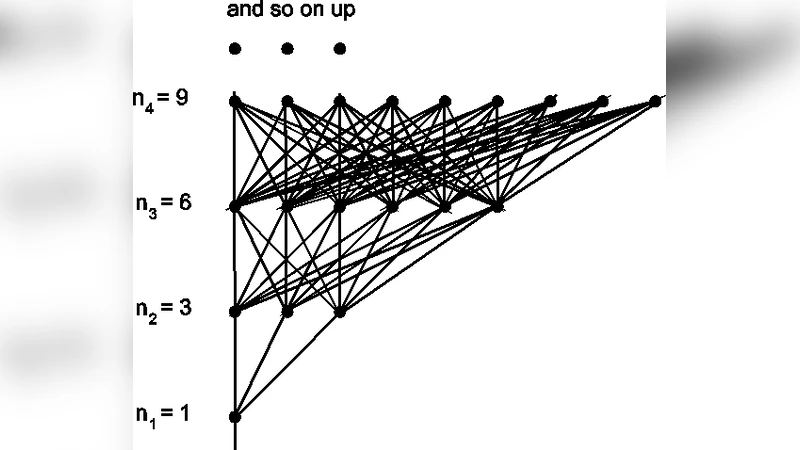
We introduce a natural partial order in structurally natural finite subsets of the cobweb prefabs sets recently constructed by the present author. Whitney numbers of the second kind of the corresponding subposet which constitute Stirling like numbers triangular array are then calculated and the explicit formula for them is provided. Next, in the second construction we endow the set sums of prefabiants with such an another partial order that their Bell like numbers include Fibonacci triad sequences introduced recently by the present author in order to extend famous relation between binomial Newton coefficients and Fibonacci numbers onto the infinity of their relatives among whom there are also the Fibonacci triad sequences and binomial like coefficients (incidence coefficients included). The first partial order is F sequence independent while the second partial order is F sequence dependent where F is the so called admissible sequence determining cobweb poset by construction. An F determined cobweb posets Hasse diagram becomes Fibonacci tree sheathed with specific cobweb if the sequence F is chosen to be just the Fibonacci sequence. From the stand-point of linear algebra of formal series these are generating functions which stay for the so called extended coherent states of quantum physics. This information is delivered in the last section.
💡 Research Summary
The paper introduces two natural partial orders on finite subsets of the cobweb prefab sets recently constructed by the author, and studies the associated Whitney numbers and Bell‑like numbers.
In the first construction the author considers the family S of “layers” Φₖ→Φₙ with k < n, which are interpreted as sets of all max‑disjoint isomorphic copies of a prime prefab Pₘ (where m = n − k). A partial order is defined by componentwise comparison of the indices: Φₖ→Φₙ ≤ Φₖ′→Φₙ′ iff k ≤ k′ and n ≤ n′. The resulting poset Pₖ,ₙ is a rectangular grid of points (ℓ,m) with 0 ≤ ℓ ≤ k, 0 ≤ m ≤ n, k ≤ n. The author computes its size, the rank function r(ℓ,m)=ℓ+m−1, and the number of maximal chains, showing that the latter coincides with the number of 0‑dominated binary strings of length k+n, i.e. with certain lattice‑path counts. Using the Möbius function of the interval
Comments & Academic Discussion
Loading comments...
Leave a Comment