Parameterized Algorithms for Partial Cover Problems
Covering problems are fundamental classical problems in optimization, computer science and complexity theory. Typically an input to these problems is a family of sets over a finite universe and the goal is to cover the elements of the universe with a…
Authors: ** - Omid Amini (Max‑Planck Institute for Informatics, 독일) - Fedor V. Fomin (University of Bergen, 노르웨이) - Saket Saurabh (University of Bergen
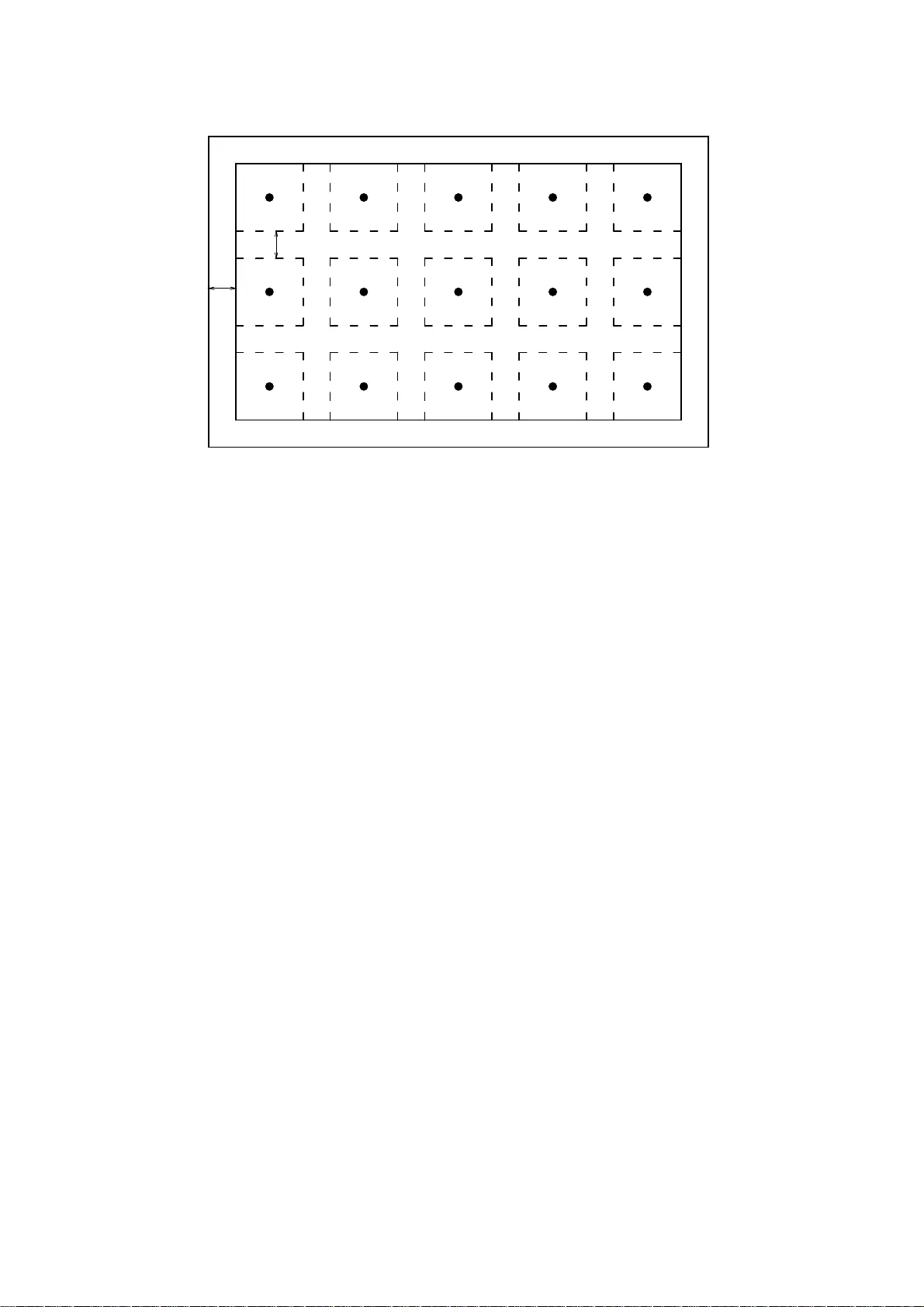
P arameterized Algorithms for P artial Co v er Problems Omid Amini ∗ F edor V. F omin † Sak et Saura bh † Abstract Cov ering problems are fundamental classical problems in optimization, computer science and complexity theory . Typically an input to these problems is a family of sets ov er a finite universe a nd the goal is to cover the element s o f the universe with as few sets of the family as p ossible. The v ar iations o f covering problems include well known problems like Set Cover , Ver tex Cover , Domina ting Set and F a cility Loca tion to na me a few. Recently there ha s b een a lot of study on partial covering problems, a natural generalizatio n of covering problems. Here, the goa l is no t to cov e r all the elements but to c over the sp ecified num b er o f elements with the minimum nu mber of sets. In this pap er we study partial cov ering pro blems in graphs in the rea lm of par am- eterized complexity . Classical (non- pa rtial) version of a ll these problems hav e been int ens ively s tudied in planar graphs a nd in graphs ex c luding a fixed graph H as a minor. Howev er, the techniques developed for para meterized version of non-partial cov ering problems canno t be applied directly to their partial counterparts. The ap- proach we use, to show that v arious par tial cov er ing problems a re fixe d parameter tractable o n planar gr aphs, graphs of b ounded lo cal tr eewidth and graph excluding some graph a s a minor, is quite different from previo us ly known techniques. The main idea be hind our appro ach is the concept of implicit br anching . W e find implicit branching technique to b e interesting on its own and b elieve that it can be used for some o ther pr oblems. 1 In tro du ction Co ve r ing pr ob lems are basic, fund amen tal and widely studied pr ob lems in algorithms and com binatorial optimizations. In general these problems ask for selecting a least sized family of sets to cov er all the elemen ts. One of the prominent co v ering problem is th e classical Set Cover problem. Set Co v er problem consists of a f amily F of sets o v er a universe U and the goal is to co v er this universe U w ith the least num b er of sets from F . Other classical problems in th e fr amew ork of co ve r ing include well kno wn problems lik e Ver tex Co ver , Domina ting Set , F acility Loca tion , k - Median , k - Center problems, on whic h hundreds of p ap ers h a ve b een wr itten. In this pap er we study the generalization of these problems to the p art i al c overing pr oblems , where the ob jectiv e is not to co v er all the elemen ts but to co ver th e pre-sp ecified n u m b er of elements with minimum num b er of ob j ects. More p recisely , in the partial co v ering p roblem, for a give n in teger t ≥ 0, w e wa nt to co v er at least t elemen ts rather ∗ Max Planc k Institute for Informatik, Germany , amini@mp i-inf.mpg.de † Department of Informatics, Universit y of Bergen, N-5020 Bergen, Norw ay , { fedor.fo min|saket.saurabh } @ ii.uib.no . P artially s u pp orted by the Norw egian Resear ch Coun- cil. 1 than co ve r in g all the elemen ts. F or an example, in P ar tial Ver tex Cover (PVC) , the goal is to co ve r at least t edges with minimum num b er of ve r tices n ot all the edges while in P ar tial Set Cover ( PSC) the goal is to co ve r at least t elemen ts of U with minimum n u m b er of sets f rom F . Other problems are defin ed similarly . Partia l co ve r ing problems are studied in tensivel y n ot only b ecause they generalize classical cov ering pr oblems, but also b ecause of many r eal life applications. They h a v e receiv ed a lot of atten tion recen tly , see, for examp le [4 , 5, 6, 8, 19, 22]. These generaliza tions are motiv ated by the fact that real d ata, for example, in cluster- ing often has errors also called outliers and hen ce discarding small num b er of constr aints p osed by these outliers can b e tolerated. The other example is related to k -center and is suggested in [8]. In a k -cen ter p roblem where a single clien t residing far fr om other clients ma y f orce a center to b e pick ed in its vicinity . The ma jor drawbac k with non-partial co v ering p roblems is that a few isolated elemen ts can force the solution size to b e large and h ence exerting a disprop ortional effect on the fin al solution of the problems. F or the ma jorit y of commercial applications of facilit y lo cation like b anking facilitie s, establishing sup er market s , etc. it ma y b e economically essen tial to ignore v ery distan t clien ts. An- other place wh ere the p artial co vering p roblems b ecome essent ial is w hen we ha ve limited facilities, in this case w e w ould like to maximize the service with limited su pply . All these problems can b e formulated as PS C . W e refer to [5, 6, 8, 10 , 19] for fu rther applications. While different v ariations of PSC were studied intensiv ely and many appr o ximation al- gorithm and non-appr oximabilit y results exist in the literature, only few thin gs are kno wn on their parameterized complexity . In this pap er w e fill this gap b y initiating p arame- terized algorithmic study of these problems. In parameterized algorithms, for d ecision problems with inp u t size n , and a parameter k , the goal is to d esign an algorithm with runtime τ ( k ) · n O (1) , where τ is a function of k alone. Problems h a ving su c h an algorithm are said to b e fix ed parameter tractable (FPT). Th ere is also a theory of hardness us ing whic h one can iden tify p arameterized problems that are not amenable to suc h algorithms. This hardness hierarc hy is represen ted by W [ i ] f or i ≥ 1. F or an introdu ction and more recen t d ev elopmen ts see the b o oks [16, 18, 25]. In this pap er, w e alwa ys parameterize a problem by the size of the partial s et co v er, i.e. all our algorithms f or fin ding a partial set co v er of size k that co v er at least t sets with input of size n are of r unning time τ ( k ) · n O (1) . Arc het y p ical examples for the stud y of PS C on graphs are P ar tial Ver tex Cover and P ar tial Domina ting Set (PDS) (w e p ostp one all d efinitions till the next sec- tion). Paramete r ized version of the Domina ting Set is kn o wn to b e W [ 2]-complete in general graphs, whic h implies that the existence of an FPT algorithm is highly u nlik ely . T remendous amoun t of literature is dev oted to p arameterized algorithms for Domina ting Set on differen t classes of sparse graphs lik e planar graph s, graph s with few crossings, graphs of b ounded genus, graphs of b ounded d egree, graphs excludin g a fixed graph as a minor. W e refer to sur v eys [13, 15] for references. Th e most general kn own class of sparse graph s for whic h Domina ting Set remains FPT is the class of d -degenerated graphs [3]. A n atur al question m otiv ating our researc h is whic h of th ese r esults are v alid for P ar tial Domina ting Se t ? Ver tex Co ver is FPT with the current champion algorithm r unning in time O (1 . 2721 k n O (1) ) [9], and a few p ap ers ha ve app eared giving FPT algorithms for p artial co v erin g problems when the p arameter is b oth the n u m b er of elemen ts to b e co v ered and the size of a sub family c h osen to co v er these elemen ts that is t and k [5, 23, 24]. In con trast to th at, P ar tial Ver tex Cover is W [1]-complete [20] . Th u s the parameterized complexit y of P ar tial Ver tex Cover on sparse graphs is also 2 an in teresting qu estion. Unfortunately , none of the kno w n tec hniques of designing FPT algorithms seems to w ork for p artial co vering p roblems. F or example, the app roac h b ased on bidimensionalit y [11] strongly exploits the f act that the existence of a large grid in a graph as a minor (or con traction) f orces the p arameter (or the solution size) also to b e large. This is n ot the case for partial co ve r ing pr ob lems, i.e. they are not bid imensional. Similar situ ation arises when w e consider the tec hnique of reducing to the pr ob lem kernel [2] or searc h tree based tec hnique [1 ]. Our Approac h and Results. Th e main ideas b ehind our app roac h can b e illustrated b y planar instances of P ar tial Ver tex Cover and P ar t ial Domina ting Set . Let a planar graph G = ( V , E ) on n vertices, and integ ers k , t , b e an instance of P ar tial Ver tex Cover . Let S b e the s et vertic es in G of d egree at least t/k . If S is suffi ciently big, say , its size is at least 4 k , then (by the F our color theorem), the sub graph of G induced on S con tains an indep endent set of size at least k . T his yields that there are k vertices of S that are pairwise non-adjacent in G , and s ince eac h of these vertice s co v ers at least t/k edges, we h av e that in total they co v er at least t edges. If the size of S is less than 4 k , w e app ly explicit br anching . The crucial observ ation here is that if G has a partial v ertex co ve r of size at most k , then this co ve r m ust con tain at least one v ertex of S . T hus b y making a guess on the vertice s x ∈ S , wh ether x is in a partial vertex co ver of size at most k , w e can guarant ee, that if the problem has a solution, then at least one of our guesses is correct. F or eac h of the guesses x , we create a n ew subpr ob lem for P ar tial Ver tex Co ve r , where the in put is the sub graph of G in duced on V \ { x } and w e are ask ed to co v er t − deg ( x ) edges by k − 1 vertic es, where deg ( x ) is the num b er of edges adjacen t to x . T h e n u mb er of su bproblems we generate in this w ay is at most 4 k , and w e call the p ro cedure recurs ively on eac h su bproblem. Th e depth of th e recursion is at most k , and the num b er of recursiv e calls at eac h steps is at most 4 k , resulting in total run ning time (4 k ) k · n O (1) . Actually , in our arguments w e used planarity only to conclude that a graph has large indep endent set. Definitely , this appr oac h is v alid f or many other graph classes with large ind ep endent sets, lik e bipartite graphs, degenerate graphs and graphs excluding some graph as a minor. (W e p ro vide detailed consequ ences of th is approac h in Section 5.) The main dra wb ac k of exp licit branc h in g is that we cannot use it for many partial co v ering problems, in particular for P ar tial Domina ting Se t . Even for planar graph s, the existence of a large indep en d en t set of v ertices of degree at least t /k do es n ot imply that k vertic es can dominate at least t v ertices. T o o ve r come this obstacle, we do the follo wing. W e start as in the case of P a r t ial Ver tex Cover , by selecting the set S consisting of v ertices of degree at least t/k . If there are more than k v ertices in S whic h are at distance at least three from eac h other, w e h a ve the solution. Otherwise, we kno w that at least one vertex fr om S should b e in a partial dominating s et bu t we cannot use explicit b ranc hin g by tryin g all ve r tices of S b ecause the size of S can b e to o large. Ho w ever, we show in this case that the graph formed b y S and their n eigh b ors is of small diameter, and th u s , by w ell kno wn prop erties of p lanar graphs, has small treewidth. (V ery lo osely small h ere means b ound ed by some fun ction of k .) In this case w e apply implicit br anching , whic h means that w e do n ot create a new subpr oblem for ev ery verte x of S , bu t instead for ev ery i , 1 ≤ i ≤ k , w e make a guess that exactly i vertic es of S are in a partial dominating s et. Thus we branch on k cases and try to solve the problem recursiv ely . W e form u late these ideas in details in Sections 3.1 and 3.2 and show h o w it is suffi cient to 3 just know the size of an in tersection of an optimal partial d ominating s et with S rather than the actual in tersection itself to solv e the prob lem. Again, the only prop ert y of planar graph s w e men tioned here w as the prop ert y that non-existence of a large set of pairwise remote vertice s in a graphs yields a sm all treewidth. But this prop erty can b e sho wn not only for planar graph s, bu t more generally for graph s of b ound ed lo cal treewidth, the class of graphs con taining planar graphs, graphs of b oun ded gen us, graphs of b ounded v ertex degree, and graphs exclud ing an ap ex graph as a minor. With m ore additional work we sho w that similar ideas can b e used to prov e that muc h more general problem, n amely a weigh ted ve r sion of the P ar tial ( k , r , t ) -Center prob- lem, wh ere the goal is to co ver at least t elemen ts by balls of radius r cente r ed around at most k vertice s, is FPT on graphs of b ounded lo cal treewidth. This result can b e foun d in S ection 3.2. This is mainly of theoretical int er est b ecause the run ning time of the al- gorithm is 2 k O ( k ) · n O (1) . S uc h a h u ge runn ing time is due to the b ound s on the treewidth of a graph , whic h is used in imp licit b ranc hin g. Due to the generalit y of the result for graphs with b ound ed lo cal treewidth, we d o not see any reasonable wa y of o verco min g this problem. But b ecause of numerous application, w e fin d it is w orth to searc h for faster practical algorithms on sub classes of grap h s of b oun ded lo cal treewidth, in particular on planar graph s. As a s tep in this d irection, w e obtain muc h b etter com binatorial b ound s on the treewidth of p lanar graphs in imp licit b ranc hing, whic h results in algorithms of runn in g time 2 O ( k ) · n O (1) on planar graphs. The combinatoria l arguments us ed for the exp onenti al sp eedup (Section 3.3 ) are inte r esting on their o wn . In Section 4, we sho w that the P ar tial ( k , r , t ) -Center problem is FPT on graphs exclud ing a fixed graph as a min or. The pr o of of this result is based on the decomp ositions theorem of Rob ertson and S eymour fr om Graph Minors [28]. T he algorithm is qu ite inv olv ed, it uses tw o lev els of d ynamic programming and t wo lev els of implicit br an ching, and can b e seen as a n on- trivial extension of the algorithm of Demaine et al. [11] for classical cov ering pr oblems to partial co v ering problems. Finally , let us remark that wh ile Domina ting Se t is FPT on d -degenerated graphs [3], there are strong arguments that our results cannot b e extended to this class of sp arse graphs. This is b ecause by a r ecen t resu lt of Golo v ac h an d Villanger (priv ate comm uni- cation), P ar tial Domina ting Set is W[1]-hard on d -degenerated graphs. 2 Preliminaries Let G = ( V , E ) b e an u ndirected graph where V (or V ( G )) is the set of v ertices and E (or E ( G )) is th e set of ed ges. W e denote the num b er of v ertices by n and num b er of edges by m . F or a subset V ′ ⊆ V , by G [ V ′ ] w e mean the sub graph of G indu ced by V ′ . By N ( u ) we d enote (op en) neigh b orho o d of u that is set of all ve r tices adj acen t to u an d b y N [ u ] = N ( u ) ∪ { u } . Sim ilarly , f or a subset D ⊆ V , we define N [ D ] = ∪ v ∈ D N [ v ]. The distanc e d G ( u, v ) b et ween t wo vertice s u and v of G is the length of th e sh ortest path in G fr om u to v . The diameter of a graph G , denoted b y diam ( G ), is d efined to b e the maxim um length of a sh ortest p ath b et we en an y pair of vertic es of V ( G ). By an abuse of notation, we d efi ne diameter of a graph as the maxim u m of th e diameters of its connected comp onen ts. F or r ≥ 0, the r -neighb orho o d of a v ertex v ∈ V is d efined as N r G [ v ] = { u | d G ( v , u ) ≤ r } . W e also let B r ( v ) = N r G [ v ] and call it a ball of radius r around v . Similarly B r ( A ) = ∪ v ∈ A N r G [ v ] for A ⊆ V ( G ). Giv en a w eigh t fun ction w : V → R + ∪ { 0 } and A ⊆ V ( G ), w ( B r ( A )) = P u ∈ B r ( A ) w ( u ). 4 Giv en an edge e = ( u, v ) of a graph G , the graph G/e is obtained b y con tracting the edge ( u, v ) that is we get G/e b y id en tifying the v ertices u and v and remo ving all th e lo ops and duplicate ed ges. A minor of a graph G is a graph H that can b e obtained from a subgraph of G by con tracting edges. A graph class C is minor close d if an y min or of an y graph in C is also an elemen t of C . A minor closed graph class C is H -minor-fr e e or simply H -fr e e if H / ∈ C . A tr e e de c omp osition of a (und ir ected) graph G is a p air ( X , U ) wh ere U is a tree whose vertice s w e will call no des and X = ( { X i | i ∈ V ( U ) } ) is a collec tion of subsets of V ( G ) su c h that 1. S i ∈ V ( U ) X i = V ( G ), 2. for eac h edge { v , w } ∈ E ( G ), there is an i ∈ V ( U ) su c h that v , w ∈ X i , and 3. for eac h v ∈ V ( G ) the s et of no d es { i | v ∈ X i } forms a su btree of U . The width of a tree decomp osition ( { X i | i ∈ V ( U ) } , U ) equals max i ∈ V ( U ) {| X i | − 1 } . The tr e ewidth of a graph G is the minimum width ov er all tree decomp ositions of G . W e u se notation t w ( G ) to denote the treewidth of a graph G . The defi nition of treewidth can b e generalized to tak e into account the lo cal prop erties of G and is called lo c al tr e ewidth [17, 21]. Definition 1 (L o cal t ree-width) The lo cal tree-width of a gr aph G i s a function ltw G : N → N which asso ciates to eve ry i nte ger r ∈ N the maximum tr e e-width of an r - neighb orho o d of vertic es of G , i .e. lt w G ( r ) = max v ∈ V ( G ) { tw ( G [ N r G ( v )]) } . A graph class G has b ounde d lo c al tr e ewidth , if th ere exists a function f : N → N such that for eac h graph G ∈ G , and for eac h in teger r ∈ N , we ha ve lt w G ( r ) ≤ f ( r ). Th e class G has line ar lo c al tr e ewidth , if in addition the fun ction f can b e chosen to b e linear, that is f ( r ) = cr where c ∈ R is a constan t. F or a giv en fun ction f : N → N , G f is the class of all grap h s G of lo cal tree-width at most f , that is lt w G ( r ) ≤ f ( r ) for eve r y r ∈ N . See [17] and [21] for more details. A few w ell known graph classes wh ic h are known to ha ve b ound ed lo cal treewidth are planar graphs, graph s of b ound ed genus, and graph s of b ound ed maxim um d egree. By a result of Rob ertson and Seymour [26], f ( r ) can b e c hosen as 3 r for planar graph s. Similarly Eppstein [17] sh o we d that f ( r ) can b e c hosen as c g g (Σ) r for graphs em b eddable in a sur face Σ, where g (Σ) is the gen us of the sur face Σ and c g is a constan t dep end in g only on the gen us of the surface. Demaine and Ha jiaghayi [12] extended this r esult and sho wed that the concept of b ounded lo cal treewidth and linear lo cal treewidth are the same for minor closed families of graphs. 3 FPT Algorithms for W eigh ted P artial- ( k , r, t ) -Cen ter Prob- lem 3.1 Dev eloping a Step b y Step P ro cedure In this section w e giv e a template of a generic algorithm for partial co ve r ing problems arising on graph s. W e use this later to sh ow that partial co v ering prob lems arising on 5 graphs are fixed parameter tr actable in graphs of b oun ded lo cal treewidth. W e formulate the template through the follo wing pr oblem. Weighted P ar t ial- ( k , r , t ) -C e nter (WP- ( k , r , t ) -C): Giv en an u n directed graph G = ( V , E ), w ith w eight function w : V → { 0 , 1 } and integ ers k , r and t . The problems asks whether there exists a C ⊆ V of size at most k ( k centers), suc h that w ( B r ( C )) ≥ t . Here k and r are the parameters. When all the vertice s ha ve weigh t 1 this is a P ar tial- ( k, r , t ) -Center (P- ( k , r , t ) -C) problem, and for r = 1 and w ( v ) = 1 for all v ∈ V this is P ar tial Domina ting S et problem. T o formulat e PS C pr oblem as WP-( k , r , t )-C pr oblem, w e consider the incidence bipartite graph asso ciated with the instance of PSC problem and give w eigh ts 1 to the v ertices asso ciated w ith elemen ts and 0 to the v ertices asso ciated with sets. Since PVC can b e transformed to PSC problem, WP-( k , r , t )-C also generalizes PVC. One defi n es P ar tial Hitting Set s imilarly . The FPT algorithms for classical n on-partial v ersion of all these pr oblems (and in fact for most of the parameterized algorithms for different pr oblems) on graphs of b ounded lo cal treewidth are based on the follo wing steps: (a) Pro vin g a combinatoria l upp er b ound on the treewidth of the graph as a fu nction of parameter. (b) Finding the treewidth of the in put graph u sing kno wn algorithms. If the treewidth is small, then d ynamic p rogramming o ve r graphs of b ound ed treewidth comes in to pla y; or (c) If the treewidth of the graph is large then b ecause of com binatorial up p er b oun d on the treewidth as a function of parameter the inpu t is a No instance. In the case of partial co ve r problems lik e PVC, PDS and WP-( k , r , t )-C p roblems, it is not true that one can b oun d the treewidth of the inp ut graph as a function of p arameters for all the Yes instances and hence the kn o wn mac hinery and tec h niques dev elop ed to handle graphs with lo cally b ounded treewidth can not b e applied. Unlik e the n on-partial and n on-w eigh ted ve r sion of WP-( k, r , t )-C problem, th e first ma jor challe n ge in partial co v erin g p roblems is: whic h t elemen ts we c h o ose to co v er? T o find an answer to this we d efine the follo wing set S and the corresp ond ing graph G , which forms the first step of the algorithm: (T1) Define S = { v | v ∈ V , w ( B r ( v )) ≥ t/k } and G = S v ∈ S G [ B r ( v )] . The basic observ ation is that if there exists a sub set C ⊆ V of size at m ost k such that w ( B r ( C, r )) ≥ t then C ∩ S 6 = ∅ . Given the graph G our second idea is to: (T2) Chec k the d iameter of G , and if diam ( G ) is large then w e argue that this is a Yes instance b y pro vidin g a su bset C of size at most k and w ( B r ( C )) ≥ t . No w when the diam ( G ) is sm all, the treewidth of the graph G is b ou n ded and h en ce dynamic pr ogramming ov er graph s with b oun ded treewidth can b e u sed. But we still do not kno w whether we can find the desir ed C among the v ertices of G . Hence eve n if w e find out th at there is no X ⊆ S such th at | X | ≤ k and w ( B r ( X )) ≥ t , w e can n ot guaran tee that this is a No instance of the p roblem. So to o v ercome this d ifficult y w e resort to an implicit branching by usin g the earlier observ ation that there is no d esir ed C whose in tersection with S is emp t y . Before we go furth er, given a v ertex set S and G (as defined ab o ve) , we defin e µ ( S, i ) = max A ⊆ S, | A | = i { w ( B r ( A )) } . 6 (T3) Using d ynamic pr ogramming ov er graphs with b oun ded treewidth, compute µ ( S, i ) for G for 1 ≤ i ≤ k as well as a subs et A i ⊆ S s u c h that w ( B r ( A i )) = µ ( S, i ). (T4) No w w e mak e k recursive calls to r educe the s ize of k on the f act that if there exists a C then its in tersection with S is b et wee n 1 ≤ i ≤ k . Now we redu ce the parameters t to t − µ ( S, i ) and k to k − i and try to solve th e problem r ecursiv ely . In the recursive steps, we follo w the ab o ve steps and either we mo v e forward to a larger G or we get a d esired solution for the problem. More pr ecisely , supp ose w e are at the i th step of recursion then w e d o as follo w s: (T5) Enlarge G b y adding some n ew vertices to S . Let S i b e the s et of new v ertices added to S that is those set of vertic es wh ic h are not in S and w ( B r ( v )) ≥ t/k wher e t and k are the cur ren t p arameters obtained after r eductions done in previous recurs iv e calls. (T6) No w w e sh o w that either we can b ound the d iameter and hence the treewidth of G or w e can select a set of at most k vertice s resp ecting the c h oices made earlier on the p ath from ro ot of the searc h tr ee to th e current no de on the n umb er of vertic es w e need to select from S j , 1 ≤ j ≤ i − 1 that is p ossible num b er of vertic es in C ∩ S j . This completes the framewo r k in which we w ill b e w orking. In the next Section we pro ve that WP-( k , r , t )-C Problem is FPT in Graphs with b ound ed lo cal treewidth b y pro vin g th e n ecessary tec hnical lemmas needed for this generic algorithm to work. 3.2 An Algorithm for WP- ( k , r, t ) -C in Graphs of Bounded Lo cal T reewidth W e first giv e an up p er b ound on the treewidth of G , the graph s w e obtained in the recursive calls whic h is cru cial for analysis of the algorithm. Lemma 1 L et G b e a gr aph on n vertic es and m e dges and H b e an induc e d su b gr aph of G such that the diameter of e ach of the c onne cte d c omp onents of H is at most ℓ . L et C b e a subset of V ( H ) of size at most k and A b e a sub se t of V ( G ) . Then ther e exists a function g ( k , r , ℓ ) such that if diam ( G [ B r ( A ) ∪ H ]) > g ( k , r , ℓ ) , then ther e is a subset T ⊆ A suc h that (a) | T | ≥ k ; (b) for al l u, v ∈ T , d G ( u, v ) ≥ 2 r + 1 ; and (c) for al l u ∈ T and f or al l v ∈ C , d G ( u, v ) ≥ 2 r + 1 . In p articular, one c an take g ( k , r , ℓ ) = (6 r + 2)2 k ℓ and find the desir e d set T in O ( m + n ) time. Pro of: Since C is a sub set of size at most k , w e ha ve that it in tersects at most k connected comp onent s of H . Let these connected comp onents b e H 1 , . . . , H r , w h ere r ≤ k . W e con tract eac h of these connected comp onen ts to a v ertex and obtain a new graph G ′ . Let the con tractions of H 1 , . . . , H r corresp ond to vertic es v H 1 , · · · , v H r in our new graph G ′ and this set of v ertices b e called X . F or a ve r tex v ∈ V ( G ), w e define its image, im ( v ), in G ′ as v H i if it is in H i for 1 ≤ i ≤ r an d v otherwise. F or a subset W ⊆ V , its image im ( W ) in V ( G ′ ), is d efined as the set { im ( v ) | v ∈ W } . 7 F or an y subset W ⊆ V ( G ), we claim that diam ( G ′ [ im ( W ) ∪ X ]) ≥ diam ( G [ W ∪ H ]) /ℓ (let us remin d that w e defin e the d iameter of the graph as the maxim um diameter of its connected comp onent s). T o pr o v e the claim we observe that a path P ′ in G ′ [ im ( W ) ∪ X ] can b e lifted to a path P in G [ W ∪ H ] b y replacing ev ery ve r tex in X on path P ′ b y lo cal p aths in eac h connected comp onen t H j of H . As the diameter of eac h H j is b ound ed by ℓ , in this w a y , the length of a p ath can only b e increased b y at most a constan t m u ltiplicativ e factor ℓ . This giv es us diam ( G [ W ∪ H ]) ≤ ℓ · diam ( G ′ [ im ( W ) ∪ X ]) , whic h completes th e p ro of of the claim. T o finish the pro of of the lemma we pro ceed as follo w s : W e apply the ab o ve claim to the subset W = B r ( A ). S ince diam ( G [ B r ( A ) ∪ H ]) > g ( k , r , ℓ ) = (6 r + 2)2 k ℓ , w e h a v e that diam ( G ′ [ im ( B r ( A )) ∪ X ]) ≥ diam ( G [ B r ( A ) ∪ H ]) ℓ > g ( k , r , ℓ ) ℓ = 2(6 r + 2) k . Th u s there is a connected comp onent C of G ′ [ im ( B r ( A )) ∪ X ] of diameter more th an 2(6 r + 2) k . Let im ( v 1 ) , . . . , im ( v κ ), κ ≤ k , b e the image of vertice s of C in this comp onent. Ob- serv e that im ( A ) ∪ { im ( v 1 ) , . . . , im ( v κ ) } form an r -cente r in C . Since the d iameter of this comp onent is at least 2(6 r + 2) k , w e can find a su bset Y ⊆ im ( A ) ∪ { im ( v 1 ) , . . . , im ( v κ ) } of size at least 2 k such that for any t wo v ertices u, v ∈ Y , d G ′ ( u, v ) ≥ 4 r + 1. T o see this, let us assume that P = u 0 u 1 u 2 · · · u q , q ≥ 2(6 r + 2) k , is a path which re- alizes th is diameter. Let V i ⊆ V ( C ) b e the subset of ve r tices of d istance exactly i from u 0 . S in ce im ( A ) ∪ { im ( v 1 ) , . . . , im ( v κ ) } forms an r -cen ter, its intersecti on with S i +2 r j = i V i , 1 ≤ i ≤ q − 2 r , is non-empty . No w one can form Y b y selecting a v ertex of im ( A ) ∪ { im ( v 1 ) , . . . , im ( v κ ) } fr om ∪ 2 r i =0 V i and then alternately not selecting any v ertex from n ext 4 r + 1 V i ’s and then s electing a v ertex of im ( A ) ∪ { im ( v 1 ) , . . . , im ( v κ ) } fr om one of th e next 2 r + 1 blo cks of V i ’s, and s o on. W e put Z = Y ∩{ im ( v 1 ) , . . . , im ( v κ ) } . Let u s remark that, for eac h vertex v in { im ( v 1 ) , . . . , im ( v κ ) } \ Z there is at most one v ertex v in Y \ Z suc h that d G ′ ( u, v ) ≤ 2 r . Otherwise it will violate the cond ition that th e d istance b et ween any tw o v ertices f r om Y is at least 4 r + 1 in G ′ . W e construct the set T ′ b y remo ving all vertic es from Y \ Z whic h are at distance at most 2 r fr om { im ( v 1 ) , . . . , im ( v κ ) } \ Z . The subset T ′ ⊆ im ( A ) satisfies the follo wing cond itions: (a) | T ′ | ≥ k ; (b) for all u, v ∈ T ′ , d G ′ ( u, v ) ≥ 2 r + 1; and (c) for all u ∈ T ′ and for all im ( v j ) , 1 ≤ j ≤ k , d G ′ ( u, im ( v j )) ≥ 2 r + 1. Lifting the subset T ′ to G one gets a T (b y taking inv erse image of vertice s in T ′ ) of the desired kind. ✷ Another essential part of our algorithm is dyn amic programming on graphs with b ound ed treewidth which will b e us ed in (T6) . T o d o so we use a v ariation of the Theorem 4 . 1 of [10]. Theorem 1 (T heorem 4 . 1 , [10]) F or a gr aph G on n vertic es and with a given tr e e de c omp osition of width ≤ b , and i nte gers k , r , the existenc e of a ( k , r ) -c enter in G c an b e 8 che cke d in O ((2 r + 1) 3 b 2 n ) time and, in c ase of a p ositive answer, c onstruct a ( k , r ) -c enter of G in the same time. By similar arguments as used in the pro of of the Theorem 1 w e can prov e th e follo wing theorem. W e giv e a sk etc h of the pro of of the next theorem by giving the necessary v ariatio n s required in the p r o of of the Theorem 1. Theorem 2 L et G b e a gr aph on n vertic es, given with (a) a weight function w : V → { 0 , 1 } , (b) a tr e e de c omp osition of width ≤ b , and (c) p ositive i nte gers k , r and t . F ur- thermor e let S 1 , · · · , S p b e disjoint subsets of V ( G ) with an asso c i ate d p ositive inte ger a i for 1 ≤ i ≤ p and P p i =1 a i = a . Then we c an c he ck the existenc e of a weighte d p artial- ( k , r, t ) -c enter such that it c ontains a i elements fr om S i , 1 ≤ i ≤ p , in O ((2 r + 1) 3 b 2 2 a 2 · n t ) time and, in c ase of a p ositive answer, c onstruct a weighte d p artia l- ( k , r, t ) -c enter of G in the same time. Pro of Sketc h: T o prov e the theorem w e increase the size of the table ke p t for eac h of the bags in the tree decomp osition in Theorem 1. Apart from asso ciating follo wing 2 r + 1 colors to { 0 , ↑ 1 , ↑ 2 , · · · ↑ r , ↓ 1 , ↓ 2 , ↓ r } eac h of the vertice s, we also asso ciate a tuple from { 0 , 1 , · · · , a 1 } × { 0 , 1 , · · · , a 2 } · · · { 0 , 1 , · · · , a p } × { 0 , 1 , · · · , t } (1) to eac h coloring of bags of th e tree decomp osition, remem b ering how man y elemen ts from eac h of S i has b een selected from the bags b elo w it and the last ent r y repr esents su m of weig hts of vertice s which are at distance at most r f rom th e v ertices s elected in the solution for WP-( k , r, t )-C p roblem. The b ound on the n u m b er of tuples generated in Equation (1) is giv en by p Y i =1 a i · t ≤ p Y i =1 2 a i / 2 · t ≤ 2 a/ 2 t. ✷ The rest of the section is dev oted to the p ro of of th e follo win g theorem. Theorem 3 L et f : N → N b e a given func tion. Then WP- ( k , r , t ) -C pr oblem c an b e solve d in time O ( τ ( k , r ) · t · ( m + n )) for gr aph s in G f , wher e τ is a function of k and r . In p articular, WP- ( k , r , t ) -C pr oblem is FPT for planar gr aphs, gr aphs of b ounde d genus and gr aph s of b ounde d maximum de gr e e. Let us remark that for fixed k , r and t , our algorithm r u ns in linear time. Pro of: The p ro of of the theorem is divid ed into th ree parts: Algorithm, correctness and the time complexit y . W e first describ e the algorithm. Algorithm: First we set up notations used in the algorithm. By S w e m ean a family of pairs ( X, i ) where X is a sub set of V ( G ), i is a p ositive integer, and for any tw o elemen ts ( X 1 , i 1 ) , ( X 2 , i 2 ) ∈ S , X 1 ∩ X 2 = ∅ . Given a f amily S , we d efine ρ ( S ) = P ( X,i ) ∈S i and µ ( w, S ) = max n w ( B r ( D )) D ⊆ V ( G ) , | D | = ρ ( S ) , ∀ ( X , i ) ∈ S | D ∩ X | = i o , 9 Algorithm PCentr e ( G , r , k , t , w , S , C , S , µ ( w , S ) ) (The a lgorithms takes a s a n input ( a ) a graph G = ( V , E ) ∈ G f , ( b ) p ositive integers k , r and t , ( c ) a weigh t function w : V → { 0 , 1 } , ( d ) a family S of pairs ( X , i ), ( e ) an S -center C , ( f ) a set S which is equal to ∪ ( X,i ) ∈S X a nd ( g ) the v alue of µ ( w , S ). It returns either a set C such that w ( B r ( C )) ≥ t o r returns N o , if no such set e xists. The algorithm is initialized with PCen tre ( G, r, k , t, w , ∅ , ∅ , ∅ , 0)). Step 0 : If µ ( w , S ) ≥ t , then answer Yes and r eturn C . Step 1: If k = 0 and µ ( w , S ) < t , then return N o a nd E xit . Step 2: First define A a s follows: A = { v | v ∈ V , v / ∈ S, w ( B r ( v )) ≥ t/k } . If A is empty return No a nd Exit . Else let S = S ∪ A and define G = S v ∈ S G [ B r ( v )]. Step 3: Compute the diameter , diam , o f G . Step 4: If dia m > ((12 r + 4)( k + ρ ( S ))) |S | +1 then apply Lemma 1 to find the subset T ⊆ A of size k such that: (a) for all u, v ∈ T , d G ( u, v ) ≥ 2 r + 1; and (b) for all u ∈ T and for a ll v ∈ C , d G ( u, v ) ≥ 2 r + 1 and return C = C ∪ T and Exit . Step 5: Else, the gr aph G has b ounded lo cal treewidth, compute a tree decomp osition of width f ( diam ) of G . Step 6: F or every 1 ≤ p ≤ k , using the dyna mic progr amming of Theorem 2, compute a S ∪ { ( A, p ) } -center D p of weigh t µ ( w , S ∪ { ( A, p ) } ). If for so me r e cursive c al ls , 1 ≤ p ≤ k , PCen tre ( G , r , k − p , t − µ ( w , S ∪ { ( A, p ) } ), w , S ∪ { ( A, p ) } , D p , S , µ ( w , S ∪ { ( A, p ) } )) returns a s e t C then answer Yes and return C else answer No a nd Exit . Figure 1: Alg orithm for W eigh ted P artial C en ter Problem that is a su bset D ⊆ S ( X,i ) ∈S X of size ρ ( S ), u nder th e additional constrain t that for eac h elemen t ( X , i ) of S we pic k exactly i elemen ts in X . A sub s et D realizing µ ( w, S ) will b e called an S - c enter . Our detailed algorithm is giv en in Figure 1. Correctness: The correctness of the algorithm follo ws (almost directly) from its detailed descriptions in the earlier sections and hence w e remark on the necessary p oints of the pro of. Whenev er w e answe r Yes , we output a s et C w hic h h as we ight at least t that is w ( B r ( C )) ≥ t and C is of size at most k and hence these steps d o not require any justification. Our observ ation is that if there exists a s ubset C su c h that w ( B r ( C )) ≥ t and | C | ≤ k , then C and A = { v | v ∈ V , w ( B r ( v )) ≥ t/k } ha ve non emp t y intersectio n . Hence w e recursive ly solve the pr oblem with an assumption that C ∩ A = p , p ∈ { 1 , 2 , · · · , k } . I n recursiv e steps we ha ve a family S of pairs ( X, i ) such that w e wan t to compute C with additional constraint s that for all ( X, i ) ∈ S , | C ∩ X | = i . At this stage the only wa y we can ha ve solution is w hen there exists a non -emp t y set A such that C ∩ A 6 = ∅ where A = n v v ∈ V , v / ∈ ( ∪ ( X,i ) ∈S X ) , w ( B r ( v )) ≥ t − µ ( w , S ) k − ρ ( S ) o 6 = ∅ . No w b ased on the diameter of the graph G = S v ∈ S G [ B r ( v )], where S = A ∪ ( X,i ) ∈S X , we either apply Lemma 1 or m ake further recursiv e calls. 1. When w e apply Lemma 1, the diameter of the graph is more than ((12 r + 4) k ) |S | +1 , and hence we obtain a set T ⊆ A suc h that T is of cardinalit y k − ρ ( S ) and the distance b etw een an y t w o v ertices in T and distance b et ween v ertices of T and C , C a S -cen ter, is at least 2 r + 1. In this case, | C ∪ T | = | C | + | T | ≤ ρ ( S ) + k − ρ ( S ) ≤ k , 10 and w ( B r ( C ∪ T )) = w ( B r ( C )) + w ( B r ( T )) ≥ µ ( w , S ) + ( k − ρ ( S )) × t − µ ( w , S ) k − ρ ( S ) ≥ t. 2. Else the diameter and hence the treewidth of the graph G is at m ost f (((12 r + 4) k ) |S | +1 ). Hence in this case there is a solution to the problem p recisely when there exists p , 1 ≤ p ≤ k − ρ ( S ), for wh ic h recur s iv e call to PCentre r eturns a solution in Step 6 of the algorithm. This completes the correctness of the algorithm. Time Complexity: The r unning time d ep ends on the num b er of recursive calls we mak e and the up p er b ound on the treewidth of the graphs G wh ic h we obtain durin g the execution of the algorithm. First we b ound the num b er of recur siv e calls. An easy b oun d is k k since the num b er of recursive calls made at any step is at most k and the dep th of the recursion tree is also at most k . Th is b ound can b e improv ed as follo ws. Let N ( k ) b e the num b er of recur s iv e calls. Then N ( k ) satisfies the recurr en ce N ( k ) ≤ P k i =1 N ( k − i ) , whic h solve s to 2 k . A t every recursive call we p erform a dynamic programming algorithm and since the size of the family S is at most k − 1, the diameter of the graph do es not exceed ((12 r + 4) k ) k at an y step of the algorithm. L et h ( r , k ) = 3 · f (((12 r + 4) k ) k ) / 2. Then the dyn amic programming algorithm can b e p erformed in O ((2 r + 1) h ( r,k ) 2 k 2 · ( n + m ) t ) time in any recursiv e step of the algorithm. Hence the total time complexity of th e algorithm is upp er b ound ed b y O ((2 r + 1) h ( r,k ) 2 3 k 2 · ( n + m ) t ) . This completes the pro of. ✷ 3.3 Impro ved Algorithm for Planar Graphs In the last section we ga v e an algorithm f or WP- ( k , r )-C problem in graphs of b ound ed lo cal treewidth. The time complexit y of the algorithm w as dominated b y the up p er b ound on the treewidth of the graph G , which w ere considered in the recursive steps of the algorithm. If the inpu t to the algorithm Algorithm PCentre is planar, then a direct ap p lication of Lemma 1 giv es us that the treewidth of the graph G , obtained in the recursiv e steps of th e algorithm, is b ound ed b y O (( r k ) O ( rk ) ). In this section w e reduce this upp er b ound to O ( r k ) us in g grid argument s. W e also need to slight ly mo dify Algorithm PCen ter by replacing the d iameter argumen ts with treewidth based arguments. W e giv e the mo dified steps here: Mo difie d Ste p 3: Compute the tre ewidth of G . Mo difie d Ste p 4: If t w ( G ) > g ( r , k ) (to b e sp e c ified later ) find a subse t T ⊆ A of size k such that: (a) for all u, v ∈ T , d G ( u, v ) ≥ 2 r + 1 ; a nd (b) for all u ∈ T and for all v ∈ C , d G ( u, v ) ≥ 2 r + 1 and return C = C ∪ T and E xit . Mo difie d Ste p 5: Else, the g raph G has b ounded treewidth, compute a tree decomp os itio n of width at most g ( r, k ) of G . T o giv e th e com binatorial b oun d on the tr eewidth of the graph G , we need th e follo wing relation b etw een the s ize of grid s and the treewidth of the planar graph. Lemma 2 ( [27]) L e t s ≥ 1 b e an inte ger. The tr e ewidth of every planar gr aph G with no ( s × s ) -grid as a minor i s upp e r b ounde d by 6 s − 4 . 11 The notations used in the next lemma is th e same as in Algorithm PCen tre . Lemma 3 L et G = ( V , E ) b e a planar gr aph on n vertic es and m e dges. L et k , r and t b e p ositive inte gers, and w b e a weight function w : V → { 0 , 1 } . Supp ose that at some step in Algorithm PCentre we ar e given a family S of p airs ( X , i ) , an S -c enter C , a se t S = ∪ ( X,i ) ∈S X and the value of µ ( ω , S ) . F u rthermor e let A = { v | v ∈ V , v / ∈ S , w ( B r ( v )) ≥ t/k ′ } 6 = ∅ , S ∗ = S ∪ A , wher e k ′ = k − P ( X,i ) ∈S i . Final ly, let G = S v ∈ S ∗ G [ B r ( v )] . Then either ther e is a su b set T ⊆ A of size k ′ such that (a) for al l u, v ∈ T , d G ( u, v ) ≥ 2 r + 1 ; and (b) for al l u ∈ T and for al l v ∈ C , d G ( u, v ) ≥ 2 r + 1 or t w ( G ) ≤ O ( r k ) . Pro of: Let S = { ( A 1 , p 1 ) , ( A 2 , p 2 ) , · · · , ( A l , p l ) } , where w e obtain th e couple ( A i , p i ) by branc h ing in the i th stage (basically w e are lo oking at the recursion tree asso ciated with the algorithm and S is used to sp ecify the path from the ro ot to this no de in th is recursion tree). L et S i = { ( A 1 , p 1 ) , ( A 2 , p 2 ) , · · · , ( A i , p i ) } and C i b e an S i -cen ter. F or an ease of the present ation we define A 0 = ∅ , p 0 = 0 and C 0 = ∅ (a S 0 -cen ter). Then notice that for ev ery set A i +1 , 0 ≤ i ≤ l − 1, the follo wing holds ( D ∗ ) There is no subset T i +1 ⊆ A i +1 suc h that (a) | T i +1 | ≥ k − P i j =0 p j , (b) for all u, v ∈ T i +1 , d G ( u, v ) ≥ 2 r + 1; and (c) f or all u ∈ T i +1 and for all v ∈ C i , d G ( u, v ) ≥ 2 r + 1. No w we mov e to w ard s the main part of the pro of. W e assu me th at we do not hav e the d esired set T . Under this assu m ption we sho w that tw ( G ) < h ( r , k ) = 6((8 r + 2)( k + 1) + 4 r + 4). F or a sake of con tradiction, let u s su pp ose that the treewidth of the graph is at least h ( r , k ). Then by L emma 2, G con tains a h ( r,k ) 6 × h ( r,k ) 6 grid as a minor. W e refer to Figure 2 for an intuitiv e p icture of th e defin itions to follo w. W e set q = (8 r + 2)( k + 1), and define Q = {− (4 r + 1) , · · · , − 1 , 0 , 1 , · · · , q , q + 1 , · · · , q + 4 r + 2 } × {− (4 r + 1) , · · · , − 1 , 0 , 1 , · · · , q , q + 1 , · · · , q + 4 r + 2 } . Let H = Q, n (( x, y ) , ( x ′ , y ′ )) | x − x ′ | + | y − y ′ | = 1 o b e a planar grid whic h is a min or of some fixe d planar em b ed ding of G . (This is the h ( r,k ) 6 × h ( r,k ) 6 grid w ith the vertex set Q .) W e call the sub grid of H induced by v ertices { 1 , · · · , q } × { 1 , · · · , q } by internal grid and denote it b y H in . Now we d efine the set of s mall gridoids in H in . R = n H i ′ j ′ i ′ , j ′ ∈ { 1 , 2 , · · · , k + 1 } o . By H i ′ j ′ w e mean the gridoid whose b ottom-left corner v ertex is giv en by ((8 r + 3)( i ′ − 1) + 1 , (8 r + 3)( j ′ − 1) + 1). The other corner v ertices of th is p articular gridoid are giv en by ((8 r + 3)( i ′ − 1) + 4 r + 1 , (8 r + 3)( j ′ − 1) + 1) (b ottom-righ t corner vertex) , ((8 r + 3)( i ′ − 1) + 1 , (8 r + 3)( j ′ − 1) + 4 r + 1) (top-left corner ve r tex) and ((8 r + 3)( i ′ − 1) + 4 r + 1 , (8 r + 3)( j ′ − 1) + 4 r + 1) (top-righ t corn er v ertex). F or a particular gridoid H i ′ j ′ , we define its cent er v ertex v i ′ j ′ as ((8 r + 3)( i ′ − 1) + 2 r + 1 , (8 r + 3)( j ′ − 1) + 2 r + 1) . Consider a sequence σ of edge con tractions and remo v als that transforms G to H . It is well kno wn that the resu lt of transformation do es not dep end on the order of edge remo v als and con tractions. W e denote the v ertex obtained by contrac tion of an edge ( u, v ) b y uv and call suc h a v ertex fat . If we on ly apply edge con tractions of the sequence σ th en 12 H H in H i ′ j ′ v i ′ j ′ 4 r + 2 4 r + 2 Figure 2: T he grid used in the Pro of of Lemma 3. Here eac h of the gridoid H i ′ j ′ is a smaller grid of size (4 r + 1) × (4 r + 1) with v i ′ j ′ as its cen ter. w e obtain a partially triangulated grid H ∗ , which is a planar graph whic h can b e obtained from the grid H b y adding some edges to non-consecutiv e vertic es of its faces. Notice that the ve r tices of S ∗ form an r -cen ter of the graph G . T his implies that for ev ery gridoid H i ′ j ′ either the cen ter v i ′ j ′ is in S ∗ , or there exists a fat or a normal vertex V in H i ′ j ′ , wh ic h con tains a v ertex u in S ∗ (the ve r tex from which the d istance to center is at most r in G ). W e sa y th at a gridoid H ab and a set A i +1 interse cts if H ab has either a fat, or a normal v ertex V , whic h cont ains a verte x u ∈ A i +1 . Let R i +1 = { H ab | H ab inter sects A i +1 } . Claim 1 F or 0 ≤ i ≤ l − 1 , |R i +1 | < k . Let C i b e a S i -cen ter. Then the num b er of gridoids from R i +1 whic h intersect C i is at most P i j =0 p j b ecause | C i | ≤ P i j =0 p j . Let R ′ i +1 b e the set of gridoids whic h are not in tersected b y C i . By picki n g a (exactly one) v ertex of A i +1 from eac h of the gridoids in R ′ i +1 (the one which is in the in tersection of A i +1 and H a ′ b ′ ∈ R ′ i +1 ), we construct a set T i +1 ⊆ A i +1 . Since the distance b et w een an y tw o ve r tices of A i +1 (or A ) in t wo differ ent gridoids is at least 2 r + 1 in G , w e h a v e that by condition ( D ∗ ), | T i +1 | < k − P i j =0 p j . Th u s we conclude th at |R i +1 | < k . By Claim 1 , w e hav e that P l j =1 |R j | ≤ k l , where l < k . Hence all other gridoids which do not contai n vertice s from S = ∪ l j =1 A j , hav e at least one v ertex from the set A , b y the definition of the graph G , and the fact that S ∗ is an r -cen ter in G .. Let R ′ b e the set of gridoids con taining no v ertex from S . Since |R| = ( k + 1) 2 , the num b er of gridoids h it by A is at least ( k + 1) 2 − k l > k . By selecting a vertex (exactly one) of A from the gridoids of R ′ w e constru ct a set T suc h that (a) for all u, v ∈ T , d G ( u, v ) ≥ 2 r + 1; and (b) for all u ∈ T and for all v ∈ C , d G ( u, v ) ≥ 2 r + 1. 13 The existence of such a s et T con tr adicts our initial assu mption. Thus t w ( G ) ≤ h ( r , k ) = O ( r k ). ✷ Let us s et g ( r, k ) = 6 h ( r , k ). W e can compu te in O ( |G | 4 ) time a tree decomp osition of width ω of G suc h that t w ( G ) ≤ ω ≤ 1 . 5 t w ( G ) [29]. Moreo ver, giv en a graph G , one can also also construct a grid minor of size ( b/ 4) × ( b/ 4) where the largest grid minor p ossible in G is of order b × b , in time O ( |G | 2 log |G | ) [7]. Hence if ω > g ( r , k ) then the t w ( G ) > 4 h ( r , k ) and th en by app lying the p olynomial time algorithm to compu te grid minor, w e can obtain a grid of size 4 24 h ( r , k ). Let us fin ally observ e that the pro of of Lemma 3 is constructiv e, in a sen se that giv en the grid H , we can construct th e desired set T in p olynomial time. Hence by setting h ( r, k ) = O ( r k ) in the time complexit y analysis of Theorem 3 , w e obtain the follo wing theorem. Theorem 4 WP- ( k , r, t ) -C pr oblem c an b e solve d in time O (2 O ( kr ) · n O (1) ) on planar gr aph s. 4 H -minor free graphs The arguments of th e p revious sections were based on a sp ecific graph class prop ert y , namely , that a graph with sm all diameter has b ounded treewidth . T hus the natural limit of our f ramew ork is the class of graph s of b ounded lo cal treewidth. W e o vercome this limit and extend the framew ork on the class of graphs excluding a fixed graph H as minor. T o d o so we need to use the s tructural theorem of Rob ertson and Seymour [28] and an algorithmic v ersion of this theorem by Demaine et al. [14]. The algorithm is quite in vol ved, it u ses t wo lev els of dynamic programming and tw o lev els of imp licit branc h ing, and can b e seen as a n on-trivial extension of the algorithm of Demaine et al. [11] for classical co vering problems to partial co ve r in g problems. All our arguments can b e u s ed for th e PW-( k , r, t )-C problem, to mak e our presen tation clear, we restrict ourselv es to the P ar t ial Domina t ing S et pr oblem. Before describing th e stru ctural theorem of Rob ertson and Seymour we need some definitions. Definition 2 ( Clique -Sums) L et G 1 = ( V 1 , E 1 ) and G 2 = ( V 2 , E 2 ) b e two disjoint gr aph s, and k ≥ 0 an inte ger. F or i = 1 , 2 , let W i ⊂ V i , form a cliqu e of size h and let G ′ i b e the gr aph obtaine d fr om G i by r emoving a set of e dges (p ossibly e mpty) f r om the clique G i [ W i ] . L et F : W 1 → W 2 b e a bije ction b etwe e n W 1 and W 2 . We define the h - clique-sum or the h -sum of G 1 and G 2 , denote d by G 1 ⊕ h,F G 2 , or simply G 1 ⊕ G 2 if ther e is no c onfusion, as the gr aph obtaine d by taking the union of G ′ 1 and G ′ 2 by iden- tifying w ∈ W 1 with F ( w ) ∈ W 2 , and b y r emoving al l the multiple e dges. The images of the v ertic es of W 1 and W 2 in G i ⊕ G 2 is c al le d the join of the sum. W e remark that ⊕ is not w ell defined; d ifferen t c h oices of G ′ i and the bijection F could giv e different clique-sums . A sequence of h -sum s, not necessarily un ique, which result in a graph G , is called a clique- sum de c omp osition of G . Definition 3 ( h -nearly embeddable graphs) L et Σ b e a surfac e with b oundary cycles C 1 , . . . , C h . A g r aph G is h -ne arly emb e ddable in Σ , if G has a subset X of size at most h , c al le d apices , such that ther e ar e (p ossibly empty) sub gr aph s G 0 , . . . , G h of G \ X such that 14 • G \ X = G 0 ∪ . . . ∪ G h , • G 0 is emb e ddable in Σ , we fix an emb e dding of G 0 , • G 1 , . . . , G h ar e p airwise disjoint, • for 1 ≤ . . . ≤ h , let U i := { u i 1 , . . . , u i m i } = V ( G 0 ) ∩ V ( G i ) , G i has a p ath de c omp o- sition ( B ij ) , 1 ≤ j ≤ m i , of width at most h such that – for 1 ≤ i ≤ h and for 1 ≤ j ≤ m i we have u j ∈ B ij – for 1 ≤ i ≤ h , we have V ( G 0 ) ∩ C i = { u i 1 , . . . , u i m i } and the p oints u i 1 , . . . , u i m i app e ar on C i in this or der (either if we walk clo ckwise or anti-clo ckwise). The class of graph s h -nearly em b eddable in a fixed surface Σ has linear lo cal treewidth after removing the s et of apices. More sp ecifically , the result of Rob ertson an d Sey- mour [28] whic h wa s m ade algorithmic by Demaine et al. in [14], states th e follo wing: Theorem 5 (Rob ert son and Seymour [28], Demaine et al. [14 ]) F or every gr aph H ther e exists an inte ger h , dep ending only on the size of H , such that every gr aph excluding H as a minor c an b e obtaine d by h - clique sums fr om gr aph s that c an b e h - ne arly emb e dde d in a surfac e Σ in which H c an not b e emb e dde d and such a c lique-sum de c omp osition c an b e obtaine d in time n O (1) . The exp onent in the running time dep ends only on H . Let G b e a H -minor fr ee graph, and ( T , B = { B a } ) b e a clique-sum d ecomp osition of G obtained in p olynomial time b y Theorem 5. Giv en th is ro oted tree T , w e d efi ne A a := B a ∩ B p ( a ) where p ( a ) is the unique parent of the vertex a in T , and A r = ∅ . Let b B a b e the graph obtained from B a b y adding all p ossib le edges b et wee n the ve r tices of A t and also b et we en the v ertices of A s , for eac h c hild s of t , making A t and A s ’s as cliques (these are also called torso in the literature [21]). In this wa y , G b ecomes an h -clique sum of th e graphs b B a , according to the ab o ve tree T and can also b e viewe d as a tree decomp osition given by ( T , B = { B a } ), where eac h b B a is h -nearly embed dable in a s urface Σ in wh ic h H can not b e emb edded. Let X a b e the set of apices of ˆ B a . Th en | X a | ≤ h , and b B a \ X a has linear lo cal treewidth. By G a w e denote the subgraph in duced by all v ertices of B a S ( ∪ s B s ), s b eing a descendant of a in T . No w w e are ready to state the main theorem of the section. Theorem 6 PDS i s fixe d p ar ameter tr actable for the class of H -minor fr e e gr aphs and the algorithm takes time O (3 (3 h ( k ) / 2) 4 k n O (1) ) , wher e the c onstants in the exp onent dep ends only on the size of H . Pro of Sketc h: F or our pro of we not only need (as in [11]) t wo level of dynamic pro- gramming ov er clique-sum d ecomp osition but also tw o lev el of implicit recurs iv e calls. Our algorithm is similar to the one f or graphs with lo cally b oun ded treewidth. W e here giv e a ske tch of the difficulties whic h arise in generalizing the algorithm of Figure 1 and explain how to resolv e that. The outline of the algorithm remains the same, the only difficult y we face is w hen the diameter of the graph G is b ounded ab ov e and we need to calculate the v alue µ ( w, S ) f or th e give n family S , as no longer we can guaran tee an up p er b ound on the treewidth of G . W e sho w ho w to compute µ ( w , { ( S, i ) } ) for 1 ≤ i ≤ k , th at is when we are in the first case and hav e not made any recur siv e calls y et. Here we ha ve G = G [ B 1 ( S )] and S = { v | w ( B 1 ( v )) ≥ t/k } (let us remind that since we are dealing with PDS, we ha ve w ( v ) = 1 for eve r y v ∈ V in the b eginning). This case itself p r esen ts 15 all the d iffi cu lt y w e will need to handle for cases when th ere are more than 1 element s in S . Hence for now we confine ours elv es to this case and lea v e the complete pr o of for the full v ersion. All other steps of the algorithm of Figure 1 remain the same. 1. Obtain a clique-sum d ecomp osition ( T , B = { B a } ) for G using Theorem 5. 2. F or a giv en b ag p ∈ T , w e fix a c oloring function ψ : A p ∪ X p → { 0 , 1 , 2 , 3 } , wh ere ψ ( v ) ∈ { 0 , 1 , 2 , 3 } if v ∈ ( S ∩ A p ), ψ ( v ) ∈ { 0 , 2 , 3 } if v ∈ ( A p \ S ), ψ ( v ) ∈ { 0 , 1 , 2 } if v ∈ (( S ∩ X p ) \ A p ) and ψ ( v ) ∈ { 0 , 2 } if v ∈ X p \ ( A p ∪ S ). O ur goal is to compute µ ( p, ψ , S, j ) in G p , 1 ≤ j ≤ i , whic h means we wan t to compute the m axim um n u m b er of new v ertices d ominated by j v ertices in ( S ∩ V ( G p )) in V ( G p ). Let C ′ b e the set realizing µ ( p, ψ , S, j ). T o compute this we guess 1 ≤ t p ≤ t and chec k whether µ ( p, ψ , S, j ) ≥ t p and finally s et it to the maximum t p it satisfies. The meaning of the colors of the vertices are as follo ws: • ψ ( v ) = 1 means v is in the set C ′ that w e are constructing; • ψ ( v ) = 2 means v / ∈ C ′ but needs to b e d omin ated by vertic es in ( S ∩ V ( G p )); • ψ ( v ) = 3 means v / ∈ C ′ but is already dominated from the ve r tices in S \ V ( G p ); • ψ ( v ) = 0 otherwise. Notice that for r ∈ T , G r = G , A r = ∅ and ψ , and µ ( S, i ) = max ψ µ ( r , ψ , S, i ). 3. F or a fixed ψ , we guess C ′ ψ = { u | u ∈ (( N ( v ) ∩ B p ∩ S ) \ ( A p ∪ X p )) , ψ ( v ) = 2 } , a set of v ertices of size at most 2 h f rom B p \ ( X p ∪ A p ) su c h that it dominates all the v ertices v in A p ∪ X p , su c h that ψ ( v ) = 2. 4. F or a fi xed ψ and C ′ ψ , let C ′ = { v | ψ ( v ) = 1 } ∪ C ′ ψ and m ( C ′ ) = w ( B 1 ( C ′ )). Notice that w e do not count already dominated v ertices. No w we redefi n e our we ight function. W e ha ve w ( v ) = 0 either if ψ ( v ) = 3, v ∈ X p or v is dominated b y some v ertex in C ′ . 5. No w we guess the num b er of v ertices q , 1 ≤ q ≤ j − | C ′ | , such th at our optimal C ′ consists of q ve r tices fr om B p \ C ′ and j − | C ′ | − q vertice s from V ( G p ) \ B p . W e compute the maxim um weig ht m q of v ertices d omin ated b y j − | C ′ | − q ve r tices from ( S ∩ V ( G p ) \ B p ) by u s ing the kno w n v alues stored for µ ( s, ψ ′ , S, j ′ ), where s is a c hild of p in th e tree T and th e fact that we ight of the vertice s in X p is zero and so w e can r emo v e them. Let m q := m q + m ( C ′ ) . 6. No w we d efine Z 1 = { v | v ∈ B p \ ( A p ∪ X p ∪ C ′ ) , w ( B 1 ( v )) ≥ ( t p − m q ) /q } . O ur final C ′ m us t inte r sect Z 1 . No w we fi nd the diameter diam of b B p [ B 1 ( Z 1 ) \ ( X p ∪ B 1 ( C ′ ))]. 7. If diam is larger than (16 k ) k then by Lemma 1 w e can find a sub set T 1 ⊆ Z 1 of size q suc h that the d istance b etw een any tw o vertice s in T 1 is at least 3, distance b et ween v ertices in T 1 and the s et of j − | C ′ | − q already selected vertic es of S ∩ ( V ( G p ) \ B p ) is at least 3 and so w ( B 1 ( T 1 )) + m q ≥ t p . So w e assume that w e ha ve b oun d ed diameter. The graph G ψ = b B p [ B 1 ( Z 1 ) \ X p ] has linear lo cal treewidth and w e can obtain a tree decomp osition ( T ψ , { U r } ) of width d H (16 k ) k in p olynomial time, where d H is a constant . No w since A s ∩ G ψ is a clique it app ears in a b ag of this tree decomp osition. L et the no de repr esen ting this bag in this tree b e r ′ . No w w e mak e a new bag con taining the v ertices of A s ∩ G ψ and mak e it a leaf of the tree T ψ b y adding a no d e and connecting this n o de to r ′ . By abuse of notation, b y s we denote th is d istinguished leaf conta in ing the bag A s ∩ G ψ . Now we apply a dyn amic 16 programming algorithm similar to th e one w e used for the b ounded lo cal treewidth case (Theorem 2). F or th is fixed ψ , C ′ ψ , q , we ru n the tree decomp osition algorithm of Theorem 2 w ith the restriction that colorings of the bags resp ect ψ and selection of v ertices in C ′ ψ , to compu te µ ( p, ψ , q , C ′ ψ , Z 1 , q 1 ), 1 ≤ q 1 ≤ q . This is to compute the maximum weig ht of v ertices in V ( G p ) one can domin ate b y selecting a set T 1 , con taining q 1 v ertices from Z 1 , and j − | C ′ | − q v ertices from S ∩ ( V ( G p ) \ B p ). W e initialize the bag s (distinguished b ag) by the appr opriat e value µ ( s , ψ ′ , S, j ′ ) for an appropriate coloring ψ ′ of A s (resp ecting the coloring ψ , C ′ ψ ). 8. After we hav e computed the v alues µ ( p, ψ , q , C ′ ψ , Z 1 , q 1 ), 1 ≤ q 1 ≤ q , we mak e implicit recursive calls as in (T4) of the fr amework based on the fact that | C ′ ∩ Z 1 | ≤ q and reduce q := q − q 1 and t p := t p − m ( C ′ ) − µ ( p, ψ , q , C ′ ψ , Z 1 , q 1 ). In this recursiv e call w e defin e Z 2 = { v | v ∈ B p \ ( A p ∪ X p ∪ Z 1 ∪ C ′ ) , w ( B 1 ( v )) ≥ t p /q } and either w e fi nd a subset T 2 of Z 2 of size q using Lemma 1 su c h that w ( B 1 ( T 2 )) ≥ t p and C ′ ∪ T 1 ∪ T 2 is the d esir ed C ′ or we do implicit recursiv e calls as in algorithm of Figure 1 and we similarly cont inue fur ther. Using this algorithm w e compute th e v alue of µ ( p, ψ , j, C ′ ψ , S, q ). Hence at the end we h a v e: µ ( p, ψ , S, j ) = max C ′ ψ ,q n µ p, ψ , j, C ′ ψ , S, q o . One can handle in the similar wa y the general case, that is when there are more th an one elements in S . In the general case for eac h bag p and f or eac h coloring ψ , w e also fix the num b er j of c hosen elemen ts in S for eac h pair ( S, i ) in S . F or one b ag of the tree decomp osition, we ha ve 4 2 h c hoices for ψ and we mak e at most n O ( h ) guesses f or a fixed ψ . Notice that after fixing ψ , C ′ ψ and q , we make at most 2 k calls to dynamic programming algorithm of Theorem 2. Since the T ψ has at most O ( n ) no des, the time tak en of the ab o ve one step of the algorithm is O ( n O ( h ) 4 h 3 (3 h ( k ) / 2) 2 k .t ) where h ( k ) = d H (16 k ) k . Since the algorithm of Figure 1 m akes at most 2 k recursiv e calls and we can obtain the clique-sum decomp osition in n O (1) , w e get the d esired time complexit y for the algorithm. ✷ 5 P artial V ertex Co v er While the results of the previous section can b e used to p ro ve that PVC is FPT on H- minor free graph s, w e do not n eed that hea vy machinery f or this sp ecific problem. In this section w e sh ow ho w implicit b ranc hin g itself do es the job , ev en for more general classes of graphs. W e pr esen t a simp le mo dification to our f r amew ork d ev elop ed in th e Section 3.1 and use it to sho w that PV C pr ob lem is FPT in triangle free graphs. Giv en a graph G = ( V , E ) and a subset S ⊆ V , b y ∂ S ⊆ E w e denote the set of all edges having at least one en d -p oint in S . Ou r mo d ification in the generic algorithm is in step (T2) . (T2 ′ ) Bound the size of S as a function of the parameter in ev ery recursiv e step. W e call a graph class G her e dita ry if for an y G ∈ G , all the ind uced s u bgraphs of G also b elong to G . Let ξ : N → N b e an increasing fun ction. W e sa y that a h ereditary graph class G has the ξ -b ounde d indep endent set pr op erty , or simply the prop erty IS ξ , if for an y G ∈ G th ere exists an indep end en t set X ⊆ V ( G ) such that | V ( G ) | ≤ ξ ( | X | ) and X can b e foun d in time p olynomial in the input size. There are v arious graph classes whic h hav e the p r op ert y of IS ξ . Ev ery bipartite graph h as an ind ep endent set of size at least n/ 2 and hence w e can c ho ose ξ b : N → N as ξ b ( k ) = 2 k . A triangle free graph h as 17 an indep en d en t set of size at least max { ∆ , n/ (∆ + 1) } wh ere ∆ is the maxim u m degree of the graph whic h implies that a triangle free graphs h as an indep end en t set of size at least √ n/ 2. In th is case we can c h o ose the function ξ t : N → N by ξ t ( k ) = 4 k 2 . Eve r y H -minor free graphs and in particular for p lanar graph s and graph s of b ound ed gen us ha ve c h romatic n umb er at m ost g ( H ) for some fun ction dep en d ing on H alone. In th is case G h as an ind ep endent s et of size at least n/g ( | H | ) and w e can take ξ H ( n ) = g ( H ) n . F or planar graphs g ( H ) is 4. W e can show that if a grap h class G has the p rop erty IS ξ , th en in the case of PV C f or ev ery G ∈ G either we can upp er b oun d the size of S used in the imp licit branching step b y ξ ( k ) or we can fin d a su bset V ′ of size at most k such that | ∂ V ′ | ≥ t . Theorem 7 L et G b e a her e ditary gr aph class with the pr op erty of IS ξ for some inte ger function ξ . Then PV C c an b e solve d in O ( τ ( k ) · n O (1) ) time in G wher e τ ( k ) = ξ ( k ) k . Pro of: Let k and t b e tw o inte gers. Let G = ( V , E ) ∈ G b e a graph on n vertice s. Let us define S and G as follo ws: S = { v | v ∈ V , deg ( v ) ≥ t/k } and G = G [ S ] . Notice that an y partial ve r tex co v er V ′ m us t conta in a v ertex fr om S . As G is hereditary and has the pr op ert y IS ξ , w e hav e G ∈ G , and one can fin d in time p olynomial in n , an indep end en t set X ⊆ A of H , such that | H | ≤ ξ ( | X | ). No w we h a ve t wo cases based on the size of th e indep en d en t set X . • If | X | ≥ k , th en the ans wer to PV C is YES and a partial v ertex co ve r can b e obtained by taking a su bset Y of X of size k . As Y ⊆ X forms an ind ep endent s et in H , and so in G . Hence | ∂ Y | ≥ k t k = t • If | X | < k , then th e size of S is b ou n ded ab o ve by ξ ( k ). Since ev ery partial v ertex co v er int ersects S , in this case we recurs iv ely solv e the p roblem b y selecting a ve r tex v ∈ S , in the p artial v ertex co v er V ′ and then lo oking for partial verte x co ver of size k − 1 and cov ering t − | ∂ v | edges in the graph G − { v } . Since the n u m b er of recur siv e calls made at any step is at most ξ ( k ) and the depth of the recursion tree is at most k , in the worst case the time tak en to s olve PV C pr oblem in G is O ( ξ ( k ) k n O (1) ). This pro ves that PVC is fixed parameter tractable in G and giv es th e desired runn ing time. ✷ Corollary 1 The PVC pr oblem c an b e solve d in time O ((2 k ) k n O (1) ) , O ((4 k 2 )) k n O (1) ) , O ((4 k ) k n O (1) ) and O (( g ( H ) k ) k n O (1) ) in b ip art i te gr aph s, triangle fr e e g r aphs, planar gr aph s and gr aph s excluding a fixe d minor H r esp e ctively. H er e g ( H ) is a c onstant dep ending only on the size of H . 6 Conclusion In th is pap er w e obtained a framework to giv e FPT algorithms f or v arious co vering prob- lems in graphs with lo cally b ound ed treewidth and graphs excluding a fixed graph H as a minor. W e conclude with some op en questions. F or planar graphs (and eve n m ore 18 generally , for H -minor free graphs), man y non-partial ve r sions of p arameterized prob lems can b e solve d in sub exp onential time [13, 15]. W e sho w that for p lanar graphs P ar tial Domina t ing Se t can b e solv ed in time 2 O ( k ) · n O (1) . Is this result tigh t, in a sense that up to some assumption in the complexit y theory , there is no time 2 o ( k ) · n O (1) algorithm solving this problem on planar graphs? Man y non-p artial parameterized problems on p lanar graphs can b e solv ed by red ucing to a k ernel of linear s ize [2]. Th is do es not seem to b e the case for their partial counterparts and an in teresting question here is if P ar t ial Domina ting Set or P ar tial Ver tex Co v er can b e reduced to p olynomial size k ern els on planar graphs. References [1] J. Alb er, H. F an, M. R. F ello ws, H. F ernau, R. Niedermeier, F. A. Rosamond, and U. Stege. A r efine d se ar c h tr e e te chnique for Dominating Set on planar gr aphs. Jour nal of Computer and System Sciences, 71(4), 385-40 5 (2005) . [2] J. Alb er, M. R. F ello ws and R. Niedermeier. Polynomial-time Data R e duction for Dominating Set . Journal of A CM 51(3): 363-384 (2004 ). [3] N. Alon and S. Gu tn er. Line ar Time Algorithms f or Finding a Dominating Set of Fixe d Size in De gener ate d Gr aph s. In the Pro c. of COCO O N, LNCS 4598 ,394-405 (2007 ). [4] S. Arora and G. Karako s tas. A 2 + ǫ Appr oximation Algorithm for the k -M ST Pr oblem . In Pro c. of S ymp osium on Discrete Algorithms (SOD A), 754-75 9 (2000). [5] Markus Bl´ aser. Computing smal l p artial c overings . In formation Pro cessing Letters 85(6): 327-331 (2003). [6] Reuve n Bar-Y eh ud a. Using Homo genous Weights for Appr oximating the Partial Cover Pr oblem . In Pro c. of Symp osium on Discrete Algorithms (SOD A), 71-75 (1999 ). [7] H. L. Bo dlaender, A. Grigoriev, A. M. C. A. Koster. T r e ewidth L ower Bounds with Br ambles . In Pro c. of Europ ean S ymp osium on Algorithms (ESA), LNCS 3669, 391-4 02, (2005). [8] M. Charik ar, S. Kh u ller, D. Moun t and G. Narasimhan. Algorithms for F acility L o c ation Pr oblems with O utliers . In Pro c. of Symp osium on Discrete Algorithms (SOD A), 642-6 51 (2001). [9] J. Ch en , I. A. Kanj and G. Xia. Impr ove d Par ameterize d Upp er Bounds for V ertex Cover . In Pro c. of Mathematical F oundations of C omputer S cience (MF CS), LNC S 4162, 238-249 (2006 ). [10] E. D. Demaine, F. V. F omin , M.T. Ha j iaghayi and D. M. Thilik os. Fixe d Par ameter Algor ithms for ( k , r ) - Ce nter in Planar Gr aphs and Map Gr aphs . ACM transactions on Algorithms, 1(1): 33-47 (2005). [11] E. D. Demaine, F. V. F omin, M.T. Ha jiagha yi and D. M. Thiliko s. Sub exp onen- tial Par am e terize d Algo rithms on Bounde d-genus Gr aphs and H -minor-fr e e Gr aphs . Journal of A CM 52(6) : 866-893 (2005). [12] E. D. Demaine and M.T. Ha jiagha yi. Equivalenc e of L o c al T r e ewidth and Line ar L o c al T r e ewidth and its Algorithm i c Applic ations . In P r o c. of Symp osium on Discrete Algorithms (SOD A), 840-84 9 (2004). 19 [13] E. Dema ine and M . Hajiagha yi , The bidimensionality the ory and its algorithmic applic ations , Th e Comp uter Jour nal, to app ear. [14] E. D. Demaine, M. T. Ha jiagha yi and K . C. Ka waraba y ashi. Algorithmic Gr aph Mi- nor The ory: De c omp osition, Appr oximation and Coloring . In Pr o c. of F oundations of Computer Science (F OC S ), 637-64 6 (2005). [15] F. Dorn , F . V. Fomin, and D. M. Thilikos , Sub exp onentia l p ar ameterize d algorithms , Computer Science Reviews, to app ear. [16] R.G. Do wn ey and M.R. F ello ws. Par ameterize d Complexity , Springer, (1999). [17] D. Eppstein. Diameter and T r e ewidth in Minor Close d Gr aph F amilies , Algorith- mica, 27 (3-4): 275-291 (2000). [18] J. Flum and M. Grohe. Par ameterize d Complexity The ory , Sp ringer, (2006). [19] R. Gand hi, S. Khuller and A. S r iniv asan. Appr oximation Algorith ms for Partial Covering Pr oblems . Journal of Algorithms 53(1): 55-84 (2004) . [20] J. Guo, R. Niedermeier and S. W er n ic ke . Par ameterize d Complexity of V ertex Cover V ariants . Theory of Comp uting Systems, Accepted f or p ublication, (2006) . [21] M. Grohe. L o c al T r e ewidth , E xclude d Minors and Appr oximatio n Algorith ms . Com- binatorica, 23(4): 613-632 (2003). [22] E. Halp erin and R. S riniv asan. Impr ove d appr oximation algorithms for the p artial vertex c over pr oblem . In Pro c. of APPRO X, LNCS 2462, 185-1 99 (2002). [23] J. Kneis, D. M¨ olle and P . Rossmanith. Partial vs. Complete Domination: t - Dominating Set . In Pro c. of Conf erence on Current T r ends in Th eory an d Practice of Computer Science (SOFSEM), LNCS 4362, (2007). [24] J. Kn eis, D. M¨ olle, S. Rich ter and P . Rossm anith. Intuitive Algorithm s and t -V ertex Cover . In Pro c. of Symp osium on Algorithms and Computation (ISAA C). L NCS 4288, 598-607 (2006 ). [25] R. Niederm eier. Invitation to Fixe d-Par ameter Algo rithms , Oxford Unive r sit y Press, (2006 ). [26] N. Rob ertson and P . Seymour. Gr aph minors V, Excluding a Planar Gr aph . Journ al of Com b in atorial Theory , Series B, 41(2): 92-114, (1986). [27] N. Rob er tson, P . Seymour and R. Thomas. Quickly Excluding a Planar Gr aph . Journal of Com b inatorial T heory , Series B, 62(2): 323-348 (1994) [28] N. Rob ertson and P . Seymour. Gr aph minors X VI, E xc lu ding a Non-planar Gr aph . Journal of Com b inatorial T heory , Series B, 81(1): 43-76 (2003). [29] P . D. S eymour and R. Thomas. Cal l r outing and the r atc atcher . Combinatorica, 14(2): 217241, (1994 ). 20
Original Paper
Loading high-quality paper...
Comments & Academic Discussion
Loading comments...
Leave a Comment