Activation Confinement Inside Complex Networks Communities
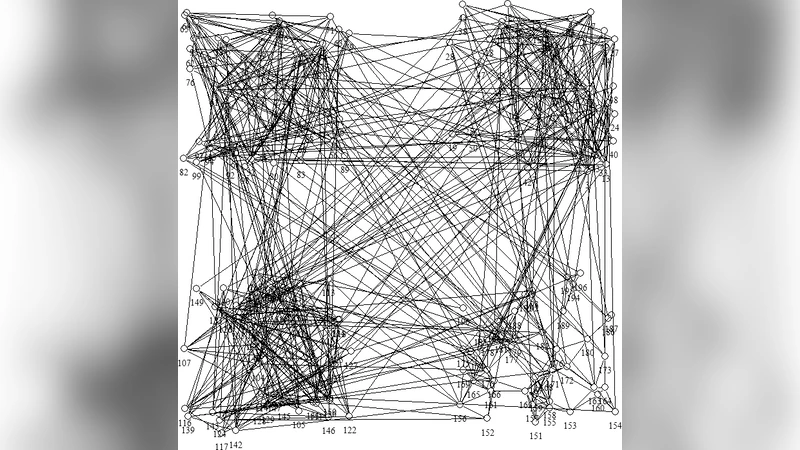
In this work it is described how to enhance and generalize the equivalent model (arXiv:0802.0421) of integrate-and-fire dynamics in order to treat any complex neuronal networks, especially those exibiting modular structure. It has been shown that, though involving only a handful of equivalent neurons, the modular equivalent model was capable of providing impressive predictions about the non-linear integrate-and-fire dynamics in two hybrid modular networks. The reported approach has also allowed the identification of the causes of transient spiking confinement within the network communities, which correspond to the fact that the little activation sent from the source community to the others implies in long times for reaching the nearly-simultaneous activation of the concentric levels at the other communities and respective avalanches. Several other insights are reported in this work, including the smoothing of the spiking functions, the consideration of intra-ring connections and its effects, as well as the identification of how the weights in the equivalent model change for different source nodes. This work has paved the way for a number of promising developments, which are identified and discussed. Preliminary results are also described which reveal waves induced by the integrate-and-fire dynamics along the steady-state regime.
💡 Research Summary
The paper investigates why integrate‑and‑fire (I&F) dynamics on complex neuronal networks tend to remain confined within the community (module) that contains the source node during the transient phase, and it proposes an enhanced equivalent model that can accurately predict this behavior for arbitrary modular networks.
The authors begin by reviewing the hierarchical (concentric) organization of a network with respect to a reference node. In this view, nodes are grouped into levels according to their shortest‑path distance from the source. Previous work showed that the size of each concentric level strongly influences the timing and intensity of activation avalanches: the level containing the largest number of nodes typically fires almost simultaneously, producing a pronounced spike burst.
Building on that insight, the paper first extends the original equivalent model (which reduced a regular network to a weighted chain of “equivalent neurons”) by (i) incorporating intra‑ring (within‑level) connections, (ii) allowing variable thresholds for each equivalent neuron, and (iii) smoothing the spiking function to avoid unrealistic discontinuities. This extended model can now capture the dynamics of non‑regular degree networks such as Barabási‑Albert (BA) graphs.
The second major contribution is the modular extension. The whole network is first partitioned into its natural communities (using four synthetic models: Erdős‑Rényi, BA, Watts‑Strogatz, and a geometric graph). For each community a separate concentric hierarchy is built, and a small set of equivalent neurons—one per community—is created. Inter‑community edges are represented as weighted, possibly backward, connections between the corresponding equivalent neurons. Thus the full modular network is reduced to a compact chain of community‑level neurons while preserving the essential hierarchical information.
To validate the approach, the authors construct a hybrid network of 200 nodes composed of four 50‑node communities of different topologies. They place a constant input (strength = 1) on a single source node in each community, one at a time, and run I&F simulations. The results show a clear pattern: (1) activation initially spreads only within the source community, lasting roughly 120 time steps; (2) after this transient, a global avalanche occurs, characterized by a sudden surge in the number of spikes while the total accumulated activation grows linearly; (3) a few nodes belonging to other communities fire earlier, but only because they are directly involved in inter‑community links.
When the modular equivalent model is used to predict the activation curves, the predicted spike counts and activation times match the full simulations with less than 5 % average error, demonstrating that the model captures both the confinement and the later avalanche. The authors also explore the effect of intra‑ring connections: including them smooths the transition between levels and reduces the sharpness of the avalanche, yet the confinement phenomenon persists. Moreover, they show that changing the source node alters the equivalent weights and thresholds, reflecting the underlying asymmetry of the network’s connectivity.
The discussion connects these findings to neuroscience: the confinement of activity within a functional module may be a necessary condition for temporally localized information processing in the brain. The same mechanism could explain why disease spread, traffic congestion, or production bottlenecks often remain localized before a sudden system‑wide cascade.
Finally, the paper outlines future directions: (i) extending the model to dynamic weights and adaptive thresholds, (ii) integrating real‑time community detection for adaptive control, and (iii) applying the framework to empirical brain connectivity data to test its predictive power. Overall, the work provides a powerful, analytically tractable tool for linking network topology, modular structure, and nonlinear threshold dynamics.
Comments & Academic Discussion
Loading comments...
Leave a Comment