Energy Aware Self-Organizing Density Management in Wireless Sensor Networks
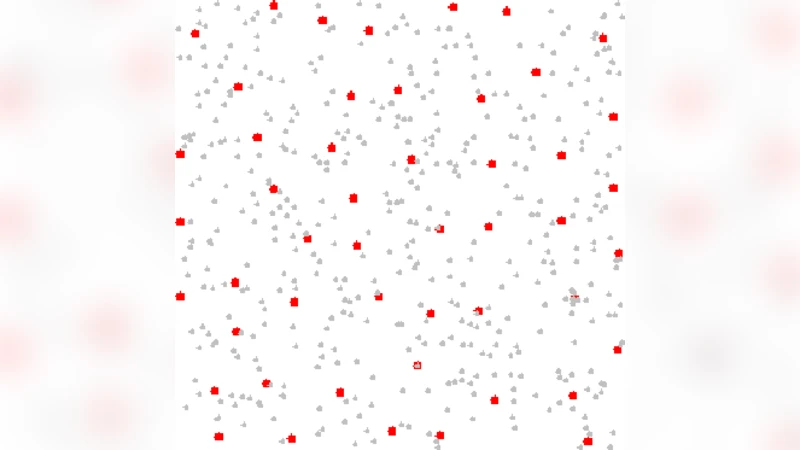
Energy consumption is the most important factor that determines sensor node lifetime. The optimization of wireless sensor network lifetime targets not only the reduction of energy consumption of a single sensor node but also the extension of the entire network lifetime. We propose a simple and adaptive energy-conserving topology management scheme, called SAND (Self-Organizing Active Node Density). SAND is fully decentralized and relies on a distributed probing approach and on the redundancy resolution of sensors for energy optimizations, while preserving the data forwarding and sensing capabilities of the network. We present the SAND’s algorithm, its analysis of convergence, and simulation results. Simulation results show that, though slightly increasing path lengths from sensor to sink nodes, the proposed scheme improves significantly the network lifetime for different neighborhood densities degrees, while preserving both sensing and routing fidelity.
💡 Research Summary
The paper introduces SAND (Self‑Organizing Active Node Density), a decentralized topology‑management protocol designed to extend the lifetime of wireless sensor networks (WSNs) while preserving both routing and sensing fidelity. The authors begin by emphasizing that energy consumption, especially that of the radio transceiver, dominates sensor node power usage. Existing schemes such as GAF and SPAN reduce energy by putting radios into low‑power sleep modes but still require the radio to be active whenever traffic exists. SAND goes further: it defines four mutually exclusive node states—Sleep (all hardware off), Sensor‑only (sensing circuitry on, radio off), Router‑Sensor (radio on for routing plus sensing), and Gateway (full radio and sensing capabilities). Nodes switch among these states based solely on 1‑hop neighbor information; no location data or global coordination is needed.
The algorithm operates in two consecutive phases that repeat periodically with a period Δ larger than twice the maximum message propagation delay δ. In Phase 1, nodes that are currently Router‑Sensor broadcast Hello messages containing their state and a timestamp (the time spent in the current state plus a unique node ID). A Sensor‑only node that does not hear any Router‑Sensor within a timeout T (T > Δ + δ) promotes itself to Router‑Sensor, thereby guaranteeing that every node is either a Router‑Sensor or has a Router‑Sensor neighbor. Conversely, if a Router‑Sensor detects another Router‑Sensor with a higher timestamp, it demotes itself back to Sensor‑only, preventing unnecessary redundancy.
Phase 2 creates connectivity between the distributed Router‑Sensor nodes. A Sensor‑only node that detects at least two distinct Router‑Sensors and no Gateway with a lower timestamp becomes a Gateway. Gateways periodically announce the Router‑Sensors they can see; if a Gateway discovers another Gateway covering the same pair of Router‑Sensors but with a higher timestamp, it steps down to Sensor‑only. This election process yields a set of Gateways that interconnect the Router‑Sensors, forming a sparse backbone.
The authors prove that the resulting configuration satisfies the properties of an independent dominating set: (i) every node is either a Router‑Sensor or adjacent to one (dominance), and (ii) no two Router‑Sensors are direct neighbors (independence). They sketch a three‑part convergence proof showing that (a) the independent‑dominating property is invariant, (b) independence cannot be violated during stabilization, and (c) any region lacking dominance eventually gains a Router‑Sensor, after which the system stabilizes. Simulation results on networks of 500 sensors and 5 sinks, with average node degrees ranging from 10 to 30, confirm the theory. Compared with a baseline that applies no topology management, SAND increases average path length by only 10–15 % while extending network lifetime by 30–50 %, with larger gains at higher densities. The presence of multiple Gateways also improves fault tolerance, as the backbone remains connected despite node failures.
Key advantages of SAND include: (1) no reliance on geographic information, (2) aggressive radio shutdown (complete sleep) whenever traffic is absent, (3) simple local decision rules that achieve a global energy‑balanced configuration, and (4) independence from any specific routing protocol. However, the paper acknowledges potential drawbacks: timestamp collisions or message loss could temporarily break domination, and the concentration of workload on Router‑Sensor and Gateway nodes may create “hot spots” that deplete those nodes faster. The authors suggest future work on role‑rotation mechanisms, robustness to clock drift, hardware implementation, and integration with event‑driven sensing applications.
In summary, SAND offers a lightweight, fully distributed method to manage node density and radio activity in WSNs, achieving substantial lifetime extensions while maintaining the essential guarantees of sensing coverage and end‑to‑end data delivery. Its simplicity and protocol‑agnostic design make it a promising candidate for real‑world sensor deployments where energy is the primary constraint.
Comments & Academic Discussion
Loading comments...
Leave a Comment