Adaptive Coevolutionary Networks: A Review
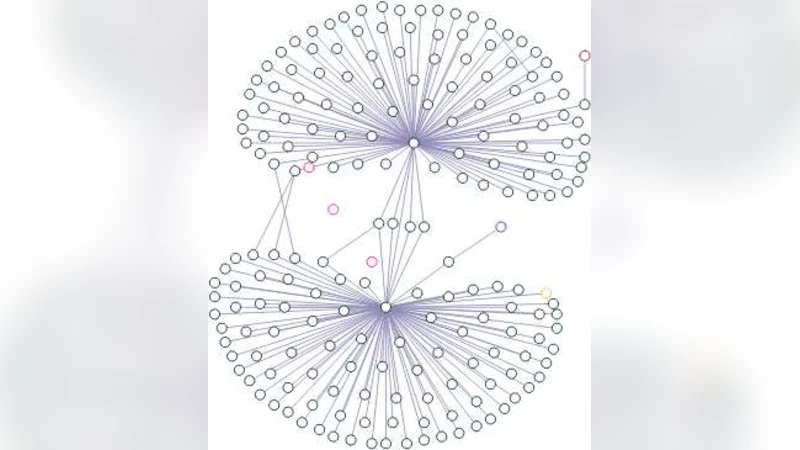
Adaptive networks appear in many biological applications. They combine topological evolution of the network with dynamics in the network nodes. Recently, the dynamics of adaptive networks has been investigated in a number of parallel studies from different fields, ranging from genomics to game theory. Here we review these recent developments and show that they can be viewed from a unique angle. We demonstrate that all these studies are characterized by common themes, most prominently: complex dynamics and robust topological self-organization based on simple local rules.
💡 Research Summary
Adaptive Coevolutionary Networks (ACNs) are systems in which the dynamics of node states and the evolution of network topology occur simultaneously and influence each other. This review synthesizes recent advances across a broad spectrum of disciplines—genomics, neuroscience, social dynamics, and evolutionary game theory—showing that, despite their diverse applications, these studies share a common set of principles.
The paper begins by contrasting traditional complex‑system approaches, which treat dynamics and structure as separate entities, with the ACN paradigm where feedback loops between node states (e.g., gene expression levels, neuronal firing rates, strategic choices) and link updates (creation, deletion, or weight adjustment) are explicit. Typical rewiring rules are local: nodes preferentially connect to others with similar states (homophily), avoid discordant partners, or sometimes seek heterogeneity to maintain diversity. The relative time scales of state updates versus topological changes determine whether the system exhibits fast adaptation of connections, slow structural drift, or a balanced co‑evolution.
Four major phenomena emerge from this co‑evolutionary process. First, self‑organized criticality: ACNs often evolve toward critical points without external tuning, producing power‑law distributions of avalanche sizes, degree fluctuations, or cascade durations. Second, pattern formation and clustering: simple homophilic rewiring can spontaneously generate highly clustered sub‑communities, while heterophilic rules can produce modular structures that preserve functional diversity. Third, phase transitions: the interplay of dynamics and topology can induce abrupt shifts between cooperative and defective regimes, active and quiescent states, or fragmented and connected network phases. Fourth, multistability and hysteresis: because the topology itself can store memory of past states, ACNs frequently display multiple coexisting attractors and path‑dependent transitions.
To analyze these behaviors, the review surveys a toolbox of analytical and computational methods. Mean‑field approximations capture average trends but neglect correlation effects that become crucial when rewiring is frequent. Pair‑approximation and dynamic message‑passing techniques incorporate nearest‑neighbor correlations, improving predictions for degree distributions and cluster sizes. Stochastic master‑equation formulations, often combined with Gillespie‑type exact simulation algorithms, allow precise tracking of fluctuations in finite‑size systems. Recent work also integrates machine‑learning approaches—graph neural networks trained on empirical data—to infer rewiring rules and predict future topologies, bridging the gap between theory and observation.
The paper then examines domain‑specific implementations. In genomic regulatory networks, transcription factors and target genes form feedback loops that remodel the interaction graph in response to environmental cues, explaining phenomena such as bistable gene expression and epigenetic memory. In neural circuits, activity‑dependent synaptic plasticity (e.g., spike‑timing‑dependent plasticity) reshapes connectivity, supporting learning, memory consolidation, and critical brain dynamics. In social and game‑theoretic contexts, agents adjust their social ties based on strategy success, leading to the emergence of cooperative clusters, persistent dissenting minorities, or complete network fragmentation. In ecological and evolutionary models, predator‑prey or host‑parasite interactions co‑evolve with the underlying food‑web structure, influencing species diversity and ecosystem resilience. Across all fields, the authors highlight how simple, locally executable rules generate robust global organization, a hallmark of complex adaptive systems.
Finally, the review identifies current challenges and future directions. Empirical validation remains limited because high‑resolution, time‑resolved data on both node states and link dynamics are scarce, especially in biological settings. Scaling analytical methods to massive, heterogeneous networks and dealing with parameter uncertainty are open problems. The authors advocate for multi‑scale modeling frameworks that couple microscopic rewiring mechanisms with macroscopic statistical descriptions, for data‑driven inference pipelines that can calibrate models against real‑world observations, and for control‑theoretic approaches that deliberately steer ACNs toward desirable functional states (e.g., enhancing cooperation or preventing cascading failures).
In summary, this review positions Adaptive Coevolutionary Networks as a unifying conceptual framework that transcends disciplinary boundaries. By demonstrating that complex dynamics, robust self‑organization, and resilient topologies can all arise from straightforward local interaction rules, the paper provides both a theoretical foundation and a practical roadmap for future research into the intertwined evolution of structure and function in complex systems.
Comments & Academic Discussion
Loading comments...
Leave a Comment