Network Tomography: Identifiability and Fourier Domain Estimation
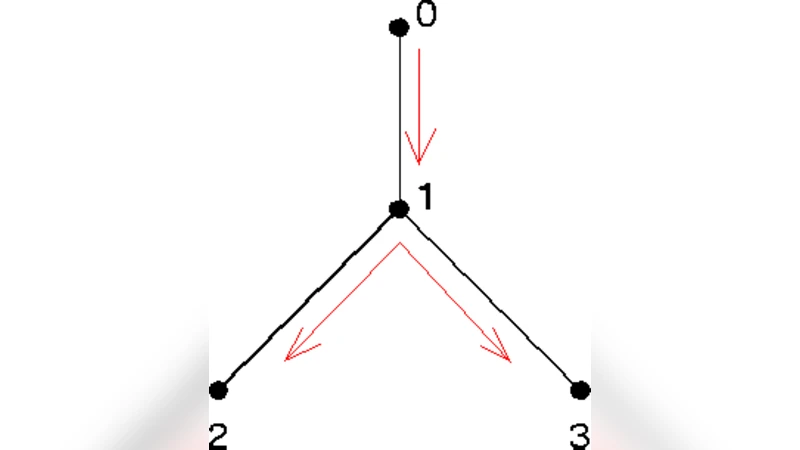
The statistical problem for network tomography is to infer the distribution of $\mathbf{X}$, with mutually independent components, from a measurement model $\mathbf{Y}=A\mathbf{X}$, where $A$ is a given binary matrix representing the routing topology of a network under consideration. The challenge is that the dimension of $\mathbf{X}$ is much larger than that of $\mathbf{Y}$ and thus the problem is often called ill-posed. This paper studies some statistical aspects of network tomography. We first address the identifiability issue and prove that the $\mathbf{X}$ distribution is identifiable up to a shift parameter under mild conditions. We then use a mixture model of characteristic functions to derive a fast algorithm for estimating the distribution of $\mathbf{X}$ based on the General method of Moments. Through extensive model simulation and real Internet trace driven simulation, the proposed approach is shown to be favorable comparing to previous methods using simple discretization for inferring link delays in a heterogeneous network.
💡 Research Summary
Network tomography aims to recover the statistical distribution of internal link variables X (assumed mutually independent) from end‑to‑end measurements Y that obey a linear routing model Y = A X, where A is a binary routing matrix. Because the number of unknown link variables (dimension d) far exceeds the number of observable path measurements (dimension m), the inverse problem is severely ill‑posed. This paper tackles two fundamental challenges: (1) establishing under what conditions the distribution of X is identifiable, and (2) devising a computationally efficient estimator that works in practice.
Identifiability.
The authors prove that, provided the routing matrix A has full column rank and each column exhibits a unique 0‑1 pattern (i.e., no two links share exactly the same set of paths), the joint distribution of X is uniquely determined up to a global shift constant. In other words, if two candidate distributions produce the same distribution of Y, they can differ only by adding the same constant c to every component of X. The proof relies on characteristic functions: the characteristic function of Y, φ_Y(s) = E
Comments & Academic Discussion
Loading comments...
Leave a Comment