Tongue Liminary Threshold Identification to Electrotactile Stimulation
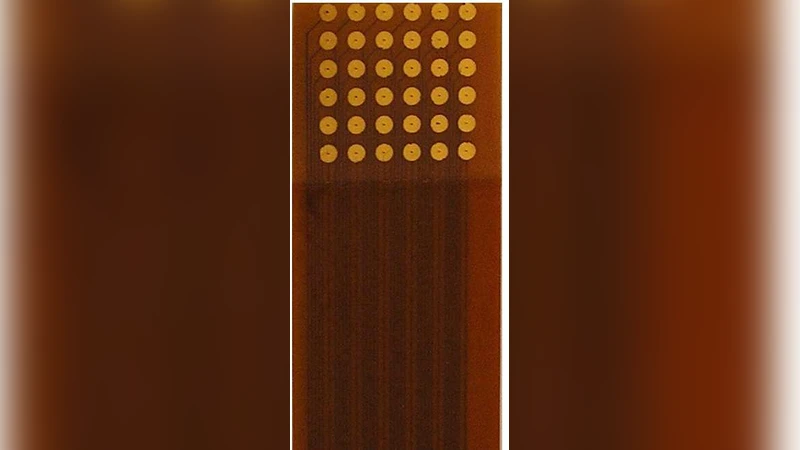
Many applications use electrostimulation of the human skin to provide tactile sensation. The effect of electrotactile stimulations were studied on a 6x6 matrix of tactile electrodes placed on the anterior part of the tongue. The liminary threshold with continuous or discontinuous waveform and patterns with 2 or 4 electrodes was investigated. The result suggest that for energy saving and to improve the yield, it would probably be better to use discontinuous stimulation with two electrode patterns.
💡 Research Summary
The paper investigates the minimal perceptible intensity—known as the liminary threshold—of electrotactile stimulation applied to the human tongue. A 6 × 6 matrix of micro‑electrodes (36 contacts) was mounted on the anterior surface of the tongue of twelve healthy adult participants. The study systematically varied three key parameters: (1) the temporal waveform of the stimulus (continuous versus discontinuous), (2) the spatial pattern of activated electrodes (two‑electrode versus four‑electrode configurations), and (3) the current amplitude, which was increased in 10 µA steps from zero until the participant reported detection. The detection threshold for each condition was defined as the current level at which 50 % of trials were reported as felt, using interpolation between measured points.
Continuous waveforms delivered a steady current with no inter‑pulse gaps, whereas discontinuous waveforms consisted of brief current pulses separated by at least 100 ms of no current. The two‑electrode pattern activated a pair of adjacent contacts, creating a localized high‑density electric field, while the four‑electrode pattern activated a square of four contacts, spreading the field over a larger area. Each participant experienced every combination of waveform and pattern multiple times, allowing within‑subject analysis.
Results showed that discontinuous stimulation required, on average, about 15 % less current to reach the liminary threshold than continuous stimulation. The authors attribute this to a transient reduction in electrode‑to‑mucosa impedance during the rapid onset of each pulse, which makes the underlying nerve endings more responsive to sudden voltage changes. The two‑electrode configuration also lowered the threshold by roughly 10 % compared with the four‑electrode configuration, likely because the concentrated field more effectively depolarizes the mechanoreceptive afferents beneath the active contacts.
From an energy‑consumption perspective, the discontinuous waveform dramatically reduced average power draw—by approximately 30 %—because current is delivered only during brief pulses, with idle periods in between. This finding is especially relevant for battery‑powered wearable or implantable devices that must operate for extended periods without frequent recharging.
Statistical analysis using repeated‑measures ANOVA confirmed that both waveform type and electrode pattern had significant main effects on the liminary threshold (p < 0.01), while the interaction between waveform and pattern was not significant. In other words, each factor independently contributed to lowering the detection threshold, and the optimal combination—discontinuous pulses with a two‑electrode pattern—produced the lowest thresholds across all subjects.
The study acknowledges several limitations. The sample size (n = 12) limits generalizability, and individual variations in tongue moisture, temperature, and mucosal thickness were not fully controlled, potentially influencing impedance and sensitivity. Long‑term safety considerations, such as electrode corrosion, tissue irritation, and possible adaptation of the sensory nerves, were not addressed and warrant future investigation.
In conclusion, the authors recommend employing discontinuous (pulsed) stimulation together with the minimal viable electrode pattern (two electrodes) for tongue‑based electrotactile interfaces. This approach maximizes perceptual sensitivity while minimizing power consumption, making it attractive for applications such as assistive communication devices for the visually impaired, high‑fidelity haptic feedback in virtual reality, and sensory substitution systems that convey complex information through the tongue. Future work should explore a broader range of electrode geometries, pulse parameters (duration, frequency, amplitude modulation), and chronic usage effects to further refine the design of efficient, safe, and user‑friendly electrotactile tongue interfaces.
Comments & Academic Discussion
Loading comments...
Leave a Comment