Iterative Filtering for a Dynamical Reputation System
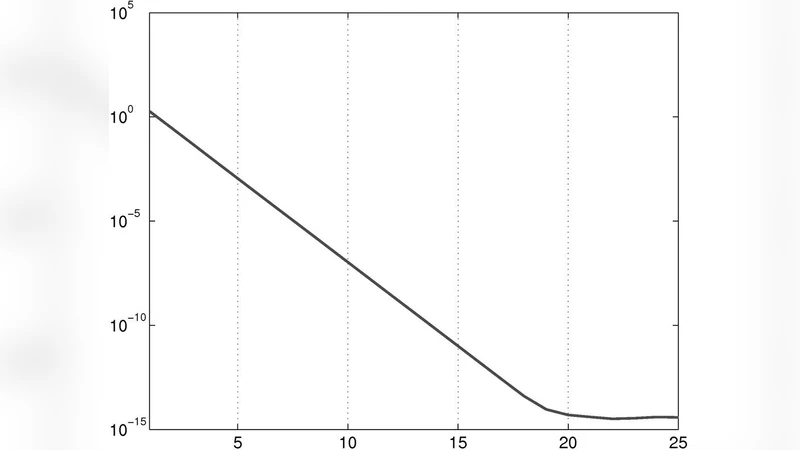
The paper introduces a novel iterative method that assigns a reputation to n + m items: n raters and m objects. Each rater evaluates a subset of objects leading to a n x m rating matrix with a certain sparsity pattern. From this rating matrix we give a nonlinear formula to define the reputation of raters and objects. We also provide an iterative algorithm that superlinearly converges to the unique vector of reputations and this for any rating matrix. In contrast to classical outliers detection, no evaluation is discarded in this method but each one is taken into account with different weights for the reputation of the objects. The complexity of one iteration step is linear in the number of evaluations, making our algorithm efficient for large data set. Experiments show good robustness of the reputation of the objects against cheaters and spammers and good detection properties of cheaters and spammers.
💡 Research Summary
The paper tackles the fundamental problem of computing reliable reputations in online platforms where users (raters) evaluate items (objects). Traditional reputation mechanisms treat only the objects as subjects of evaluation, often discarding outlier ratings or applying simple weighting schemes that ignore the credibility of the raters themselves. This approach is vulnerable to coordinated attacks by spammers and cheaters who can flood the system with deceptive scores, thereby distorting the perceived quality of objects.
To address these shortcomings, the authors propose a dual‑reputation model in which both raters and objects are assigned a non‑negative reputation score. Let there be (n) raters and (m) objects, and let the rating matrix (R\in\mathbb{R}^{n\times m}) contain the observed scores (r_{ij}) (with missing entries for unevaluated pairs). The model introduces a weight function (w_{ij}=f(u_i,v_j)) that depends on the current reputation of rater (i) ((u_i)) and object (j) ((v_j)). A typical choice in the paper is an exponential form (f(u,v)=\exp(\beta uv)) with a temperature‑like parameter (\beta>0). This function ensures that a high‑reputation rater gives more influence to his/her ratings, while a low‑reputation rater’s contributions are automatically down‑weighted.
The reputations are defined as the solution of a coupled nonlinear fixed‑point system:
\