Can a Computer Laugh ?
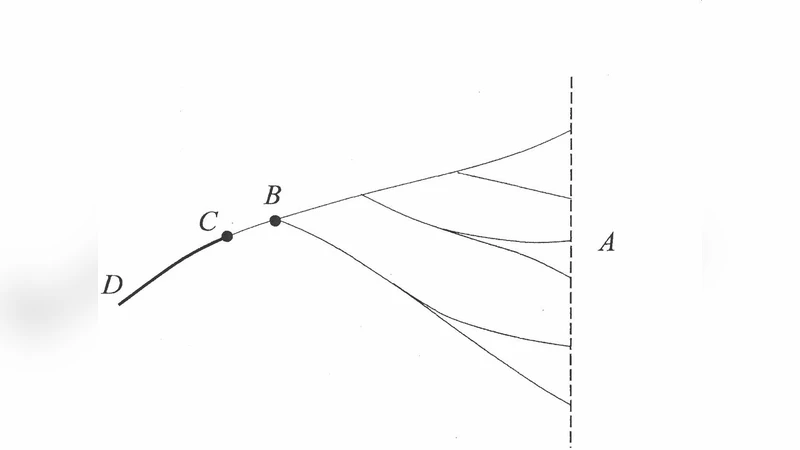
A computer model of “a sense of humour” suggested previously [arXiv:0711.2058,0711.2061], relating the humorous effect with a specific malfunction in information processing, is given in somewhat different exposition. Psychological aspects of humour are elaborated more thoroughly. The mechanism of laughter is formulated on the more general level. Detailed discussion is presented for the higher levels of information processing, which are responsible for a perception of complex samples of humour. Development of a sense of humour in the process of evolution is discussed.
💡 Research Summary
The paper revisits and expands upon a previously proposed computational model of humor (arXiv:0711.2058, 0711.2061) by presenting it in a more comprehensive framework that integrates psychological theory, higher‑level information processing, and evolutionary considerations. The authors begin by restating the core idea of the original model: the humorous effect arises when an information‑processing system encounters a temporary conflict or “malfunction” in the interpretation of an input, prompting a rapid corrective operation that manifests as laughter. This conflict is formally modeled as a violation of expected semantic coherence, which triggers a cascade of neural‑like signals.
To make the model more realistic, the paper introduces a dedicated “conflict‑detector unit” within a multilayer perceptron architecture. Each unit computes a semantic distance between competing interpretations of an input vector; if this distance exceeds a predefined threshold, an error signal is generated and propagated to higher layers. The higher‑level “reconstruction module” then synthesizes a new, coherent meaning while simultaneously activating a “laughter‑generation module.” This module produces a periodic output that can be mapped onto physical expressions of laughter (vocalization, facial movement). The authors argue that this architecture mirrors the brain’s “over‑shoot” correction mechanism observed during incongruity resolution.
Psychologically, the authors fuse two major humor theories: the incongruity theory (which posits that humor stems from a mismatch between expectation and reality) and the transfer effect (which emphasizes the role of prior experience in shaping the resolution of that mismatch). They illustrate how complex humor—such as satire, irony, and metaphor—often involves multimodal processing, where linguistic and visual streams operate in parallel and generate cross‑modal conflicts. The model’s conflict detectors capture these cross‑modal mismatches, thereby providing a computational substrate for higher‑order humor.
From an evolutionary standpoint, the paper proposes that early organisms evolved rapid error‑correction mechanisms to cope with unpredictable environments. These mechanisms later became co‑opted as social signals—laughter—to reduce tension and promote group cohesion. Consequently, humor is framed not as a by‑product of cognition but as an adaptive function that enhances information exchange efficiency within a community.
The authors acknowledge several limitations of the current implementation. The model lacks a nuanced representation of affective depth and cultural context, which are crucial for authentic humor generation. To address this, they suggest integrating reinforcement‑learning based reward signals that reflect social feedback (e.g., smiles, laughter from interlocutors). By training the system on large multimodal corpora and fine‑tuning it with human‑in‑the‑loop evaluations, the model could learn to align its humor output with socially appropriate cues.
In conclusion, the paper offers a theoretically grounded, multi‑layered computational architecture that captures the essential dynamics of humor perception and laughter production. By bridging information‑theoretic conflict detection with psychological and evolutionary insights, it lays a solid foundation for future work on creating machines capable of genuine, context‑aware humor—a key step toward more natural and engaging human‑computer interaction.
Comments & Academic Discussion
Loading comments...
Leave a Comment