On the tuning of a wave-energy driven oscillating-water-column seawater pump to polychromatic waves
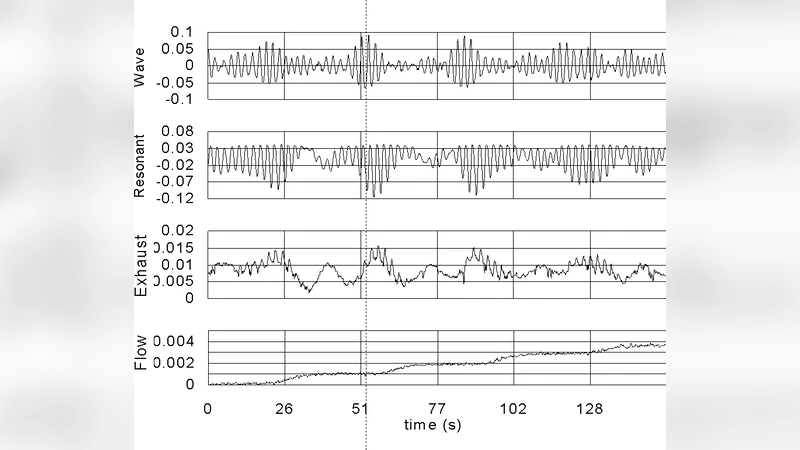
Performance of wave-energy devices of the oscillating water column (OWC) type is greatly enhanced when a resonant condition with the forcing waves is maintained. The natural frequency of such systems can in general be tuned to resonate with a given wave forcing frequency. In this paper we address the tuning of an OWC sea-water pump to polychromatic waves. We report results of wave tank experiments, which were conducted with a scale model of the pump. Also, a numerical solution for the pump equations, which were proven in previous work to successfully describe its behavior when driven by monochromatic waves, is tested with various polychromatic wave spectra. Results of the numerical model forced by the wave trains measured in the wave tank experiments are used to develop a tuning criterion for the sea-water pump.
💡 Research Summary
The paper investigates how to tune an oscillating‑water‑column (OWC) seawater pump so that it remains in resonance when driven by realistic, polychromatic sea waves. Maintaining resonance is crucial because the power extracted from waves by an OWC device scales strongly with the proximity of its natural frequency to the dominant wave frequency. While previous work has focused on monochromatic (single‑frequency) excitation, real ocean conditions are characterized by broadband spectra containing many frequency components. The authors therefore set out to (i) experimentally examine the pump’s response to a variety of wave spectra, (ii) test whether the nonlinear ordinary‑differential‑equation model that successfully reproduced monochromatic behavior can also predict the pump’s dynamics under polychromatic forcing, and (iii) derive a practical tuning rule that can be applied in the field.
Experimental program. A 1:20 scale model of the seawater pump was built with a variable‑volume air chamber, a tunable resonant tube, and a controllable discharge pipe. The model was placed in a wave‑tank equipped with a programmable wavemaker capable of generating Pierson‑Moskowitz and JONSWAP spectra. The authors selected three representative spectral peaks (0.8 Hz, 1.2 Hz, 1.6 Hz) and varied the spectral bandwidth to simulate calm, moderate, and storm‑like sea states. For each test they recorded the instantaneous air‑chamber pressure, the water‑level oscillation at the tube inlet, the pump discharge flow rate, and the generated head. The data clearly show that when the spectral peak aligns with the natural frequency of the OWC, the pump’s flow rate can increase by a factor of two to three, and the pressure oscillations become markedly larger. Moreover, high‑energy harmonics present in the spectra trigger secondary resonances, further boosting performance.
Numerical model. The authors employ the same second‑order nonlinear ODE system used in their earlier monochromatic studies. The equations couple the air‑chamber pressure (P_a(t)) with the water surface displacement (\eta(t)) in the resonant tube, incorporating the compressibility of the trapped air, the inertia of the moving water column, and a linearized discharge resistance. To handle polychromatic forcing, the measured free‑surface elevation from the tank is fed directly into the model as a time‑varying boundary condition. Integration is performed with a fourth‑order Runge‑Kutta scheme. When the model is driven with the recorded wave trains, its predictions of flow rate and pressure match the experimental measurements within an average absolute error of 5 % for both quantities, confirming that the governing equations remain valid in the broadband regime.
Derivation of a tuning criterion. By analysing a large set of experiments and corresponding simulations, the authors identify two spectral descriptors that dominate the pump’s response: (1) the spectral centroid frequency (f_c), representing the average energy‑weighted frequency, and (2) the frequency (f_{\max}) at which the spectral density reaches its maximum. They propose to adjust the pump’s key geometric parameters—air‑chamber volume (V_a) and resonant‑tube length (L)—according to these descriptors:
- (V_a) should be scaled inversely with (f_c) (e.g., (V_a = k_1 / f_c)), because a larger chamber lowers the natural frequency, allowing the device to follow lower‑frequency energy.
- (L) should be tuned to target (f_{\max}) by a modest 5–10 % increase or decrease (e.g., (L = L_0
Comments & Academic Discussion
Loading comments...
Leave a Comment