Infection spreading in a population with evolving contacts
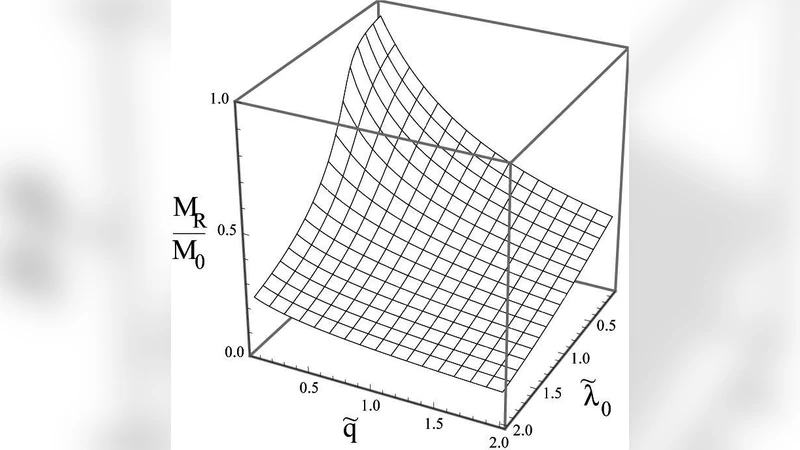
We study the spreading of an infection within an SIS epidemiological model on a network. Susceptible agents are given the opportunity of breaking their links with infected agents. Broken links are either permanently removed or reconnected with the rest of the population. Thus, the network coevolves with the population as the infection progresses. We show that a moderate reconnection frequency is enough to completely suppress the infection. A partial, rather weak isolation of infected agents suffices to eliminate the endemic state.
💡 Research Summary
The paper investigates how an SIS (susceptible‑infected‑susceptible) epidemic evolves on a network whose topology co‑evolves with the disease dynamics. The authors introduce a behavioral rule: susceptible individuals may sever their links to infected neighbors with probability (p_b). Once a link is broken, it is either permanently removed (probability (1-r)) or re‑connected to a randomly chosen susceptible individual (probability (r)). This “break‑and‑reconnect” mechanism captures two realistic public‑health actions—social distancing that reduces contact and gradual reopening that restores social ties.
Mathematically, the system is described by continuous‑time differential equations for the fraction of infected nodes (i(t)) and the average degree (k(t)). Using a mean‑field approximation and a pair‑approximation closure for the susceptible‑infected edge density (k_{SI}), the authors derive a compact expression for the basic reproduction number:
\
Comments & Academic Discussion
Loading comments...
Leave a Comment