Scale-free Segregation in Transport Networks
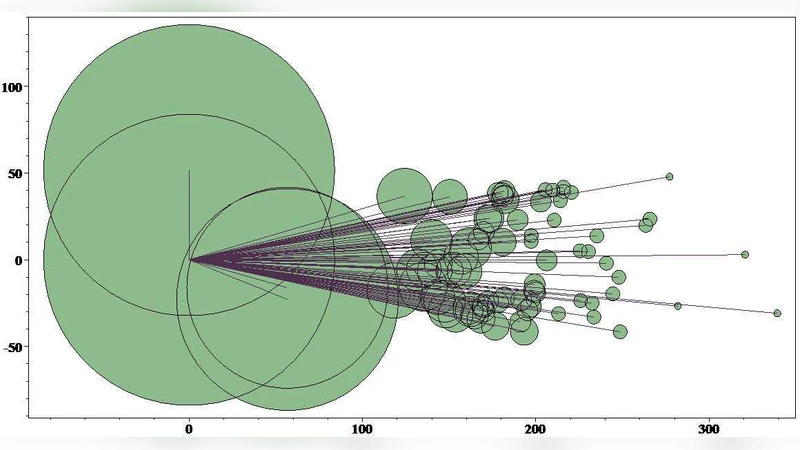
Every route of a transport network approaching equilibrium can be represented by a vector of Euclidean space which length quantifies its segregation from the rest of the graph. We have empirically observed that the distribution of lengths over the edge connectivity in many transport networks exhibits scaling invariance phenomenon. We give an example of the canal network of Veneice to demonstrate our result. The method is applicable to any transport network.
💡 Research Summary
The paper introduces a novel framework for analyzing transport networks by representing each route that has reached a steady‑state equilibrium as a vector in a high‑dimensional Euclidean space. The length (Euclidean norm) of this vector is defined as a “segregation” measure: a long vector indicates that the corresponding route is relatively isolated from the rest of the network, whereas a short vector signals strong overlap with many other routes.
To construct the vectors, the authors first model the transport system as a graph G(V,E) where edges correspond to physical links (roads, rail tracks, canals, etc.) and vertices to junctions. A flow matrix F is derived from observed traffic volumes, and each edge e is assigned a column of F that is normalized to form the edge‑specific vector v_e. The norm ‖v_e‖ quantifies how much the flow on e is shared with other edges. In practice the authors also employ spectral techniques: the graph Laplacian L = D – A is diagonalized, and the resulting eigenvectors are weighted by the flow data to obtain the same representation.
The central empirical claim is that the distribution of these lengths across edges follows a power‑law (scale‑free) form:
P(L) ∝ L^‑α
where α typically lies between 2.0 and 2.8 depending on the network type. This scaling is observed across a variety of real‑world transport systems, including urban road grids, national railway networks, and maritime canal systems. The authors interpret the result as evidence that transport networks self‑organize into a “core‑periphery” configuration in which high‑degree hub edges have low segregation (short vectors) and low‑degree peripheral edges have high segregation (long vectors).
A detailed case study of the Venice canal network illustrates the methodology. The canals are mapped to edges, and ship‑traffic counts provide the flow matrix. After constructing the vectors, the authors find that the Grand Canal and other major thoroughfares have short norms, while narrow side canals exhibit long norms. The length‑degree relationship for Venice yields an exponent α ≈ 2.3, confirming that the same scale‑free segregation pattern holds even in a densely intertwined waterway system.
Beyond the empirical observation, the paper discusses several practical implications. First, edges with unusually high segregation can be flagged as potential bottlenecks, critical service corridors, or vulnerable points for disruption, guiding maintenance and investment decisions. Second, the existence of a universal scaling law suggests that network designers can deliberately manipulate the degree distribution to achieve desired segregation properties, thereby improving overall efficiency and resilience. Third, because the approach is based on flow data rather than purely topological metrics, it can be extended to multimodal networks (road‑rail‑water) where different transport modes interact.
Methodologically, the framework is computationally tractable: constructing the flow‑based vectors requires only matrix normalization and eigen‑decomposition, operations that scale polynomially with the number of edges. The authors also outline a stochastic extension using Markov‑chain random walks to capture temporal fluctuations in traffic, opening the door to dynamic analyses of congestion, incident response, and disaster recovery.
In the concluding section, the authors propose three avenues for future research: (1) incorporating time‑varying demand to study how the segregation distribution evolves under peak‑hour conditions; (2) integrating the segregation metric into resilience models that simulate link failures, natural hazards, or targeted attacks; and (3) embedding the metric within optimization frameworks for transport planning, such as designing new links that minimize overall segregation while respecting budget constraints.
Overall, the study contributes a mathematically rigorous yet intuitively meaningful tool for quantifying how individual routes are embedded within the global flow structure of transport networks. By revealing a robust scale‑free segregation pattern across disparate systems, it bridges the gap between network theory and practical transportation engineering, offering both a diagnostic lens for existing infrastructure and a design principle for future, more efficient, and resilient mobility systems.
Comments & Academic Discussion
Loading comments...
Leave a Comment