Updating Probabilities: An Econometric Example
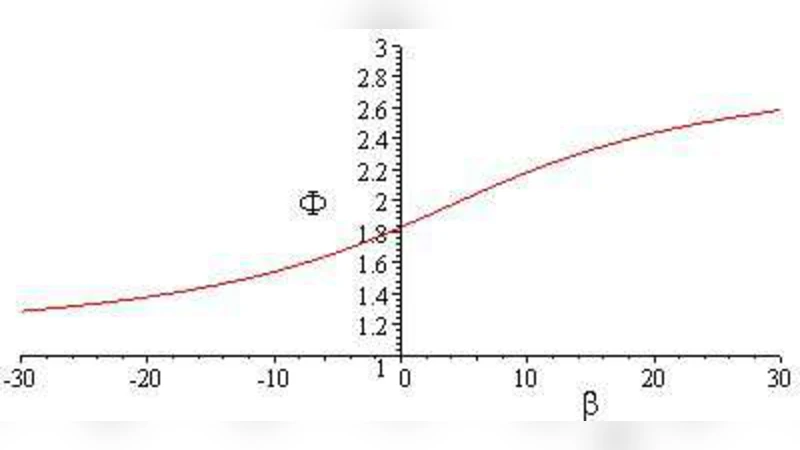
We demonstrate how information in the form of observable data and moment constraints are introduced into the method of Maximum relative Entropy (ME). A general example of updating with data and moments is shown. A specific econometric example is solved in detail which can then be used as a template for real world problems. A numerical example is compared to a large deviation solution which illustrates some of the advantages of the ME method.
💡 Research Summary
The paper presents a unified framework for updating probability distributions when new information arrives, based on the principle of Maximum relative Entropy (ME). It begins by highlighting the limitations of traditional Bayesian updating, which incorporates only observed data through the likelihood function, and often neglects additional prior knowledge such as moment constraints (e.g., known means or variances). The authors argue that an information‑theoretic approach—maximizing entropy relative to a prior—naturally accommodates both data and auxiliary constraints.
Mathematically, the authors formulate the problem as the minimization of the relative entropy
(S
Comments & Academic Discussion
Loading comments...
Leave a Comment