Crystallography without crystals I: the common-line method for assembling a 3D intensity volume from single-particle scattering
We demonstrate that a common-line method can assemble a 3D oversampled diffracted intensity distribution suitable for high-resolution structure solution from a set of measured 2D diffraction patterns, as proposed in experiments with an X-ray free electron laser (XFEL) (Neutze {\it et al.}, 2000). Even for a flat Ewald sphere, we show how the ambiguities due to Friedel’s Law may be overcome. The method breaks down for photon counts below about 10 per detector pixel, almost 3 orders of magnitude higher than expected for scattering by a 500 kDa protein with an XFEL beam focused to a 0.1 micron diameter spot. Even if 103 orientationally similar diffraction patterns could be identified and added to reach the requisite photon count per pixel, the need for about 106 orientational classes for high-resolution structure determination suggests that about ~ 109 diffraction patterns must be recorded. Assuming pulse and read-out rates of 100 Hz, such measurements would require ~ 107 seconds, i.e. several months of continuous beam time.
💡 Research Summary
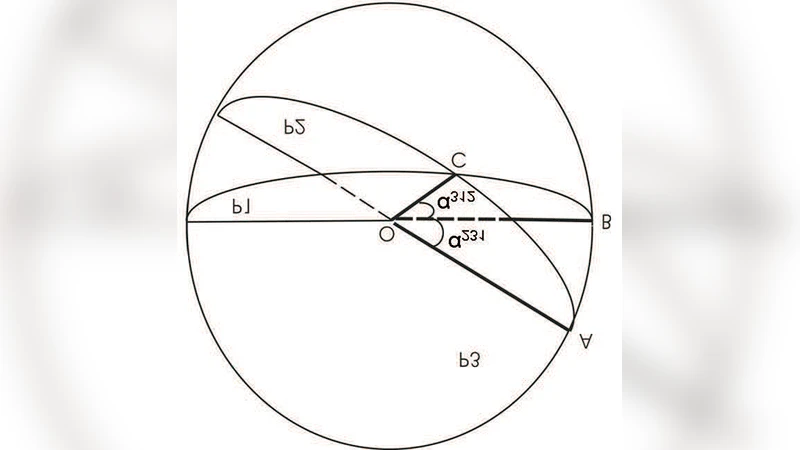
The paper presents a practical implementation of the common‑line method for assembling a three‑dimensional oversampled diffraction intensity volume from a large set of two‑dimensional single‑particle diffraction patterns, as envisioned for X‑ray free‑electron laser (XFEL) experiments. The authors start by adapting the classic common‑line technique from electron microscopy to the XFEL context, where each measured pattern corresponds to a random orientation of the particle. By converting each pattern into polar coordinates and computing cross‑correlation functions, the intersection line (the “common line”) between any two projection planes in reciprocal space can be identified. This line provides the relative rotation that aligns the two patterns. Repeating this for all pattern pairs yields a network of relative rotations, which can be globally optimized to assign an absolute orientation to every pattern.
A major complication arises from Friedel’s law: because diffraction intensities are symmetric (I(q)=I(‑q)), each pattern admits two mirror‑related orientation solutions. The authors resolve this ambiguity by evaluating both possibilities for each pair and enforcing global phase consistency across triples of patterns; the configuration that minimizes residual discrepancies in the reconstructed 3D volume is selected as the correct one.
Through extensive simulations, the authors determine the photon‑count threshold required for reliable common‑line detection. They find that when the average number of photons per detector pixel falls below roughly ten, the signal‑to‑noise ratio becomes insufficient, leading to a rapid increase in orientation errors. Consequently, a minimum of ~10 photons/pixel is needed for the algorithm to work robustly.
Applying realistic XFEL parameters, the authors estimate the data acquisition burden. For a 500 kDa protein illuminated by a 0.1 µm‑diameter XFEL focus, the expected photon count per pixel is only 0.01–0.1, far below the required ten. To reach the needed signal, about 10³ diffraction patterns with nearly identical orientations must be summed, which in turn demands a total of roughly 10⁹ distinct patterns to cover the ~10⁶ orientation classes required for high‑resolution (≈3 Å) reconstruction. At a feasible pulse‑and‑readout rate of 100 Hz, recording this many patterns would take on the order of 10⁷ seconds—several months of continuous beam time.
The paper concludes that, while the common‑line approach theoretically overcomes the orientation‑determination problem and the Friedel ambiguity even for a flat Ewald sphere, the practical implementation is limited by photon statistics and the sheer volume of data required. The authors suggest that future progress will depend on improving detector efficiency, increasing photon flux, reducing the number of required orientation classes through smarter classification or machine‑learning techniques, and developing faster data‑handling pipelines. Only with such advances can single‑particle XFEL diffraction become a viable route to atomic‑resolution structures without the need for crystals.
Comments & Academic Discussion
Loading comments...
Leave a Comment