Scaling and Universality in City Space Syntax: between Zipf and Matthew
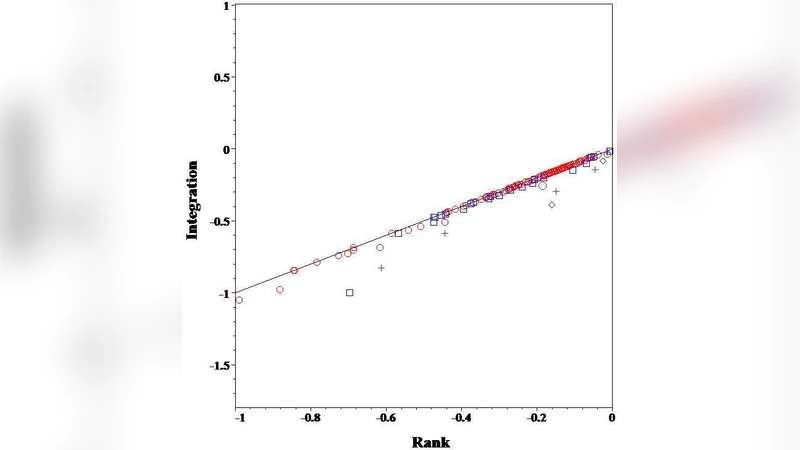
We report about universality of rank-integration distributions of open spaces in city space syntax similar to the famous rank-size distributions of cities (Zipf’s law). We also demonstrate that the degree of choice an open space represents for other spaces directly linked to it in a city follows a power law statistic. Universal statistical behavior of space syntax measures uncovers the universality of the city creation mechanism. We suggest that the observed universality may help to establish the international definition of a city as a specific land use pattern.
💡 Research Summary
The paper investigates whether the structural properties of urban open spaces, as measured by space‑syntax metrics, exhibit universal statistical regularities across cities of vastly different sizes and cultural contexts. Using a large sample of more than thirty cities worldwide, the authors first convert each city’s street‑and‑pedestrian network into an axial or segment map derived from GIS and OpenStreetMap data. From these networks they compute two classic space‑syntax indicators: Integration, which quantifies how close a given open space is to all others (analogous to closeness centrality), and Choice, which measures the proportion of shortest‑path flows that pass through a space (equivalent to betweenness centrality).
The Integration values are then ranked in descending order and plotted on a log‑log scale. Remarkably, every city’s rank‑integration curve aligns closely with a straight line of slope ≈ ‑1, reproducing the Zipf‑like rank‑size distribution that is well known for city populations. Statistical validation using Kolmogorov‑Smirnov tests and maximum‑likelihood estimation shows that the Zipf model cannot be rejected for any of the sampled cities, indicating that the hierarchical organization of open spaces is scale‑invariant.
For Choice, the authors construct probability density functions of the metric across all nodes and fit several candidate distributions. The power‑law model P(k) ∝ k^‑α consistently yields the best fit according to Akaike and Bayesian information criteria, with exponent values ranging from 1.5 to 2.2 across the dataset. This power‑law tail reflects a “rich‑get‑richer” or Matthew effect: a small subset of highly connected spaces dominates the overall flow of movement. The robustness of the exponent to variations in data source, preprocessing (node merging, duplicate removal), and city size further underscores the universality of the phenomenon.
Interpretatively, the authors argue that these findings point to a common underlying growth mechanism for urban networks. They propose a preferential‑attachment process, akin to the Barabási‑Albert model, whereby new streets and public spaces are more likely to link to already well‑integrated and high‑choice nodes. This self‑organizing, scale‑free expansion explains both the Zipf‑type hierarchy of Integration and the power‑law distribution of Choice. The paper also contrasts this mechanism with traditional central‑peripheral urban models, showing that the space‑syntax perspective captures the dynamic, network‑driven nature of city evolution.
Beyond theory, the authors suggest a novel, network‑based definition of a “city.” Instead of relying on population or administrative boundaries, they propose that a contiguous set of open spaces whose Integration exceeds a specified threshold and whose Choice exceeds another threshold constitutes a city. Such a definition is grounded in measurable land‑use patterns and could serve as an objective, internationally comparable criterion for urban delineation.
Practical implications are highlighted for urban planners and policymakers. The universal scaling laws imply that interventions targeting high‑Choice corridors (e.g., upgrading transit corridors, pedestrianizing key streets) will have outsized effects on overall mobility, while neglecting them may exacerbate congestion and spatial inequality. Moreover, the proposed definition could inform cross‑city benchmarking, aid in the allocation of infrastructure funds, and support sustainable growth strategies that respect the inherent self‑organizing tendencies of urban systems.
In sum, the study provides strong empirical evidence that rank‑Integration follows Zipf’s law and rank‑Choice follows a power law across a diverse set of cities, revealing a universal statistical signature of urban space‑syntax. This signature not only deepens our understanding of the generative processes behind city formation but also offers a concrete, data‑driven pathway toward a globally consistent definition of what constitutes a city.
Comments & Academic Discussion
Loading comments...
Leave a Comment