How to become a superhero
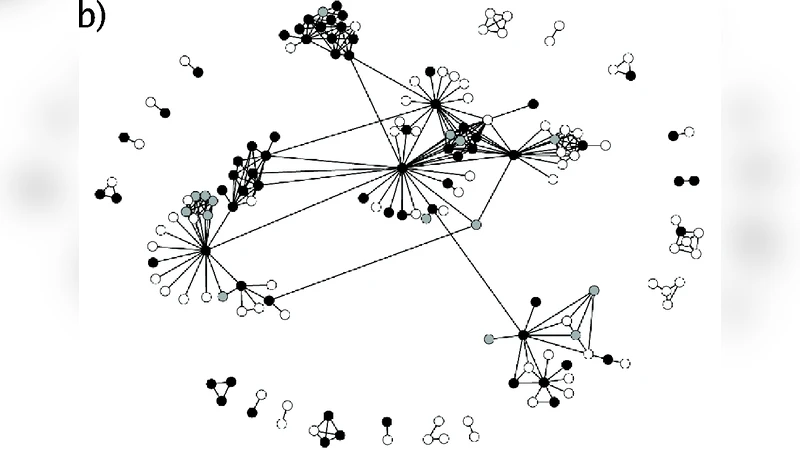
We analyze a collaboration network based on the Marvel Universe comic books. First, we consider the system as a binary network, where two characters are connected if they appear in the same publication. The analysis of degree correlations reveals that, in contrast to most real social networks, the Marvel Universe presents a disassortative mixing on the degree. Then, we use a weight measure to study the system as a weighted network. This allows us to find and characterize well defined communities. Through the analysis of the community structure and the clustering as a function of the degree we show that the network presents a hierarchical structure. Finally, we comment on possible mechanisms responsible for the particular motifs observed.
💡 Research Summary
The paper presents a comprehensive network‑theoretic investigation of the Marvel Universe (MU) based on character co‑appearances in comic books. Using a dataset that comprises 6,449 distinct characters and 12,774 publications, the authors construct two representations of the system: an unweighted (binary) graph where an undirected edge connects any pair of characters that appear together in at least one issue, and a weighted graph in which the edge weight w ij equals the number of joint appearances.
In the binary analysis the degree distribution follows a power‑law with exponent ≈2.5, indicating a scale‑free structure. The average degree is about 4.7, while the most connected characters (e.g., Iron Man, Spider‑Man) have degrees exceeding 1,200. Contrary to most empirical social networks, the MU graph exhibits disassortative mixing: the average nearest‑neighbor degree ⟨k_nn(k)⟩ decreases with k (approximately k⁻⁰·³). This pattern shows that high‑degree “hub” heroes preferentially link to low‑degree peripheral characters, reflecting a narrative design where central protagonists intersect with many minor figures.
Weighting the edges reveals a heavy‑tailed distribution that is well described by a log‑normal form; the mean weight is 1.8 and the maximum reaches 87 joint appearances. By applying a threshold on w ij and then using modularity‑maximization (Louvain method), the authors uncover 10–15 well‑defined communities. Each community corresponds closely to a specific comic series (e.g., Avengers, X‑Men, Fantastic Four) or a temporal era, and internal densities are high (modularity >0.68). This community structure is invisible in the binary graph because many low‑weight links blur the boundaries.
The clustering coefficient C(k) as a function of degree follows a C(k) ∝ k⁻¹ scaling, indicating a hierarchical organization. Low‑degree nodes (k < 10) have high clustering (C≈0.6–0.7) and form tightly knit sub‑groups, whereas high‑degree hubs (k > 200) have very low clustering (C < 0.05) and act as bridges between those sub‑groups. Such a hierarchy mirrors the “super‑hero” role: a few central characters bind together many loosely connected storylines.
Motif analysis shows a pronounced over‑representation of triangles (≈23 % of all possible three‑node subgraphs), confirming frequent three‑character joint scenes. In contrast, four‑node squares are scarce (<2 %), reflecting editorial constraints that limit the number of characters that can appear together in a single issue.
The discussion links these structural findings to the production process of comics. The disassortative mixing and hierarchical clustering arise from a “core‑periphery” storytelling strategy, where writers repeatedly place popular heroes at the center of diverse plots. The heavy‑tailed weight distribution stems from commercial incentives that boost the visibility of high‑profile characters. Page‑count limits and narrative pacing explain the abundance of triangles and the paucity of larger motifs.
In conclusion, the Marvel Universe exhibits a dual nature: as an unweighted graph it is a disassortative, scale‑free network; as a weighted graph it reveals clear, modular communities and a hierarchical clustering pattern. These properties differentiate it from conventional social networks and underscore the influence of medium‑specific narrative and editorial mechanisms on network formation. The authors suggest future work on temporal dynamics, cross‑media comparisons, and the impact of editorial policies on network evolution.
Comments & Academic Discussion
Loading comments...
Leave a Comment