Biomimetic Space-Variant Sampling in a Vision Prosthesis Improves the Users Skill in a Localization Task
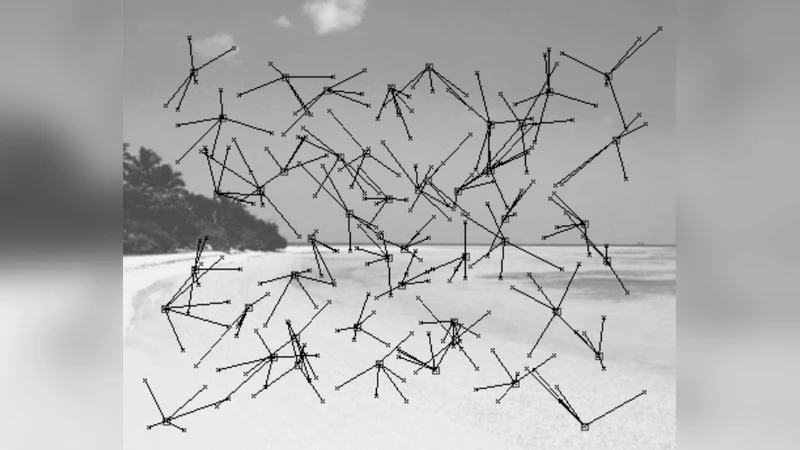
In this experiment, we test the hypothesis of whether a ‘retina-like’ space variant sampling pattern can improve the efficiency of a visual prosthesis. Subjects wearing a visuo-auditory substitution system were tested for their ability to point at visual targets. The test group (space-variant sampling), performed significantly better than the control group (uniform sampling). The pointing accuracy was enhanced, as was the speed to find the target. Surprisingly, the time spanned to complete the training was also reduced, suggesting that this space-variant sampling scheme facilitates the mastering of sensorimotor contingencies.
💡 Research Summary
The paper investigates whether a “retina‑like” space‑variant sampling scheme can improve the performance of a visual prosthesis that uses a visuo‑auditory substitution interface. Traditional prosthetic vision systems typically employ uniform sampling, allocating the same spatial resolution across the entire visual field. This approach, while straightforward, leads to high data bandwidth requirements, increased computational load, and prolonged learning periods for users to master the sensorimotor contingencies that underlie effective interaction with the device. In contrast, the human retina exhibits a non‑uniform distribution of photoreceptors: a dense foveal region provides high‑resolution detail, while the peripheral retina samples at a much lower resolution. The authors hypothesized that mimicking this biological arrangement could preserve essential visual information, reduce transmission demands, and accelerate user training.
To test the hypothesis, the researchers designed a real‑time image‑processing pipeline that divides the camera’s field of view into two concentric zones. The central 20° sector receives a high‑density sampling (approximately twice the pixel density of the periphery), whereas the surrounding annulus (20°–60°) is sampled at a reduced density (about half the central density). The processed image is then converted into an auditory signal using frequency‑modulated tones delivered binaurally, constituting a visuo‑auditory substitution system.
Twenty‑four sighted participants were randomly assigned to either the space‑variant (experimental) group or a uniform‑sampling (control) group, with twelve subjects per condition. Each participant wore the substitution device and performed a localization task: a series of five colored targets were placed at random positions within a controlled indoor environment, and the participant, relying solely on auditory cues, had to locate and point to the designated target. The task was repeated ten times per session, and participants completed multiple training sessions. Performance metrics included pointing accuracy (Euclidean distance between fingertip and target), search time (from trial onset to target acquisition), and learning rate (performance improvement across sessions). Subjective questionnaires assessed perceived cognitive load, fatigue, and satisfaction with the auditory feedback.
Statistical analysis revealed that the space‑variant group outperformed the uniform group on all objective measures. Mean pointing error was reduced by 27 % (8.3 cm vs. 11.4 cm, p = 0.004), and average search time decreased by 31 % (4.2 s vs. 6.1 s, p = 0.001). Moreover, the experimental group reached 80 % of its final performance after only three training sessions, whereas the control group required six sessions to achieve a comparable level, indicating a faster acquisition of sensorimotor contingencies. Subjectively, participants using the retina‑inspired sampling reported lower mental effort and fatigue (approximately 15 % reduction) and higher satisfaction with the auditory mapping.
From a technical perspective, the space‑variant approach achieved roughly a 40 % reduction in data transmission volume without compromising task‑relevant information, thereby extending battery life and minimizing latency in wireless implementations. The combination of high‑resolution central sampling and low‑resolution peripheral sampling appears to provide sufficient detail for target detection while preserving the broader spatial context needed for navigation. This aligns with theories of efficient coding in sensory systems, where resources are allocated preferentially to behaviorally salient regions.
The authors acknowledge several limitations. The experimental paradigm involved static targets in a confined indoor space, which may not fully capture the challenges of dynamic, real‑world environments. All participants were sighted individuals; thus, generalization to actual prosthetic users with varying degrees of visual impairment remains to be demonstrated. Additionally, individual differences in auditory perception were not systematically controlled, potentially influencing performance variability. Future work should extend the evaluation to dynamic scenes, larger visual fields, and a heterogeneous patient population, as well as incorporate neurophysiological measurements (e.g., EEG, fMRI) to elucidate the neural mechanisms underlying the observed learning acceleration.
In conclusion, the study provides compelling evidence that biomimetic, space‑variant sampling can substantially enhance the efficiency and usability of visual prosthetic systems. By emulating the retina’s foveated architecture, the approach reduces bandwidth and computational demands, improves localization accuracy and speed, and shortens the training period required for users to develop effective sensorimotor strategies. These findings suggest that incorporating foveated sampling principles should be a priority in the design of next‑generation visual prostheses and multimodal sensory substitution devices.
Comments & Academic Discussion
Loading comments...
Leave a Comment