Schizophrenia - a parameters game?
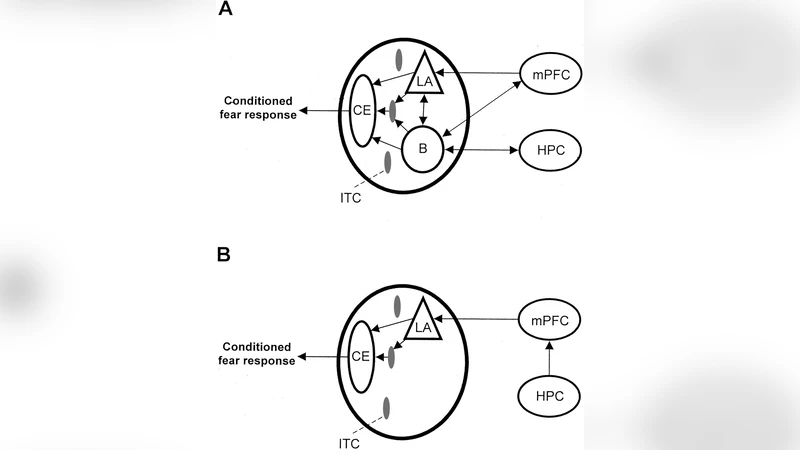
Schizophrenia is a severe, currently incurable, relatively common mental condition. Its symptoms are complex and widespread. It structurally and functionally affects cortical and subcortical regions involved in cognitive, emotional and motivational aspects of behavior. Its cause is unknown, its diagnosis is based on statistical behavior and its treatment is elusive. Our paradigm addresses the complexity of schizophrenic symptoms. Building upon recent neural vulnerability and limbic dysregulation hypotheses, it offers a mathematical model for the evolution of the limbic system under perturbation. Dependence on parameters and the concept of “bifurcation” could be the key to understanding the threshold between “normality” and “disease”.
💡 Research Summary
The paper tackles the longstanding challenge of understanding schizophrenia by moving beyond purely clinical descriptions and proposing a quantitative, dynamical‑systems framework that captures the evolution of the limbic network under perturbation. Building on two contemporary neurobiological concepts—neural vulnerability (the idea that certain brain circuits are predisposed to destabilization by genetic or developmental factors) and limbic dysregulation (the observation that the amygdala‑hippocampal‑prefrontal axis often exhibits abnormal excitability in patients)—the authors construct a set of coupled nonlinear differential equations to model the time‑dependent activity of key limbic structures.
Each brain region (e.g., amygdala, hippocampus, ventromedial prefrontal cortex) is represented by a state variable (x_i(t)). The dynamics are expressed as
\
Comments & Academic Discussion
Loading comments...
Leave a Comment