Reliability of Coupled Oscillators I: Two-Oscillator Systems
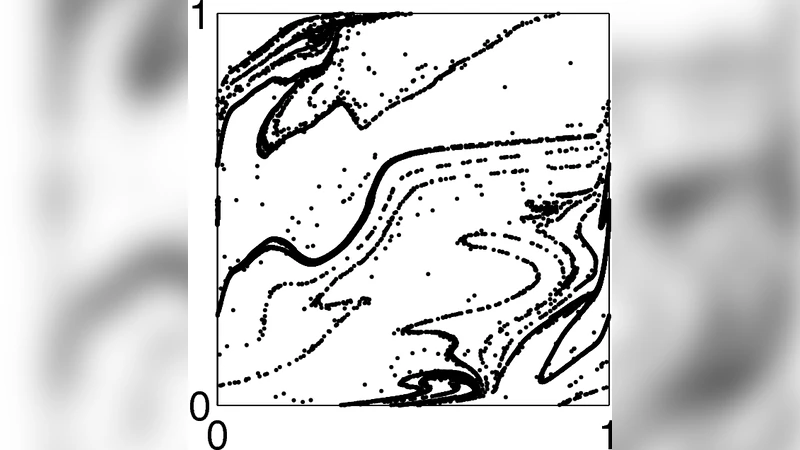
This paper concerns the reliability of a pair of coupled oscillators in response to fluctuating inputs. Reliability means that an input elicits essentially identical responses upon repeated presentations regardless of the network’s initial condition. Our main result is that both reliable and unreliable behaviors occur in this network for broad ranges of coupling strengths, even though individual oscillators are always reliable when uncoupled. A new finding is that at low input amplitudes, the system is highly susceptible to unreliable responses when the feedforward and feedback couplings are roughly comparable. A geometric explanation based on shear-induced chaos at the onset of phase-locking is proposed.
💡 Research Summary
The paper investigates how a pair of coupled oscillators responds to fluctuating inputs and whether the response is reliable – that is, whether repeated presentations of the same input produce essentially identical output trajectories regardless of the network’s initial state. Reliability is quantified by the sign of the largest Lyapunov exponent (λmax): a negative λmax indicates convergence of all trajectories to the same phase‑locked orbit (reliable behavior), while a positive λmax signals exponential divergence of nearby trajectories (unreliable behavior).
The authors model each oscillator by a phase equation of the Kuramoto type and introduce two coupling pathways: a feed‑forward term with strength α and a feedback term with strength β. Both oscillators receive the same external stochastic drive ξ(t), modeled as zero‑mean white Gaussian noise of adjustable amplitude. The coupled system is therefore described by
θ̇1 = ω1 + α sin(θ2 − θ1) + ξ(t)
θ̇2 = ω2 + β sin(θ1 − θ2) + ξ(t).
When uncoupled (α = β = 0) each oscillator is known to be intrinsically reliable because its phase dynamics are strongly attracted to a limit cycle that is robust against weak noise. The central question is how the introduction of coupling modifies this intrinsic reliability.
To answer it, the authors perform extensive numerical simulations across a two‑dimensional parameter space (α, β). For each pair of coupling strengths they compute λmax by integrating the variational equations together with the stochastic dynamics over long time horizons. The resulting “reliability map” reveals a striking pattern: regions where α and β are comparable (α ≈ β) exhibit a broad swath of positive λmax, indicating unreliable behavior, while regions where one coupling dominates the other (α ≫ β or β ≫ α) retain negative λmax and thus remain reliable.
The paper’s most original contribution is a geometric explanation for the unreliable zone. Near the onset of phase‑locking, the coupled flow develops strong shear: the velocity field stretches phase differences in one direction while compressing them in another, creating thin “shear strips” in the phase plane. Small stochastic perturbations that cross these strips are repeatedly stretched and folded, a mechanism identical to the classic “stretch‑fold” route to chaos. When feed‑forward and feedback couplings are balanced, the shear is maximal, so even low‑amplitude noise can trigger chaotic wandering of the phase difference, turning λmax positive. Conversely, strong asymmetry in the couplings damps the shear, allowing the system to settle into a stable phase‑locked orbit despite noise.
The authors also explore the role of input amplitude. By varying the noise strength σ, they show that at low σ the shear‑induced chaotic region expands: the system becomes highly susceptible to unreliability even when the external drive is weak. This counter‑intuitive finding underscores that reliability is not simply a matter of “small noise = reliable”; the internal geometry of the coupled flow can amplify tiny fluctuations into large, unpredictable deviations.
In the discussion, the authors connect these results to biological neural circuits and engineered oscillator arrays. In neural tissue, feed‑forward and feedback synaptic pathways often have comparable strengths; the analysis suggests that such balanced connectivity could make spike timing unreliable under modest background fluctuations, potentially affecting information processing. In engineered contexts (e.g., phase‑locked loops, MEMS resonators), deliberately breaking the symmetry of coupling could be a design strategy to suppress shear‑induced chaos and guarantee reliable operation.
Finally, the paper outlines future directions: extending the analysis to networks of three or more oscillators, incorporating heterogeneity in natural frequencies, and validating the shear‑induced chaos mechanism experimentally in electronic or optoelectronic oscillator platforms. Overall, the study provides a clear demonstration that coupling can both create and destroy reliability, introduces shear‑induced chaos as a unifying geometric framework, and offers practical insights for the design of robust coupled oscillator systems.
Comments & Academic Discussion
Loading comments...
Leave a Comment