Fluctuation-dissipation ratios in the dynamics of self-assembly
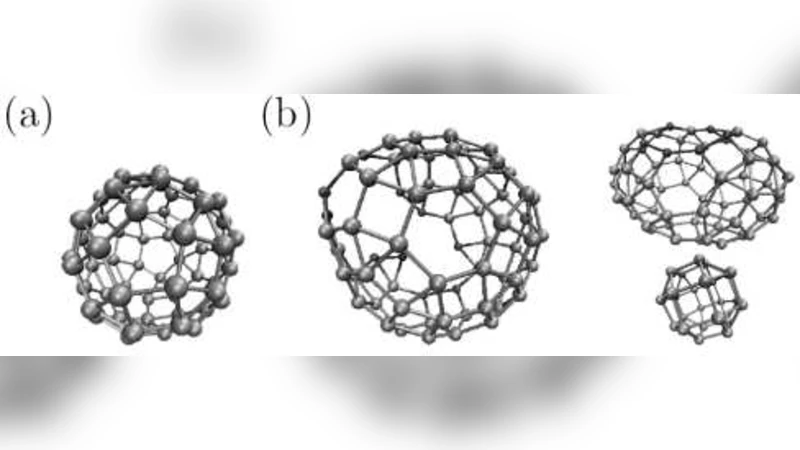
We consider two seemingly very different self-assembly processes: formation of viral capsids, and crystallization of sticky discs. At low temperatures, assembly is ineffective, since there are many metastable disordered states, which are a source of kinetic frustration. We use fluctuation-dissipation ratios to extract information about the degree of this frustration. We show that our analysis is a useful indicator of the long term fate of the system, based on the early stages of assembly.
💡 Research Summary
This paper investigates how fluctuation‑dissipation ratios (FDRs) can be used to quantify kinetic frustration in two very different self‑assembly processes: the formation of icosahedral viral capsids and the crystallization of sticky discs in two dimensions. The authors first motivate the problem by noting that at low temperatures self‑assembly often stalls in numerous metastable, disordered configurations, leading to poor yields. Traditional approaches require long simulations or experiments to observe the eventual fate of the system, but the authors propose that early‑time measurements of the relationship between spontaneous fluctuations and the response to a small external perturbation contain sufficient information to predict long‑term outcomes.
The methodology consists of coarse‑grained simulations for each system. Capsid assembly is modeled with 60 subunits that bind according to a prescribed angular geometry and an attractive potential; disc crystallization is represented by hard discs with a short‑range sticky interaction on a plane. Both systems are simulated over a wide temperature range (from well above to well below the assembly transition) using molecular dynamics or Monte‑Carlo algorithms. For each run the authors compute the autocorrelation function C(t,τ) of a structural order parameter (capsid completeness or number of bonded neighbours) and the linear response R(t,τ) to a weak field that perturbs the same observable. The fluctuation‑dissipation ratio X(t,τ)=TR(t,τ)/∂C(t,τ)/∂τ is then evaluated; at equilibrium X=1, while deviations from unity signal non‑equilibrium behaviour.
Results show a clear temperature‑dependent crossover. At high temperature the systems quickly reach a regime where X≈1, indicating near‑equilibrium dynamics and high assembly yields (≈90 % for capsids, nearly perfect crystalline order for discs). As temperature is lowered below a critical value (≈0.3 in reduced units), X rises sharply above 1 already within the first few thousand simulation steps. In the capsid case this correlates with the prevalence of partially assembled intermediates and a final yield below 30 %; for the discs the system becomes trapped in a mosaic of small clusters with no long‑range order. Importantly, the magnitude of the early‑time deviation of X from unity predicts the eventual yield: larger early deviations correspond to stronger kinetic frustration and poorer outcomes. The authors also analyse the time evolution of X, distinguishing cases where X departs immediately from 1 (indicating early frustration) from those where X remains close to 1 initially but diverges later (signalling the emergence of new metastable states).
The discussion emphasizes that FDRs provide a practical, experimentally accessible early warning signal. By applying a weak, controllable perturbation (e.g., optical tweezers or an electric field) and measuring the system’s response, one can estimate X in real time. If X deviates significantly from 1, feedback mechanisms—such as adjusting temperature, concentration, or interaction strength—could be employed to steer the assembly away from kinetic traps.
In conclusion, the study demonstrates that fluctuation‑dissipation ratios, traditionally a tool of non‑equilibrium statistical physics, can serve as a quantitative indicator of kinetic frustration in self‑assembly. Early‑time FDR measurements reliably forecast long‑term structural yields across distinct models, suggesting a broadly applicable strategy for designing and controlling nanoscale assembly processes. Future work will extend the approach to more complex building blocks (DNA origami, block copolymers) and to experimental verification.
Comments & Academic Discussion
Loading comments...
Leave a Comment