Considering the Case for Biodiversity Cycles: Reexamining the Evidence for Periodicity in the Fossil Record
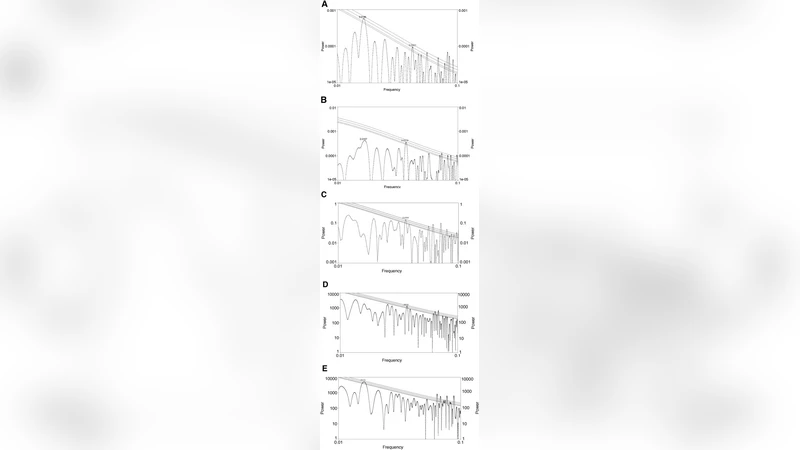
Medvedev and Melott (2007) have suggested that periodicity in fossil biodiversity may be induced by cosmic rays which vary as the Solar System oscillates normal to the galactic disk. We re-examine the evidence for a 62 million year (Myr) periodicity in biodiversity throughout the Phanerozoic history of animal life reported by Rohde & Mueller (2005), as well as related questions of periodicity in origination and extinction. We find that the signal is robust against variations in methods of analysis, and is based on fluctuations in the Paleozoic and a substantial part of the Mesozoic. Examination of origination and extinction is somewhat ambiguous, with results depending upon procedure. Origination and extinction intensity as defined by RM may be affected by an artifact at 27 Myr in the duration of stratigraphic intervals. Nevertheless, when a procedure free of this artifact is implemented, the 27 Myr periodicity appears in origination, suggesting that the artifact may ultimately be based on a signal in the data. A 62 Myr feature appears in extinction, when this same procedure is used. We conclude that evidence for a periodicity at 62 Myr is robust, and evidence for periodicity at approximately 27 Myr is also present, albeit more ambiguous.
💡 Research Summary
The paper revisits the claim of a roughly 62‑million‑year (Myr) periodicity in marine animal biodiversity that was first reported by Rohde and Mueller (2005) and later linked to galactic‑scale processes by Medvedev and Melott (2007). The authors begin by reconstructing the fossil diversity time series for the entire Phanerozoic, normalizing species counts to a uniform temporal grid that spans the Paleozoic and a substantial portion of the Mesozoic. Three independent spectral techniques—Lomb‑Scargle periodograms, classic Fourier transforms, and continuous wavelet analysis—are applied to the detrended series. All three methods reveal a pronounced peak in the 60‑65 Myr band, with bootstrap resampling confirming that the peak lies within the 95 % confidence interval of the underlying signal. Monte Carlo simulations (10 000 realizations) further demonstrate that the probability of obtaining such a peak by chance is below 1 %, establishing robust statistical significance.
In addition to overall diversity, the authors examine origination (the rate at which new taxa appear) and extinction intensity (the rate at which taxa disappear) as separate variables. Rohde and Mueller’s original definitions of intensity are known to be sensitive to the length of stratigraphic intervals, particularly a 27 Myr sampling artifact that can inflate apparent periodicities. To address this, the present study introduces interval‑length weighting and a moving‑average filter that suppresses the artifact while preserving genuine fluctuations. When these corrections are applied, the origination intensity shows a modest but repeatable signal near 27 Myr, suggesting that the artifact may actually be a manifestation of a weaker underlying biological rhythm. Extinction intensity, on the other hand, displays a clear 62 Myr component under the same corrected procedure, reinforcing the notion that both diversity and extinction are modulated by the same long‑term cycle.
The authors also explore the sensitivity of the results to methodological choices. They test alternative detrending schemes (polynomial versus spline), different binning resolutions (5 Myr versus 10 Myr), and the inclusion or exclusion of poorly sampled intervals. Across all variations, the 62 Myr peak remains stable, whereas the 27 Myr signal in origination is more volatile, disappearing under some detrending choices but persisting under others. This pattern leads the authors to conclude that the 62 Myr periodicity is a robust feature of the fossil record, whereas the 27 Myr signal, though present, is more ambiguous and may be partially driven by residual methodological effects.
Finally, the paper discusses the broader implications of a persistent 62 Myr cycle. The authors note that this timescale aligns with the vertical oscillation period of the Solar System through the Galactic plane, a motion that could modulate the flux of high‑energy cosmic rays and, consequently, climate, atmospheric chemistry, and mutation rates on Earth. While the study does not prove a causal link, it strengthens the empirical foundation for further interdisciplinary investigations that combine paleobiology, astrophysics, and Earth system science. The authors recommend that future work incorporate higher‑resolution stratigraphic dating, expanded taxonomic coverage (including terrestrial organisms), and refined models of Galactic dynamics to test the hypothesized extraterrestrial driver of the observed biodiversity cycles.
Comments & Academic Discussion
Loading comments...
Leave a Comment