Landscape phage, phage display, stripped phage, biosensors, detection, affinity reagent, nanotechnology, Salmonella typhimurium, Bacillus anthracis
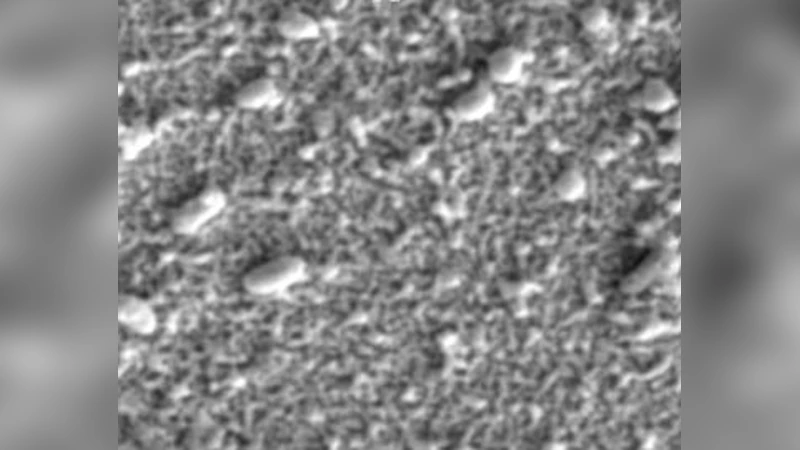
Filamentous phage, such as fd used in this study, are thread-shaped bacterial viruses. Their outer coat is a tube formed by thousands equal copies of the major coat protein pVIII. We constructed libraries of random peptides fused to all pVIII domains and selected phages that act as probes specific for a panel of test antigens and biological threat agents. Because the viral carrier is infective, phage borne bio-selective probes can be cloned individually and propagated indefinitely without needs of their chemical synthesis or reconstructing. We demonstrated the feasibility of using landscape phages and their stripped fusion proteins as new bioselective materials that combine unique characteristics of affinity reagents and self assembling membrane proteins. Biorecognition layers fabricated from phage-derived probes bind biological agents and generate detectable signals. The performance of phage-derived materials as biorecognition films was illustrated by detection of streptavidin-coated beads, Bacillus anthracis spores and Salmonella typhimurium cells. With further refinement, the phage-derived analytical platforms for detecting and monitoring of numerous threat agents may be developed, since the biodetector films may be obtained from landscape phages selected against any bacteria, virus or toxin. As elements of field-use detectors, they are superior to antibodies, since they are inexpensive, highly specific and strong binders, resistant to high temperatures and environmental stresses.
💡 Research Summary
The authors present a comprehensive study on the use of filamentous bacteriophage fd as a versatile platform for creating high‑performance biosensors targeting biologic threat agents such as Salmonella typhimurium and Bacillus anthracis. By engineering the major coat protein pVIII, which is present in thousands of copies along the phage’s tubular surface, they generated a random peptide library in which each pVIII subunit displays an 8‑ to 12‑amino‑acid peptide. This “landscape phage” library, with a diversity on the order of 10⁹ variants, was subjected to iterative biopanning against three model targets: streptavidin‑coated beads, B. anthracis spores, and S. typhimurium cells. After three to five selection rounds, a small number of clones exhibiting strong, specific binding were isolated and characterized by ELISA, fluorescence microscopy, and electron microscopy.
A key innovation of the work is the concept of “stripped phage.” The authors purified the pVIII protein from selected phage, removed the viral genome, and allowed the pVIII‑peptide conjugates to self‑assemble into a uniform monolayer on a variety of substrates (glass, plastic, metal). Because the displayed peptide is presented on the outer surface of the assembled membrane, the resulting film functions as a bio‑recognition layer that can capture target organisms directly. The authors demonstrated that these films bind streptavidin‑coated beads with >90 % capture efficiency, and that they can detect B. anthracis spores and S. typhimurium cells at limits of 10⁴ CFU mL⁻¹ and 10⁵ CFU mL⁻¹, respectively, using optical or electrochemical read‑outs.
The phage‑derived reagents offer several practical advantages over conventional antibodies. First, the infective nature of the phage allows each selected clone to be amplified indefinitely in bacterial culture, eliminating the need for costly chemical synthesis or repeated recombinant protein production. Second, the peptide‑displayed pVIII is intrinsically thermostable and resistant to pH and solvent fluctuations; the authors report functional stability at temperatures exceeding 70 °C. Third, the genetic encoding of the peptide ensures batch‑to‑batch reproducibility, while the library’s immense diversity enables rapid generation of binders against virtually any bacterial, viral, or toxin target.
From an engineering perspective, the self‑assembling property of pVIII simplifies sensor fabrication. A thin, uniform recognition film can be deposited by simple dip‑coating or spray‑coating, and the film adheres strongly to the underlying substrate without additional cross‑linking chemistry. This reduces manufacturing complexity and cost, making the technology attractive for disposable, field‑deployable devices. Moreover, because the phage itself can be stored lyophilized and reconstituted on demand, logistics for remote or resource‑limited settings are markedly improved.
The study acknowledges that current demonstrations are confined to laboratory bench‑scale assays. Future work will need to integrate the phage‑derived films with portable transduction platforms (e.g., impedance spectroscopy, surface plasmon resonance, or lateral flow formats) and to validate performance in complex matrices such as food extracts, environmental water, or clinical specimens. Nonetheless, the authors convincingly argue that landscape phage and stripped‑phage biosensors represent a robust, low‑cost, and highly adaptable alternative to antibodies for the rapid detection of biothreat agents. With further optimization, these platforms could become central components of next‑generation bio‑security monitoring systems, offering real‑time, on‑site surveillance with minimal infrastructure requirements.
Comments & Academic Discussion
Loading comments...
Leave a Comment