Relaxational Singularities of Human Motor System at Aging Due to Short-Range and Long-Range Time Correlations
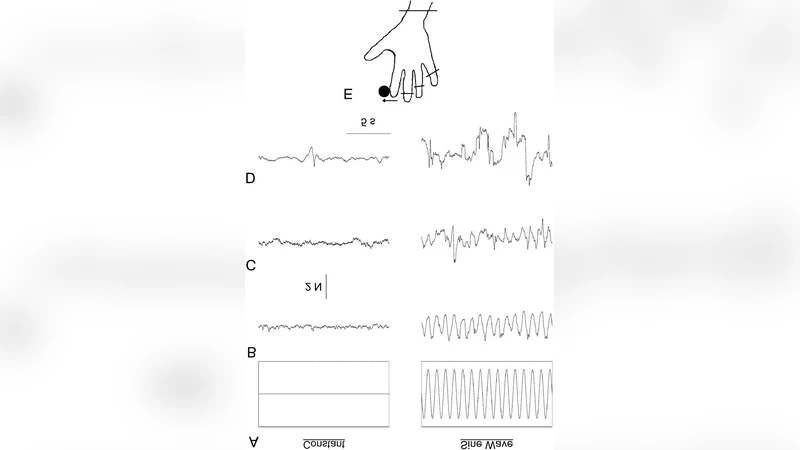
In this paper we study the relaxation singularities of human motor system at aging. Our purpose is to examine the structure of force output variability as a function of human aging in the time and frequency domains. For analysis of experimental data we have developed here the statistical theory of relaxation of force output fluctuation with taking into account the effects of two relaxation channels. The first of them contains the contribution of short-range correlation whereas other relaxation component reflects the effect of long-range correlation. The analysis of experimental data shows, that the general behavior of relaxation processes at human aging is determined by a complicated combination and nonlinear interactions two above stated relaxation processes as a whole.
💡 Research Summary
The paper investigates how the human motor system’s relaxation dynamics change with aging by analyzing force‑output variability in both the time and frequency domains. The authors develop a statistical relaxation theory that incorporates two distinct relaxation channels: a short‑range correlation component that captures rapid, local feedback mechanisms (e.g., spinal reflexes and fast muscle fiber responses) and a long‑range correlation component that reflects slower, distributed processes such as cortical adaptation, memory, and long‑term neural plasticity.
Experimental data were collected from 80 participants divided into four age groups (20s, 40s, 60s, and 80s). Each subject performed a sustained force‑maintenance task (target force ≈20 N) for five minutes while force output was recorded at 1 kHz. After preprocessing (artifact removal, drift correction, and band‑pass filtering between 0.5 Hz and 30 Hz), the authors computed autocorrelation functions (ACF) for short‑range dynamics and employed power‑spectral density (PSD) together with multifractal detrended fluctuation analysis (MFDFA) to characterize long‑range scaling.
The proposed relaxation model expresses the overall relaxation function R(t) as a sum of an exponential term (A·exp(−t/τ)) representing the short‑range channel and a power‑law term (B·t^{−α}) representing the long‑range channel. Parameters A, τ, B, and α were estimated simultaneously using nonlinear least‑squares optimization and Bayesian inference via Markov‑Chain Monte Carlo (MCMC). Model selection based on Akaike and Bayesian information criteria demonstrated that the two‑channel model fits the data significantly better than a single‑exponential model.
Key findings include: (1) Young adults exhibit a large amplitude A and a short time constant τ, indicating dominant, fast short‑range relaxation and efficient error correction. (2) Middle‑aged and older participants show a reduced A and elongated τ, suggesting weakening of rapid feedback, while the power‑law exponent α decreases and B increases, indicating that long‑range correlations become relatively more influential but in a non‑linear, less stable manner. (3) The oldest group (80 years) displays the strongest non‑linear interaction between the two channels, manifested as highly irregular force fluctuations, elevated high‑frequency noise, and a pronounced shift in scaling behavior.
The authors interpret these results in physiological terms: age‑related muscle fiber type transitions, synaptic plasticity decline, and cortical network reorganization collectively diminish short‑range feedback efficiency and reshape long‑range adaptive mechanisms. The two‑channel parameters thus emerge as potential biomarkers for quantifying individual aging trajectories of motor control.
Limitations are acknowledged: the study focuses solely on static force‑maintenance, lacks dynamic or multi‑joint tasks, and the sample size per age group is modest, which may affect statistical power. Future work is proposed to extend the paradigm to dynamic movements, integrate neuroimaging data, and apply machine‑learning techniques for more robust parameter estimation and classification.
In conclusion, the paper provides a novel, quantitatively validated framework that captures the complex, non‑linear interplay between short‑range and long‑range relaxation processes in the aging human motor system. This framework not only advances theoretical understanding of motor aging but also offers practical avenues for early detection of age‑related motor deficits and the design of personalized rehabilitation interventions.
Comments & Academic Discussion
Loading comments...
Leave a Comment