Towards journalometrical analysis of a scientific periodical: a case study
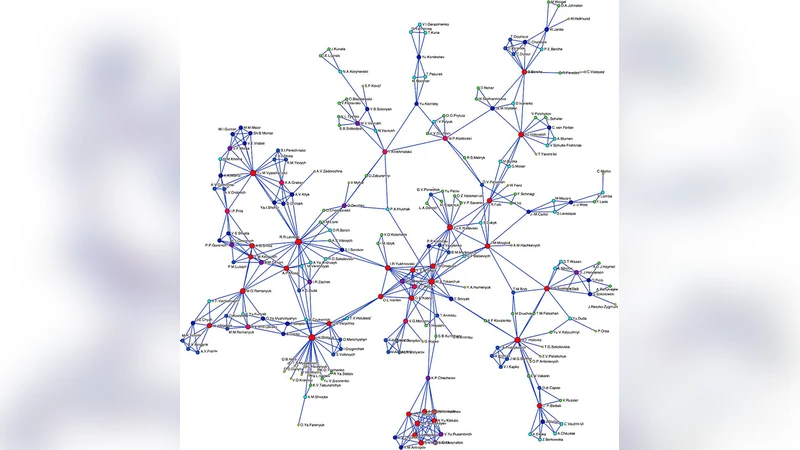
In this paper we use several approaches to analyse a scientific journal as a complex system and to make a possibly more complete description of its current state and evolution. Methods of complex networks theory, statistics, and queueing theory are used in this study. As a subject of the analysis we have chosen the journal ``Condensed Matter Physics’’ (http://www.icmp.lviv.ua/journal/). In particular, based on the statistical data regarding the papers published in this journal since its foundation in 1993 up to now we have composed the co-authorship network and extracted its main quantitative characteristics. Further, we analyse the priorities of scientific trends reflected in the journal and its impact on the publications in other editions (the citation ratings). Moreover, to characterize an efficiency of the paper processing, we study the time dynamics of editorial processing in terms of queueing theory and human activity analysis.
💡 Research Summary
The paper presents a comprehensive, multi‑method investigation of the scientific journal Condensed Matter Physics (CMP) by treating the journal as a complex system. Using data from its inception in 1993 to the present, the authors first construct a co‑authorship network where nodes represent individual researchers and edges denote joint authorship on a paper. Standard network metrics—average degree, degree distribution, clustering coefficient, average shortest‑path length, and network diameter—are computed. The degree distribution follows a power‑law, indicating a scale‑free structure, while the high clustering and short paths reveal small‑world characteristics. This suggests that a few central authors dominate collaborations, yet the overall community remains highly interconnected.
Next, the study applies text‑mining techniques to titles, abstracts, and keywords to trace scientific trends within the journal. By employing TF‑IDF weighting and Latent Dirichlet Allocation (LDA), dominant topics such as superconductivity, quantum critical phenomena, nanostructures, and more recently two‑dimensional materials and topological insulators are identified and their temporal evolution plotted. The analysis shows clear shifts in research focus, reflecting broader developments in condensed‑matter physics.
The third component examines citation impact. Using external citation databases (Web of Science, Scopus) the authors build a citation network linking CMP articles to works that cite them. They calculate citation‑count distributions, mean citations per paper, h‑index, and centrality measures (betweenness, closeness) to pinpoint influential papers and authors. The citation network exhibits a hub‑and‑spoke pattern, with a small set of highly cited papers—particularly those on superconductivity and quantum criticality—driving the journal’s visibility in the global physics community.
Finally, the editorial workflow is modeled through queueing theory. Timestamp data (submission, first review, acceptance, publication) allow estimation of arrival rate (λ) and service rate (μ). An initial M/M/1 model is tested but rejected because inter‑event times display heavy‑tailed, bursty behavior typical of human activity. Consequently, an M/G/1 framework with a heavy‑tailed service‑time distribution is adopted. The model yields an average waiting time of over 30 days and a utilization factor approaching 0.9 during peak periods, indicating significant bottlenecks. The analysis also uncovers burst patterns in reviewer response times, underscoring the need for more robust scheduling or automated reminders.
By integrating complex‑network analysis, statistical trend detection, citation network metrics, and advanced queueing models, the authors provide a holistic portrait of CMP’s structural, intellectual, and operational dynamics. The findings offer actionable insights for editorial policy (e.g., expanding reviewer pools, streamlining manuscript handling) and illustrate how journal‑level metrics can inform strategies to strengthen research collaborations and improve publication efficiency. Moreover, the methodological framework is positioned as a template for journalometrics studies of other scientific periodicals.
Comments & Academic Discussion
Loading comments...
Leave a Comment