e-Science initiatives in Venezuela
Within the context of the nascent e-Science infrastructure in Venezuela, we describe several web-based scientific applications developed at the Centro Nacional de Calculo Cientifico Universidad de Los Andes (CeCalCULA), Merida, and at the Instituto Venezolano de Investigaciones Cientificas (IVIC), Caracas. The different strategies that have been followed for implementing quantum chemistry and atomic physics applications are presented. We also briefly discuss a damage portal based on dynamic, nonlinear, finite elements of lumped damage mechanics and a biomedical portal developed within the framework of the \textit{E-Infrastructure shared between Europe and Latin America} (EELA) initiative for searching common sequences and inferring their functions in parasitic diseases such as leishmaniasis, chagas and malaria.
💡 Research Summary
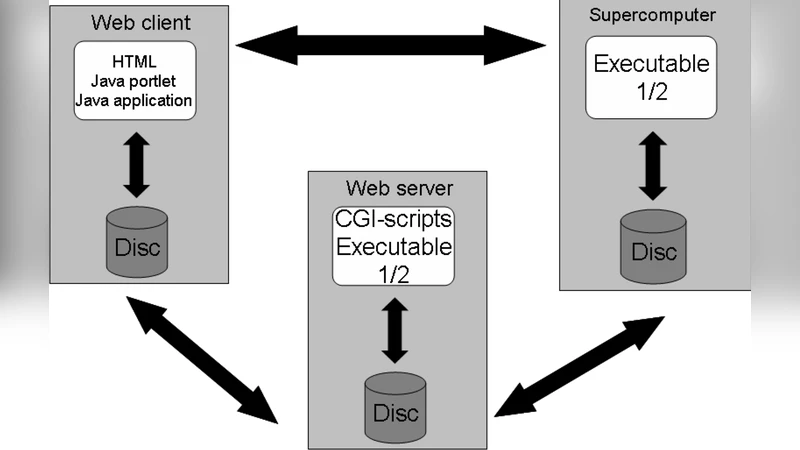
The paper presents a snapshot of emerging e‑Science activities in Venezuela, focusing on web‑based scientific portals developed at two national research centers: the Centro Nacional de Cálculo Científico (CeCalCULA) in Merida and the Instituto Venezolano de Investigaciones Científicas (IVIC) in Caracas. At CeCalCULA, legacy quantum‑chemistry and atomic‑physics codes written in Fortran have been wrapped as SOAP/REST web services, allowing remote users to submit jobs, monitor progress, and retrieve results through a browser‑based interface. The authors describe the architecture that separates authentication, job queuing, resource allocation, and result visualization, thereby enabling multi‑user access to a high‑performance cluster despite limited local hardware.
IVIC’s contribution is a damage‑analysis portal built on dynamic, nonlinear finite‑element methods. The portal implements a lumped‑damage mechanics model that captures time‑dependent, nonlinear structural degradation while keeping the computational model tractable. Users provide material properties, loading conditions, and initial damage parameters via a web form; the server automatically generates the mesh, runs the nonlinear analysis, and returns interactive 3‑D visualizations as well as downloadable data files for further processing.
The third major effort is a biomedical portal created under the E‑Infrastructure shared between Europe and Latin America (EELA) initiative. This portal targets parasitic diseases such as leishmaniasis, Chagas disease, and malaria. It aggregates sequence databases from European and Latin‑American partners, standardizes metadata, and offers a BLAST‑based search engine coupled with functional annotation pipelines. Researchers can input a gene or protein sequence, retrieve homologous sequences, predict domains, and obtain functional hypotheses in a single, user‑friendly report.
Collectively, the paper demonstrates how Venezuelan institutions are leveraging web technologies, standardized service protocols, and collaborative data infrastructures to overcome local resource constraints. By abstracting complex scientific codes behind web services and integrating high‑performance computing with intuitive front‑ends, they enable broader participation in quantum‑chemical calculations, structural damage simulations, and bioinformatics analyses. The authors argue that these modular, interoperable platforms not only serve the immediate national research community but also provide a scalable model for regional e‑Science networks, fostering deeper collaboration between Latin America and Europe.
Comments & Academic Discussion
Loading comments...
Leave a Comment