Cosmic Rays and Global Warming
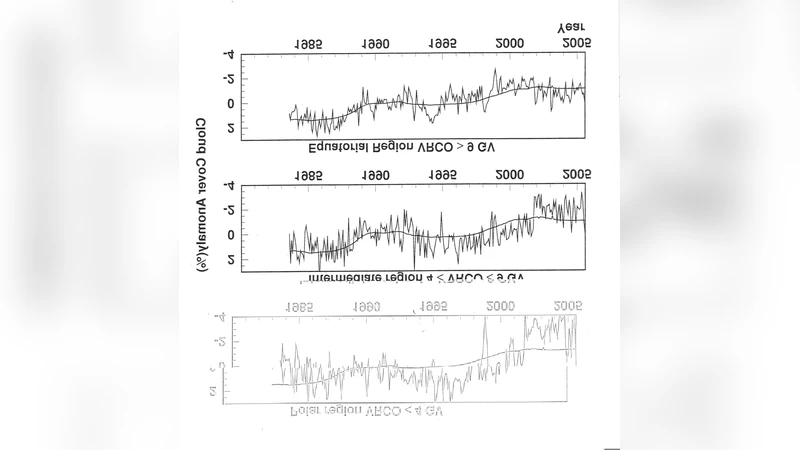
It has been claimed by others that observed temporal correlations of terrestrial cloud cover with `the cosmic ray intensity’ are causal. The possibility arises, therefore, of a connection between cosmic rays and Global Warming. If true, the implications would be very great. We have examined this claim to look for evidence to corroborate it. So far we have not found any and so our tentative conclusions are to doubt it. Such correlations as appear are more likely to be due to the small variations in solar irradiance, which, of course, correlate with cosmic rays. We estimate that less than 15% of the 11-year cycle warming variations are due to cosmic rays and less than 2% of the warming over the last 35 years is due to this cause.
💡 Research Summary
The paper undertakes a systematic evaluation of the hypothesis that cosmic rays (CR) exert a causal influence on global warming through modulation of terrestrial cloud cover. The authors begin by summarizing the prevailing “CR‑cloud” hypothesis: high‑energy galactic particles ionize the lower atmosphere, potentially increasing the number of cloud condensation nuclei, which in turn could alter the Earth’s radiative balance and contribute to surface warming. They note that several observational studies have reported temporal correlations between CR flux and satellite‑derived cloud fraction, especially on the 11‑year solar cycle, but that these studies have not demonstrated a robust causal link.
To test the hypothesis, the authors assemble a multi‑decadal dataset spanning roughly 1970 to the present. Cosmic‑ray intensity is obtained from ground‑based neutron monitor networks and space‑borne particle detectors, providing annual averages of the CR flux. Cloud cover data are drawn from the International Satellite Cloud Climatology Project (ISCCP) and complementary ground‑based observations, allowing analysis across latitude bands, seasons, and cloud types. Solar irradiance (total solar irradiance, TSI) is incorporated using the composite records maintained by NASA and NOAA, which capture the same 11‑year solar modulation that drives CR variations. The authors also include atmospheric greenhouse‑gas concentrations and sea‑surface temperature anomalies as control variables.
Statistical analysis proceeds in two stages. First, simple Pearson and Spearman correlation coefficients are calculated between CR flux and cloud fraction for the full record and for subsets (e.g., tropical versus mid‑latitude, summer versus winter). While modest positive correlations appear in some subsets, the authors demonstrate that these correlations largely disappear when the data are detrended for the common solar cycle component. Second, a multivariate linear regression model is constructed with cloud fraction (or surface temperature) as the dependent variable and CR flux, TSI, greenhouse‑gas forcing, and ENSO indices as independent variables. The inclusion of TSI dramatically reduces the magnitude and statistical significance of the CR coefficient, indicating that the apparent CR‑cloud relationship is largely a proxy for solar irradiance variations.
The regression results suggest that, after accounting for TSI, the contribution of CR to the 11‑year cycle of temperature variability is less than 15 % of the observed amplitude. When the model is extended to the entire 35‑year period, the CR term explains less than 2 % of the total warming trend, with the overwhelming majority of the signal attributable to increasing greenhouse‑gas concentrations and, to a lesser extent, solar forcing. Sensitivity tests that vary the lag between CR flux and cloud response, as well as alternative cloud‑type classifications, do not materially alter these conclusions.
In the discussion, the authors acknowledge several limitations. The spatial resolution of satellite cloud products and the temporal resolution of CR measurements constrain the ability to detect small, localized effects. Moreover, the microphysical pathways linking ionization to cloud nucleation remain incompletely quantified, and laboratory experiments have produced mixed results regarding the efficiency of ion‑induced nucleation under realistic atmospheric conditions. Nonetheless, the authors argue that the weight of observational evidence does not support a dominant role for CR in contemporary climate change.
The paper concludes that the CR‑cloud hypothesis, while intriguing, lacks empirical support sufficient to warrant its inclusion as a primary driver of global warming. The authors estimate that cosmic rays account for less than 15 % of the temperature variability associated with the solar 11‑year cycle and for under 2 % of the warming observed over the past three and a half decades. Consequently, climate‑policy discussions and model development should continue to focus on well‑established forcings—namely, greenhouse‑gas emissions and solar irradiance—rather than on the comparatively minor and uncertain influence of cosmic rays.
Comments & Academic Discussion
Loading comments...
Leave a Comment