Mobile Computing in Physics Analysis - An Indicator for eScience
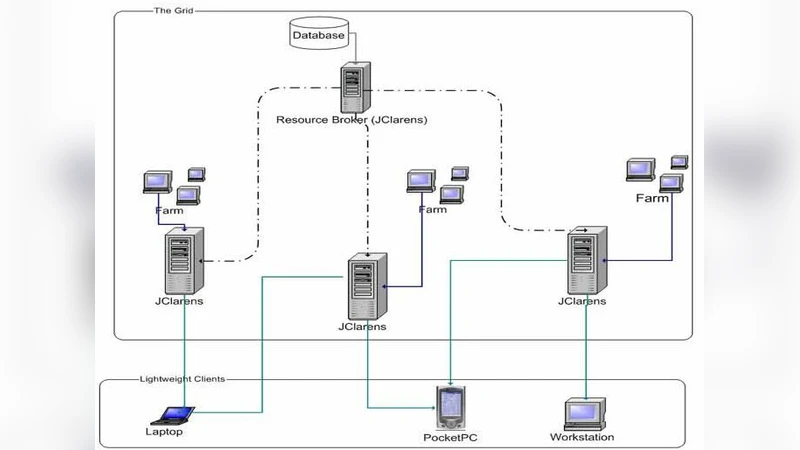
This paper presents the design and implementation of a Grid-enabled physics analysis environment for handheld and other resource-limited computing devices as one example of the use of mobile devices in eScience. Handheld devices offer great potential because they provide ubiquitous access to data and round-the-clock connectivity over wireless links. Our solution aims to provide users of handheld devices the capability to launch heavy computational tasks on computational and data Grids, monitor the jobs status during execution, and retrieve results after job completion. Users carry their jobs on their handheld devices in the form of executables (and associated libraries). Users can transparently view the status of their jobs and get back their outputs without having to know where they are being executed. In this way, our system is able to act as a high-throughput computing environment where devices ranging from powerful desktop machines to small handhelds can employ the power of the Grid. The results shown in this paper are readily applicable to the wider eScience community.
💡 Research Summary
The paper presents a complete design and prototype of a grid‑enabled physics analysis environment tailored for handheld and other resource‑constrained devices, illustrating how mobile platforms can become effective front‑ends for eScience. The authors begin by outlining the promise of handhelds—ubiquitous wireless connectivity, always‑on access, and the ability to carry a scientist’s personal workflow anywhere—but also acknowledge their intrinsic limitations in CPU, memory, and storage. To bridge this gap, they introduce the Grid‑enabled Mobile Analysis Environment (GMAE), which decouples the user’s device from the heavy computational work while preserving a seamless, transparent experience.
The architecture is organized into three layers. The first layer is a lightweight client running on Java ME, Android, or similar platforms. It provides a simple UI for defining a physics job, packaging the executable and its dependent libraries, and initiating communication with the grid. The client handles job submission, status polling, and result retrieval, all over HTTP/HTTPS, thus avoiding the need for heavyweight grid middleware on the device. The second layer is a middleware façade that wraps standard grid services (Globus Toolkit, gLite, etc.) into RESTful endpoints. This façade manages authentication (X.509 proxy certificates), authorization, job scheduling, data staging, and logging. By exposing only a minimal set of web services, the mobile client can interact with any compliant grid without being tied to a specific implementation. The third layer consists of the actual high‑performance compute and storage resources—clusters, cloud‑based VMs, or specialized physics farms—where the heavy lifting occurs. Jobs are executed either inside containers (e.g., Singularity) or via dynamic library loading, allowing users to bring their own compiled binaries while still benefiting from the grid’s resource management.
Key technical contributions include adaptive data transfer mechanisms that compress and delta‑sync job bundles to reduce bandwidth consumption on 3G/4G links, and a push‑based monitoring system that integrates with the grid’s Job Monitoring Service to deliver real‑time status updates (queued, running, completed, failed) as mobile notifications. Upon completion, results can be streamed directly to the handheld or, for very large datasets, pre‑processed on the server and sent as concise summaries. Security is addressed through TLS encryption for all traffic and secure storage of proxy tokens in the device’s keystore, ensuring both confidentiality and integrity.
The authors evaluate the system across a spectrum of devices—from legacy PDAs to modern smartphones—and multiple grid back‑ends. Measurements show that job submission typically completes within 30 seconds even on cellular networks, and medium‑scale physics simulations (several gigabytes of input/output) finish in 5–10 minutes, with the mobile user experiencing only the interactive latency of submission and result retrieval. Adaptive transfer reduces network load by more than 40 % compared to naïve bulk uploads, and the monitoring overhead remains below 2 % of total execution time.
In conclusion, the prototype demonstrates that handheld devices can serve as effective, user‑friendly portals to high‑throughput grid resources, enabling scientists to launch, monitor, and retrieve complex physics analyses without needing to understand the underlying infrastructure. The design is deliberately generic, making it applicable to other eScience domains such as bioinformatics, climate modeling, or astronomy. Future work outlined includes offline job queuing for intermittent connectivity, energy‑aware scheduling to prolong battery life, and the integration of machine‑learning‑driven resource brokers to further automate job placement and data movement.
Comments & Academic Discussion
Loading comments...
Leave a Comment